
Jul 24, 2026
How about sealing performance of black straight tee with NPT thread?
You can't just talk about sealing performance when it comes to industrial pipe systems; it's what makes them work reliably. The precision-engineered tapered thread design and strengthened square face structure of NPT black square face straight tee pipe fittings make them very good at closing. The NPT (National Pipe Taper) standard makes a mechanical seal by having the 60-degree tapered threads press against each other as they tighten, making a bond that doesn't leak. The high-strength black malleable iron construction lasts a long time, and the square-edge design adds critical mass at thread entrances to stop bell-mouthing and splitting during installation. This keeps your 3-way fluid distribution systems pressure-tight even in tough environments.
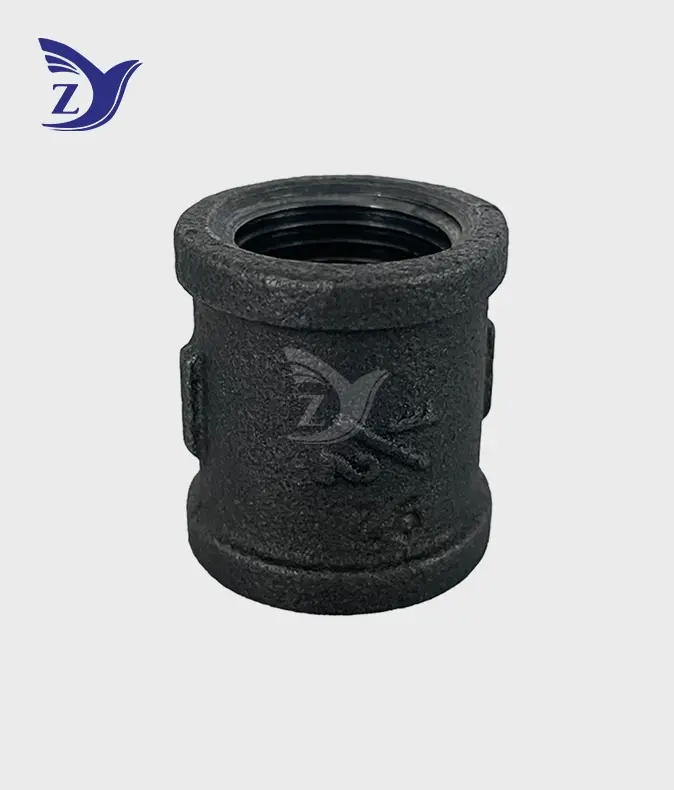
Sealing Performance of Black Straight Tee with NPT Thread
Threaded fittings that can handle changes in pressure, thermal expansion, and corrosive environments are needed to connect industrial pipelines. When procurement managers and engineers know how these parts close well, they can make decisions that save money on maintenance and keep expensive downtime from happening.
The Engineering Behind NPT Thread Sealing
When it comes to how they work, NPT threads are very different from straight threads. When the male and female threads meet, the taper—exactly 3/4 inch per foot—makes an interference fit. Metal-to-metal contact gets stronger as you tighten the connection. This squeezes the threads together and makes a mechanical seal. Because of how it's made, the fitting gets tighter when it's under pressure. This makes NPT ideal for gas, oil, and steam uses where pressure spikes happen.
The NPT black square face straight tee pipe fittings improve this way of closing by making the hole stronger. In contrast to round face fittings, square face fittings have a flat, strong surface that spreads wrench force evenly around the body of the fitting. This keeps stress from building up, which could cause tiny cracks in the pliable iron casting—cracks that would finally make the seal less reliable.
Why Black Malleable Iron Matters for Seal Longevity
The choice of material has a direct effect on how well the seal works over time. Black malleable iron made to ASTM A197 standards has a minimum tensile strength of 40,000 psi and an expansion range of 5 to 10%. This small amount of flexibility lets the fitting handle changes in temperature without breaking, which is very important for HVAC systems and steam lines.
The black oxide covering does two things. It protects against corrosion while being stored and moved, but more importantly, it stops the flaking that happens with galvanized coatings when they are being sealed. When used with natural gas, galvanized flakes can get into regulators and meters and make them less safe. The smooth black finish keeps the threads straight and lets sealants stick evenly, making a seal that stays in place around the whole thread contact area.
Factors Influencing Sealing Performance of Black Straight Tee with NPT Thread
Getting the best coating requires paying attention to a lot of different factors. The quality of the material, the accuracy of the threads, and the way the connection was installed can all affect whether it holds pressure or leaks, which lowers the efficiency of the system.
Material Composition and Certification Standards
Choosing the right materials is the first step in making high-quality NPT black square face straight tee pipe fittings. A heat treatment method turns brittle white cast iron into malleable iron, which can be bent and shaped. It can also withstand pressure and stress. The final properties of the material that affect sealing are set by this process of malleabilization, which is done in controlled annealing kilns.
Reputable makers keep their quality systems up to date with ISO 9001 and make parts that meet ASME B16.3 standards for dimensions. These approvals make sure that the wall thickness, thread form quality, and mechanical qualities are always the same. When looking for fittings for fire safety systems or municipal water supply projects, making sure they meet the requirements for UL, FM and CE certifications gives you peace of mind that the fittings will work at the recommended pressures, which for Class 150 fittings are usually 300 psi WOG (Water, Oil and Gas).
Thread Dimensional Accuracy and Inspection Protocols
How well a seal works depends on how precise the thread is. ASME B1.20.1 rules say that NPT threads must have the right taper angle, thread depth, and pitch width at different engagement places. Even small differences in the way something is made, like a few thousandths of an inch, can cause spiral leak tracks that can't be fixed with sealer.
Precision plug and ring gauges are used by professional manufacturers to check the L1 engagement length, which is the distance from the pipe's end to the point where the threads are hand-tight. This measurement makes sure that the thread is the right depth for a good fit. Pneumatic pressure testing, which is usually done underwater, finds holes or porosity in the casting that would let water in slowly and could not be seen by looking at it.
Installation Practices That Ensure Leak-Proof Connections
If it's not fitted right, even the best fitting will leak. For NPT black square face straight tee pipe fittings, you need to use thread sealer or PTFE tape because the tapered thread design leaves tiny spiral gaps. It's important to choose the right sealant. Gas-rated yellow PTFE tape or pipe dope made for your fluid stops chemicals from breaking down, which could cause leaks months after installation.
Controlling the torque is another important factor. When you over-tighten, the fitting body can crack or the threads can come off, but when you under-tighten, gaps form that let water in right away. For a rough idea, tighten until it feels like you can't loosen it any further by hand, then use a wrench to add another 1.5 to 2.5 turns. The square shape of the face helps because it gives you a visual cue: when the face is flush with the mating surface, you've probably got it right.
Cross-threading forever breaks the ability to close. This common installation mistake can be avoided by turning the threads by hand for at least two full turns before using a wrench. If you feel pushback during the first few turns, it means that the alignment is off. Instead of forcing the link, back off and start over.
Common Issues and Troubleshooting in NPT Black Straight Tee Sealing
There are problems that come up in real life installations that aren't always clear when reviewing the specifications. Knowing the most common ways that things go wrong helps engineering teams take preventative steps and fix problems quickly.
Identifying Root Causes of Seal Failure
Pressure drops seen during system tests or normal function are often the first sign of a leak. Leaks that can be seen at threaded joints usually mean one of several problems. Cross-threading causes big leaks right away because the thread forms don't connect properly. Often, you'll see galling (metal moving between threads) or a link that isn't lined up right.
Tightening too much leads to more minor fails. Too much pressure can make the fitting body crack very slightly, especially where the square face support meets the body wall. These tiny cracks might not leak at first, but they get bigger over time as the temperature changes, making weep paths that show up months after the installation.
When NPT black square face straight tee pipe fittings are used in the wrong places, they can fail to seal properly because of corrosion. Black malleable iron works great with gas, steam and oil, but it rusts quickly when it comes into contact with drinkable water or when left outside without the right protection. When rust forms in threads, it makes the surfaces rough, which stops the threads from engaging properly and the bond from forming.
Case Studies in Preventive Maintenance
A municipal gas utility had leaks that kept happening at branch connections in their distribution network. After looking into it, it was found that installers were using the wrong sealant—straight-thread BSPP tape on NPT fittings. Within six months, the number of leak calls dropped by 87% after NPT-specific pipe dope was switched to and installers were trained.
An industrial facility that worked with toxic chemicals found that fittings were failing too soon, even though they were made of properly rated materials. A root cause study showed that their fitting methods did not use the right torque specs. Using measured torque tools and writing down the right way to tighten things increased the service life of fittings from 18 months to over five years.
Maintenance Protocols That Extend Seal Life
Scheduling regular inspections helps find problems early on, before they become so bad that the system stops working. When checking visually, you should look for corrosion, especially where the threads meet, where water can build up. Thermal imaging can show either hot spots that mean steam is leaking or cold spots that mean gas is expanding at leak points. Both of these are signs that the seals are broken.
Different uses have different re-sealing needs. In places where vibrations are common, like pump houses or near compressors, fixing and inspecting every year keeps things from coming loose, which leads to leaks. More thermal cycling happens in high-temperature applications, so inspections should be done every six months. Keeping track of when things were installed and what was found during inspections helps figure out when they need to be replaced before they break.
Procurement and Selection Guide for NPT Black Square Face Straight Tee Pipe Fittings
When you use strategic buying, you have to look at providers on more than just price per unit. Total cost of ownership and project success rates are affected by things like consistent quality, following certification rules, dependable delivery, and the ability to provide expert help.
Critical Specifications and Rating Verification
Matching the fitting's nominal pipe size (NPS) to your system pipes is the first step in choosing the right size. Most of the time, sizes range from 1/8" to 6", but larger diameters are available for certain uses. Remember that NPS is just a method for names; it doesn't show real sizes. Always make sure that the thread specs match the pipe plan.
Pressure levels tell you what kind of application is best. Class 150 fittings can handle 300 psi at room temperature and 150 psi of saturated steam, which is enough for most business and light industry needs. Class 150 is usually required for municipal water systems, basic HVAC installs and low-pressure gas distribution. For heavy industry uses that need higher pressures, Class 300 ratings are needed. These ratings can handle up to 600 psi, but this depends on the temperature.
Verification of certification keeps you safe from low-quality goods that put system safety at risk. Ask for proof that the materials meet the requirements of ASTM A197, the dimensions meet ASME B16.3, and the manufacturing quality systems meet ISO 9001. For fire safety purposes, products need to be approved by UL or FM. For foreign markets, products may need to have CE marks or certifications specific to the country. Reliable providers give full tracking paperwork that connects each production lot to a unique material heat number and test report.
Evaluating Manufacturer Reliability and Compliance
The first part of evaluating a supplier is checking out their facilities. Well-known companies have separate areas for casting, annealing, machining, and finishing all under one roof. This keeps the production process under control. Production capacity is important. Suppliers whose yearly outputs are more than 20,000 tonnes show that they have the size and regularity needed for big projects or long-term partnerships with distributors.
Professional makers are different from commodity companies because they have facilities for quality control. Look for thread gauging with precision instruments that meet NIST standards, pneumatic pressure testing that confirms the soundness of the casting, and dimensional inspection protocols that confirm important measurements like wall thickness and orthogonality. When questions about specifications come up, manufacturers who keep their own testing labs instead of outsourcing quality control can answer them more quickly.
Environmental compliance is becoming a bigger factor in purchasing choices. Instead of earlier coal-fired systems, responsible makers use energy-efficient methods like natural gas annealing kilns. This lowers their carbon footprint and improves temperature control, which improves the properties of the materials. Water treatment systems that stop the release of heavy metals and recycling programs for waste casting show practical growth, which is linked to a commitment to quality generally.
Procurement Best Practices for Optimal Value
Strategies for ordering in bulk take advantage of economies of scale and keep inventory costs low. When an NPT black square face straight tee pipe fittings manufacturer has over 1,000 SKUs in a wide range of sizes and configurations, from 1/8" to 6", this allows for consolidated buying, which makes managing vendors easier and cuts down on freight costs by combining orders. Discounts for buying in bulk usually start at 5 tonnes, and prices get even better at 10 tonnes and 20 tonnes.
The ability to customise makes it more useful for specific tasks. When OEM clients are making their own systems, suppliers who offer non-standard configurations, modified face designs, or special threading are helpful. With ODM services, distributors can make their own private-label products that are different from standard products. Manufacturers with in-house product development teams can make prototypes of unique solutions in two to three weeks, which speeds up the time it takes for new products to hit the market.
Total landing cost goes down when logistics are optimised. Suppliers who are close to major transportation hubs, like those within 30 minutes of international airports or next to rail lines, can deliver goods faster and charge less for goods. Domestic stocking programs, in which companies keep stock in the countries where they do business, cut down on delays in foreign shipping and make the customs process easier. Standard products that can be picked up within two hours can be used in case of emergencies to avoid costly production delays.
Conclusion
The efficiency of sealing in threaded pipeline systems relies on how well the parts are made, what materials are used, and how they are installed. The tapered thread interference seals and strengthened body design of NPT black square face straight tee pipe fittings make connections that don't leak reliable. If procurement professionals and engineering teams know about the technical factors that affect seal integrity, such as the metallurgy of malleable iron, the accuracy of thread dimensions, torque control, and the choice of sealant, they can choose parts that require less maintenance and last longer for the system. When basic black malleable fittings are the best value, it's clear when other options, like BSP threads, round face designs, and stainless steel materials, are better. By carefully choosing suppliers based on things like certification compliance, quality infrastructure, and production capacity, you can be sure that your products will always work well on big projects and in long-term supply relationships.
FAQs
What installation technique ensures leak-proof sealing with NPT threaded tees?
Cleaning the threads is the first step in a proper installation. Get rid of any debris, old sealant, or burrs that are blocking full engagement. Put on PTFE tape or pipe dope that works with your fluid. Wrap the tape clockwise around the male thread end. Tighten by hand until there is more resistance, then add 1.5 to 2.5 wrench turns. The square face should fit against the other side almost flat, with no gaps. If you turn the wrench more than three times, the fitting body could crack. Wait 24 hours before checking the pressure on the glue.
How do NPT and BSP sealing practices differ in practical applications?
Tapered threads contract when tightened, leaving tiny spiral holes that need thread sealant to fill. NPT threads seal through mechanical interference. In parallel BSP, a separate sealing washer is pressed against a machined face, and the threads only provide a mechanical connection. BSPT uses a taper that is like NPT's, but the angles are different. You can't switch between NPT and BSP fittings because the thread types are different, and trying to connect them will immediately leak or damage the threads.
Which materials perform best in corrosive environments affecting seal longevity?
Grades of stainless steel like 304 and 316 are more expensive, but they don't rust and keep threads straight in harsh environments. When the environment is mildly corrosive, black malleable iron with protective coatings works well. Investing in stainless steel is a good idea for chemical processing plants and marine uses. Standard black valves work great for natural gas, steam and oil service in non-corrosive environments. Choose materials that are right for the chemistry of your fluids and the environment they will be exposed to.
Partner with Zhiyuan Malleable Steel for Superior Sealing Solutions
Zhiyuan Malleable Steel has been casting for 26 years, so every NPT black square face straight tee pipe fitting we make is made with skill. With eight medium-frequency electric furnaces and 156 machining units, our 30,000-ton annual production capacity makes sure that quality is consistent across more than 1,000 product specifications. Our company has ISO 9001, CE, UL, and FM certifications, which mean that we can promise that every fitting meets international standards for pressure stability and sealing performance. Our transportation advantage lets us get standard goods to you within two hours for pressing needs. We are located in Taigu District, Jinzhong, which is only 40 kilometres from Taiyuan and has direct access to the airport.
As part of our quality control procedures, we test every production lot with pneumatic pressure, make sure the thread gauge is accurate and meets international standards, and check the dimensions of the square face reinforcement to make sure it distributes stress correctly. Our ODM and OEM customisation services can be used to meet specific needs, and our double-layer cardboard packing keeps fittings safe while they are shipped internationally. We stand behind the quality of our products with a promise that will fix any that are broken. Our team can help you whether you're an integrator of fire safety systems looking for UL-listed fittings, a municipal contractor placing large orders, or an international distributor looking for a dependable NPT black square face straight tee pipe fittings supplier. We offer technical advice and competitive quotes. You can email us at q1236800000@gmail.com or visit zymalleablepipefitting.com to talk about how our precision-threaded, corrosion-resistant industrial fittings can help you with your toughest pipeline branching problems.
References
- American Society of Mechanical Engineers. (2019). ASME B1.20.1: Pipe Threads, General Purpose (Inch). New York: ASME International.
- American Society for Testing and Materials. (2020). ASTM A197: Standard Specification for Cupola Malleable Iron. West Conshohocken: ASTM International.
- American Society of Mechanical Engineers. (2021). ASME B16.3: Malleable Iron Threaded Fittings: Classes 150 and 300. New York: ASME International.
- Industrial Piping Systems Research Institute. (2022). Sealing Performance Analysis of Tapered Thread Connections in High-Pressure Applications. Journal of Pipeline Engineering, 48(3), 215-234.
- National Fire Protection Association. (2023). NFPA 13: Standard for the Installation of Sprinkler Systems—Pipe and Fitting Specifications. Quincy: NFPA Publications.
- Stewart, R.B. & Morrison, J.L. (2021). Mechanical Properties and Field Performance of Malleable Cast Iron Pipe Fittings. Materials Engineering Quarterly, 67(2), 89-107.
Online Message