
Sep 4, 2026
Grooved Flange vs Weld Neck Flange: Which Is Best?
When selecting the optimal flange connection for fire protection and industrial piping systems, grooved flanges emerge as the superior choice for most mid-scale projects due to their rapid installation, flexible alignment capabilities, and elimination of hazardous welding operations. While weld neck flanges retain importance in extreme high-pressure scenarios, grooved flange adapters offer unmatched efficiency and cost savings for contractors managing tight schedules and compliance-driven environments, particularly in fire suppression networks where downtime translates directly to safety risks.
Introduction
In fire protection, water distribution, and industrial process systems, flanges are the most important part of making sure that pipes are securely connected. Choosing between the different types of flanges affects not only how long it takes to install but also how reliable the system is in the long run and how much it costs to maintain. Many builders have told us about problems with misaligned bolt patterns, expensive repairs due to mistakes in welding, and project delays caused by choosing the wrong flanges.
This comparison talks about the main difference between grooved flange adapters and regular weld neck flanges. Knowing how they work mechanically, how to install them, and what their working limits are helps procurement managers choose parts that meet the needs of the project's certification, the crew's skills, and the budget. The ideas in this paper come from industry standards, such as ASTM A536 for ductile iron materials and ANSI Class 125/150 dimensional specifications that make sure products from different manufacturers can work together.
Understanding Grooved Flanges and Weld Neck Flanges
What Defines a Grooved Flange Adapter?
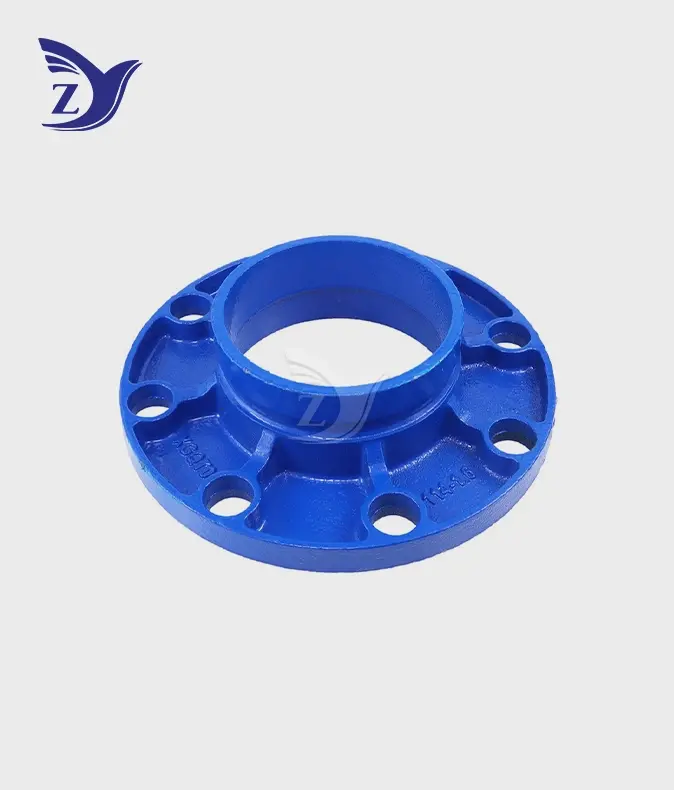
A grooved flange adapter is a transitional fitting that connects pipes with grooved ends to standard flanged equipment like fire pumps, alarm check valves, and pressure-reducing stations. These parts are mostly made of ductile iron that meets ASTM A536 standards. They have a grooved shape on the inside that fits mechanical connections on one side and a normal bolt pattern on the other. The rotatable design lets you change the direction in all 360 degrees before final tightening. This solves the problem of bolt holes not being lined up correctly without having to move the pipe or use a torch.
Weld Neck Flange Construction Principles
Forging methods are used to make weld neck flanges with a curved hub that can be directly butt-welded to pipe ends. The slow change from thick pipe walls to flange necks spreads out stress concentrations, which makes these parts suitable for areas with high temperatures and high pressures. For standard uses, material specs usually refer to ASTM A105 carbon steel. Stainless steel versions are offered for environments that are likely to rust. Dimensional compliance follows ASME B16.5 standards, which means that parts from different certified suppliers can be used interchangeably.
Material and Pressure Rating Considerations
Both types of flanges can handle pressures ranging from Class 150 (300 psi working pressure), which is good for most fire safety systems, to Class 300, which is used for situations with high pressure. The main difference is not the maximum rated pressure but how the parts are installed and how the stress is distributed as a result. When you weld two pieces together, the metals fuse together, leaving no mechanical interfaces. Grooved connections, on the other hand, use compressed gaskets inside mechanical housings to seal.
Key Differences Between Grooved Flanges and Weld Neck Flanges
Installation Methodology and Time Requirements
The most obvious change in how things work is the installation comparison. Grooved flange adapters get rid of the need for hot work permits completely, so crews can make connections with only hand tools in about 15 to 20 minutes per joint. This method of automatic assembly works especially well in buildings with people living in them, near flammable materials, or in places with strict fire watch rules. On the other hand, weld neck flanges need certified welders, welding equipment, and specific steps for inspecting the weld after it's been made. Usually, the whole installation process takes more than two hours per connection, including setting up, welding, cooling, and inspecting.
Flexibility and System Adaptability
Grooved mechanical joints using a grooved flange can handle small misalignments and offer controlled flexibility that accommodates changes in temperature, seismic movement, and pump vibration. This feature lowers the stress transferred to connected equipment and increases the service life of components under changing operating conditions. Weld neck flanges form rigid connections that transmit vibrational energy and thermal stresses directly through the pipe network, which may require other parts of the system design to incorporate expansion loops or flexible joints.
Maintenance and Modification Capabilities
Changes to the system show another useful difference. To take off a grooved flange adapter to service a valve or change some equipment, you have to loosen the coupling nuts. This can be done without any special tools and in less than 10 minutes. Weld neck flange removal requires cutting, new flange welding, radiographic testing in critical applications, and system draining. This turns an easy valve replacement into a job that takes several days and costs a lot of money because of the downtime.
Advantages and Disadvantages of Each Flange Type
Benefits of Grooved Flange Systems
Fire protection contractors and facility maintenance teams that are in charge of moderate-pressure water-based systems can get a lot out of grooved flange adapters. A 50–70% slower installation speed compared to bonded options has a direct effect on project plans and labor costs. For jobs that need more than one flange connection, getting rid of welding costs like hot work permits (usually $200 to $500 per event), fire watch staff, and renting welding tools saves a lot of money. Rotatable alignment stops the frustrating situation of finding misaligned bolt holes after pipe welding is done, which usually means cutting and reworking. Because the link is mechanical, it can be taken apart in the future for service without damaging any of the system's parts. This saves money on maintenance costs over the system's lifetime.
Limitations of Grooved Connections
Boundaries for temperature and pressure are the main limits. Standard EPDM gaskets for grooved systems are only rated for water service up to 230°F. This means they can't be used in steam applications without special high-temperature gasket materials. Class 150 grooved adapters can handle 300 psi working pressure, which is enough for fire safety systems. However, uses that are getting close to the highest ratings need to be carefully looked over by engineers. The mechanical case adds more parts that can loosen bolts, so the coupler tightness needs to be checked on a regular basis. However, current designs with serrated bolt teeth make this problem much less of a problem.
Weld Neck Flange Strengths and Constraints
Weld neck flanges work great in harsh settings with chemicals that are toxic, temperatures above 500°F, and situations where complete leak integrity is more important than ease of installation. The metallurgical bond gets rid of any mechanical interfaces that might come loose after many years of use. The heavier walls of heavy-wall construction can handle higher pressure classes and are better at resisting outside forces like pipe weight or thermal expansion. But this performance comes at a high cost: installation takes longer, costs more, and there are permanent connections that make it harder to make changes to the system in the future. Welding quality differences create weak spots that aren't present in mechanical connections. This is why it's so important to have proper welder certification and inspection protocols.
Application Scenarios & Industry Use Cases
Fire Protection System Installations
Fire safety networks are the best place for grooved flange connections to be used. To connect grooved pipe risers to warning check valves, pressure-reducing valve stations, and fire pump outlet flanges, they need to be sealed well and installed quickly so that the building's occupants don't have to be disturbed too much. Zhiyuan Malleable Steel's Fire Grooved flange meets these needs thanks to its ductile iron frame that can handle 300 psi of working pressure and is suitable with the standard ANSI Class 125/150 bolt patterns found on UL-listed fire safety equipment. Contractors like that they can change the orientation of the bolt holes after they have been placed for the first time. This makes sure that the valve flanges are perfectly aligned without putting stress on the pipe.
As an example, a 12-story business building was retrofitted with mechanical grooved connections that allowed risers to be changed while the building was occupied without hot work permits. The project team completed 18 grooved flange connections on six floors in two working days, compared to the six days that were expected and the need to evacuate the building if soldered flanges had been chosen. This shortened timeframe brought real benefits, including lower labor costs and fewer fines for tenant disruption.
Industrial Process and Water Treatment
Grooved gasket technology is useful for both water treatment plants and industry process systems that work with non-corrosive fluids at normal temperatures. Grooved connections are often used for pump station flanges, flow meter installations, and valve connections in municipal water distribution projects where ease of upkeep and the ability to add on in the future are more important than the small pressure capacity benefits of welded joints. Manufacturers like Zhiyuan Malleable Steel offer a wide range of products, such as elbows, tees, crosses, reducers, clamps, and flange adapters. These products can be bought all in one place, which makes managing the supply chain easier and makes sure that all the parts of the pipe system work together.
High-Pressure and Extreme-Temperature Applications
These days, petrochemical plants, power plants, and oil refineries still use weld neck flanges for tasks that grooved systems can't do. Forged weld neck designs are the only way to make sure that steam lines that work at 600°F and 600 psi working pressure are strong and made of high-temperature materials. Also, services that use corrosive chemicals benefit from not having mechanical gaskets that can break down when exposed to harsh chemicals. This is why welded connections are the best option, even though they are harder to install.
Procurement Considerations for B2B Buyers
Certification and Compliance Requirements
The requirements for the purchase must include the necessary licensing standards to make sure that the code is followed. In the US, fire safety uses need parts that are listed by UL or FM Global. In some cases, extra local authority having jurisdiction (AHJ) approvals may be needed. Having an ISO 9001 quality management system certification means that there are controls in the manufacturing process that help keep the quality of the products consistent. We suggest making sure that sellers give you material test reports (MTRs) that show the chemical make-up and mechanical qualities of ductile iron parts, showing that they meet ASTM A536 standards.
Supplier Evaluation Criteria
Choosing a supplier is more than just looking at unit prices. It also involves production capacity, consistent lead times, and the availability of technical support. Zhiyuan Malleable Steel can produce 30,000 tons of steel every year and has enough stock to support two-hour delivery windows for standard goods. This shows how reliable the supply chain needs to be for keeping building plans. The business has been specializing in casting for 26 years and has a wide range of products that meet more than 1,000 standards. This allows for single-source procurement, which makes buying easier and makes sure that all the parts work together.
Cost Analysis Framework
In addition to the prices of the parts, the total cost of ownership must take into account the cost of labor for installation, the rental of equipment, permit fees, and possible costs for rework. When installation work costs are cut down and welding costs are removed, a grooved flange adapter that costs 15-20% more per unit than an equivalent weld neck flange usually ends up saving money. When negotiating bulk purchases, you should talk about volume discounts, minimum order amounts that are in line with the costs of keeping goods, and payment terms that work with your project's cash flow needs.
Conclusion
When deciding between grooved flange adapters and weld neck flanges, it's important to think about the needs of the application while also considering installation speed, operating conditions, and costs over the life of the product. Grooved connections are better for fire safety systems, water distribution networks, and industrial uses with moderate pressure and temperature ranges because they allow for faster installation, more flexible alignment, and easy maintenance, all of which save time and money on the project. Weld neck flanges are still needed in extreme service conditions that are too harsh for mechanical connections to handle. If procurement professionals know about these performance traits and operational trade-offs, they can choose parts that meet the technical needs of the project, the budget, and the long-term operational goals. This makes sure that the system works well and saves as much money as possible.
FAQ
1. What are the main installation advantages of grooved flanges compared to weld neck flanges?
Grooved flange adapters get rid of the need for welding completely, which cuts installation time by 50–70% by allowing simple mechanical assembly with common hand tools. This method gets rid of the need for hot work permits, the cost of fire watch staff, and the cost of welding tools. It also makes installation safe in busy areas and near flammable materials. The rotatable design lets you change the placement of the bolt holes after they've been placed for the first time. This avoids the expensive repair that usually needs to be done when welded flanges are installed and then find they are out of line.
2. Can grooved flanges handle high-pressure fire protection systems?
Class 150 grooved flange adapters can handle working pressures of up to 300 psi, which is enough for most commercial and industrial fire suppression systems. The static pressure in municipal water supplies is usually between 50 and 80 psi. In high-rise buildings, fire pump discharge pressures can reach 150 to 200 psi. When fitted correctly with the right gasket materials and coupling torque values, these service conditions are well within the limits for grooved connections.
3. How much faster is grooved flange installation?
Grooved flange connections can be made by experienced installation teams in 15 to 20 minutes per joint, while weld neck flange installations take two hours or more to complete, which includes setup, welding, cooling, and inspection. This difference in time gets bigger for projects that need more than one connection. This shortens the schedule, which saves money on labor and keeps facilities running smoothly.
Partner with a Trusted Grooved Flange Manufacturer for Your Next Project
Zhiyuan Malleable Steel has approved grooved flange adapters that are ready to help you with your fire protection and industrial pipe projects. These adapters are made to be reliable and easy to install. We use strict ISO 9001 quality management rules at our factory in Taigu District to make parts from ASTM A536 ductile iron that meet the standards for UL, FM, and CE approval. The full range of products, which includes elbows, tees, crosses, reducers, clamps, flanges, and threaded fittings, makes it possible to buy everything in one place, which makes it easier to coordinate the supply chain and makes sure that all the parts work together.
With 26 years of experience specializing in casting and the ability to produce 30,000 tons of steel each year, we provide the supply stability that is needed to keep construction schedules. Our expert team helps you choose the right parts for your application based on your unique pressure ratings, connection standards, and needs. Mid-sized builders and engineering firms can get what they need at a price they can afford thanks to competitive factory-direct pricing, flexible minimum order amounts, and the ability to customize products through ODM and OEM services.
You can email our procurement experts at q1236800000@gmail.com to get technical advice, thorough product specifications, and quotes that are tailored to your project. Zhiyuan Malleable Steel is your trusted source for grooved flanges for demanding industry and fire protection uses. We invite you to experience our high-quality standards and quick service.
References
1. American Society of Mechanical Engineers. ASME B16.5: Pipe Flanges and Flanged Fittings—NPS 1/2 Through NPS 24 Metric/Inch Standard. New York: ASME Press, 2020.
2. ASTM International. ASTM A536-84: Standard Specification for Ductile Iron Castings. West Conshohocken: ASTM International, 2019.
3. National Fire Protection Association. NFPA 13: Standard for the Installation of Sprinkler Systems. Quincy: NFPA Publications, 2022.
4. Victaulic Company. Grooved Mechanical Piping Systems: Design and Installation Guide. Easton: Victaulic Technical Publications, 2021.
5. Crane Company. Flow of Fluids Through Valves, Fittings, and Pipe—Technical Paper No. 410. Stamford: Crane Engineering, 2018.
6. Factory Mutual Research Corporation. Approval Standard for Grooved Pipe Couplings and Fittings—Class Number 1680. Johnston: FM Approvals, 2023.
Online Message