
Aug 14, 2026
Galvanized Union 330 Pipe Fittings for Easy Pipe Maintenance
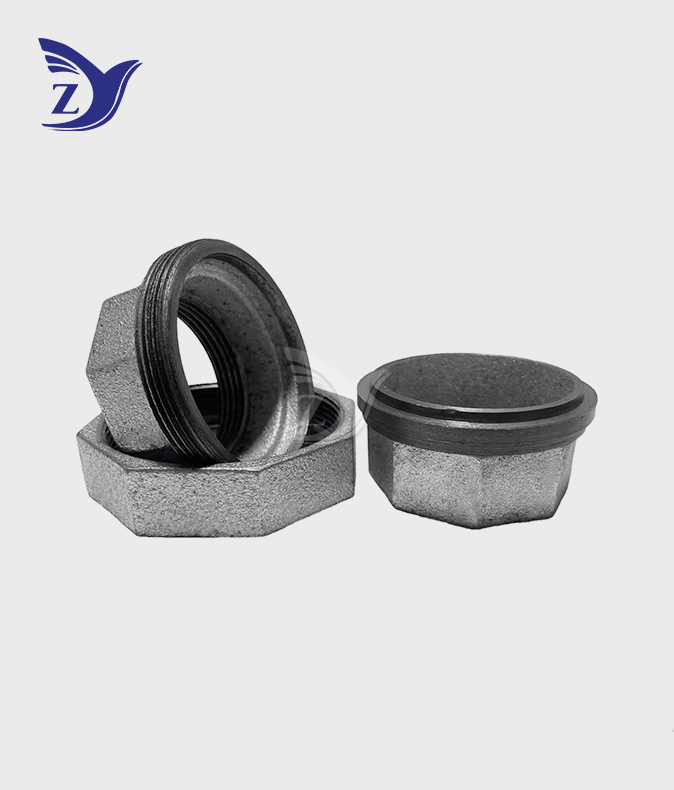
When pipeline systems demand reliability, accessibility, and long-term durability, galvanized union 330 pipe fittings deliver the practical solution that engineers and procurement managers need. These industrial-grade, removable pipe joiners combine hot-dipped galvanized malleable iron construction with precision-threaded NPT/BSPT compatibility, enabling quick disassembly for maintenance without disrupting surrounding pipework. The flat-seat design ensures leak-proof connections in water, gas, and HVAC applications, while the corrosion-resistant zinc coating extends service life even in harsh environments. Whether you're managing municipal water treatment retrofits or commercial HVAC installations, these threaded unions simplify system modifications and reduce costly downtime.
Understanding Galvanized Union 330 Pipe Fittings
Material Composition and Manufacturing Standards
Galvanized union 330 pipe fittings are made of moldable iron castings that are made to ASTM A197 standards. These castings are more flexible and resistant to impact than regular gray cast iron. The first step in making something is carefully controlling the melting in medium-frequency electric furnaces. The metal is then poured into precise molds. After the initial casting, parts are annealed in natural gas-powered kilns at temperatures above 900°C. This turns brittle white iron into pliable iron through heat treatment processes that last 48 to 72 hours.
The "330" number refers to the flat-seat union design standard, which is different from the "340" arrangement, which has conical taper seats. Instead of metal-to-metal contact, this flat joining surface depends on gasket compression. This makes it perfect for uses that need to be taken apart often. Thread profiles meet ASME B1.20.1 for NPT (National Pipe Taper) or ISO 7-1 for BSPT (British Standard Pipe Taper), which means that they can be used with all pipeline systems around the world.
Hot-Dip Galvanization Process
The most important defense against corrosion is the zinc coating that is put on by hot-dip galvanization. After being machined, the fittings are put into liquid zinc pools that are heated to about 450°C. This joins the base iron layer to the zinc layer mechanically. According to ASTM A153, good producers can get coating widths of more than 86 microns (600g/m² total weight), which is a lot better than electro-galvanized options, which usually only get 8–12 microns.
This strong zinc layer protects against cathodic breakdown, giving up to rust before the iron below it does. Third-party tests show that properly galvanized unions don't rust in the air for 20 to 30 years in mild areas and for 10 to 15 years in sea or industrial settings with a lot of chloride.
Certifications and Quality Compliance
Reputable makers use ISO 9001 quality control systems at every stage of production, from checking the raw materials to putting them in boxes for shipping. Other approvals, like CE marking for European markets, UL recognition for North American fire protection uses, and FM approval for sprinkler system parts, show that the product meets strict safety standards.
These approvals lower supply chain risk for B2B procurement pros by making sure that measurements are consistent, pressure ratings are met, and materials can be tracked back to their source. Third-party audits make sure that tests for thread gauge, galvanization thickness, and hydrostatic pressure happen at regular times. This keeps bad products from getting to job sites.
Installation and Maintenance: Ensuring Long-Term Performance
Step-by-Step Installation Guide
To make links that don't leak, you need to be careful when installing threaded union joints. First, use a wire brush to clean off any dirt, rust, or old sealer from the threads on both the pipe and the fitting. Use PTFE tape (3–4 wraps) or pipe joint compound that is rated for the service medium. Be careful not to use too much sealant, as it could get into the system fluids and cause problems.
Tighten the galvanized union 330 pipe fittings tail onto the pipe by hand until you feel resistance. Then, use pipe tools to finish the connection. For NPT threads, tighten them two to three turns more than hand-tight. Keep an eye on the torque to make sure you don't overtighten, which could crack the iron body. The hexagonal flats on the union should be tightened with wrenches of the right size (12 to 18 inches for 1/2" to 1" fittings), and a spare wrench should be used to keep the attached pipe stable so that stress doesn't build up.
Place the gasket (which could be rubber, fiber, or PTFE, depending on its temperature and chemical resistance) on the flat seat, making sure it is lined up in the middle and not folded or pinched. Before applying wrench torque, thread the union nut by hand to make sure it fits properly. Tighten gradually by quarter-turn increments while checking the gasket for alignment and compression. Stop tightening when firm resistance shows that the sealing pressure is right without deformation.
Leak Prevention Through Effective Sealing
With controlled gasket compression, the flat-seat design used in galvanized union 330 pipe fittings makes seals that are reliable. When it comes to conical metal-to-metal seats, which need to be perfectly angled, flat seats can handle small surface imperfections and let you change the seal without any special tools. This design is especially useful for repair situations where the original pipes may be slightly out of round or misaligned.
Pressure testing at 1.5 times the system's highest working pressure should be done during commissioning to make sure the joints are solid. A visual check should show that the seal is compressed evenly around its entire diameter. Any bulging should show that the tightening isn't happening evenly and needs to be fixed. For important uses in fire safety systems or transporting dangerous materials, ultrasonic leak detection equipment gives extra peace of mind before the system is turned on.
Regular Maintenance and Inspection Protocols
Setting up a plan for preventative maintenance increases the life of fittings and improves the efficiency of the system. Visual checks of the zinc coating should be done every three months to keep track of its condition. Any white rust (zinc oxide) formation should be noted as a sign of normal weathering, while red rust means the base metal is being exposed and needs to be fixed. Check for mechanical damage that could make it hard for the threads to engage, such as damage from impacts, vibrations that cause the threads to come loose, or thermal cycling.
Part of the annual maintenance process is taking apart unions to check the state of the gaskets, cleaning the mating surfaces with non-abrasive materials, and changing seals that are worn out. Light wire brushing on thread surfaces gets rid of built-up scale while keeping the galvanization. Before putting the parts back together, reapply the thread sealant according to the manufacturer's instructions. Keep track of all repair activities for legal and guarantee reasons.
Why Choose Galvanized Union 330 Pipe Fittings: Value Proposition for B2B Clients
Real-World Applications Across Key Industries
Galvanized union 330 pipe fittings are useful in many situations, and commercial cooling tower HVAC systems are a good example. In these situations, aerated and chemically treated water creates harsh acidic conditions that would quickly break down ferrous metals that are not protected. The hot-dip galvanized finish can handle this environment, and the removable union design lets you quickly fix the pump and filter without having to cut the permanent pipes. Facility managers say that maintenance time is cut by 40–60% compared to welded connections. This means that climate control problems in occupied buildings are less likely to happen.
Another convincing use case is the retrofitting of municipal water treatment plants. Welding is not allowed in secondary processing lines or areas that handle sludge because of the risk of explosive atmospheres or because of operational limitations. Threaded galvanized unions make it possible to put together complicated pipe networks without heating them up. They also make it easy to add check valves, flow meters, and sample ports. Because the flat-seat gasket design doesn't need to be precisely ground like conical metal seats do, it's easier to change the seals during planned maintenance times. Public utilities that serve more than 50,000 people say that they save an average of $15,000 to $25,000 a year on costs by cutting down on labor and equipment downtime.
Agricultural irrigation systems that work outside in harsh conditions show that galvanized protection lasts a long time. Pumping stations that are connected to field distribution networks have to deal with UV radiation, extreme temperatures, and changes in moisture levels, all of which speed up the breakdown of materials. Zinc coats put on using hot-dip methods stay strong for 15 to 20 years in farm use, and the simple flat-seat mechanism works well at the 20 to 80 psi pressures that are common in irrigation systems. Farmers like how easy it is to take apart the system so that it can be stored for the winter in places where it freezes. This keeps expensive harm from freezing.
Cost Savings and Operational Efficiencies
When you look at the total cost of ownership instead of just the original purchase price, you can find real economic benefits. Galvanized unions cost $4.50 per unit, which might seem more expensive than black iron alternatives that cost $2.80, but they are a better deal because they last longer and need less upkeep. When corrosion causes failures that need immediate fixes, the costs of labor, system downtime, and other damage add up to an average of $800 to $1,200 per event. These costs can be avoided by choosing the right materials.
Another important cost factor that makes threaded unions better than welded joints is the work needed to install them. In most U.S. markets, certified welders get paid $45 to $75 an hour, and making a joint usually takes 15 to 30 minutes, depending on the diameter and how easy it is to get to. Threaded assembly by general maintenance workers for $25 to $35 an hour cuts installation costs by 60 to 70% and gets rid of the need for hot work permits and fire watch costs. These ways of saving time and effort save five figures on projects with hundreds of links.
Quality Testing and Certification Documentation
Professional-grade parts are different from the cheap imports that flood commodity markets because they go through strict quality control processes. Using accurate Go/No-Go tools for thread measuring makes sure that the dimensions meet ASME B1.20.1 standards. This stops cross-threading and leakage problems during assembly. Manufacturers who use 100% thread inspection show a level of quality commitment that goes beyond the statistical sampling that is common in lower-level production facilities.
Using magnetic gauges to check the thickness of the galvanization process confirms that the coating weight meets ASTM A153 standards, which are usually at least 600g/m², which is about 85 microns thick on average. This testing happens several times during production, such as during the post-galvanizing review and the final quality check. The results are written down on certificates of compliance that are sent with packages. Random samples are put under hydrostatic pressure at 1.5 times the rated pressure to make sure the structure stays strong under stress levels higher than normal service conditions.
Spectrographic testing of the material's makeup makes sure that the amount of carbon (2.0–2.5%), silicon (0.9–1.4%), and manganese (0.3–0.8%) that falls within the ranges set by ASTM A197 is correct. The tensile strength, elongation, and impact resistance of a material are all affected by its elemental ratios. These are important factors for pressure-containing parts. Reliable manufacturers give test reports and material certifications that can be linked to specific production batches. This makes it possible to find the root cause of problems in the field.
Conclusion
Galvanized union 330 pipe fittings have been used for a long time because they are strong, don't rust, and are also cost-effective for a wide range of industrial piping needs. The hot-dipped zinc finish will last for decades and is safe for use on water, gas, and HVAC systems. The flat-seat design that can be removed makes maintenance tasks easier that would normally require expensive cutting and welding. Following ASTM and ASME standards makes sure that the dimensions are always the same and that the pressure levels meet strict engineering needs. To make a good purchase, you need to carefully look at the supplier's manufacturing skills, quality certifications, and expert help that is quick to respond and lasts after the delivery.
FAQs
What thread standards are compatible with galvanized union 330 fittings?
These unions can fit both NPT (National Pipe Taper) threads that meet ASME B1.20.1 standards, which are common in North America, and BSPT (British Standard Pipe Taper) threads that meet ISO 7-1 standards, which are common in Europe and Asia. The taper threads make mechanical seals that are strengthened by thread sealants. This makes sure that links between foreign pipeline systems don't leak. When looking for fittings, make sure the thread standard matches the ones you already have in place to make sure they fit properly and close properly.
How long do galvanized unions last in industrial applications?
Service life depends on the environment and how well it is maintained. When unions are put correctly in indoor city water systems, they usually work reliably for 25 to 30 years before the zinc coating wears off and needs to be replaced. Installations outside or in harsh industrial settings shorten the life to 10 to 15 years. Regular inspections and preventative maintenance, such as replacing gaskets and cleaning the surface, make things last longer and find problems before they break.
Can these fittings be reused after disassembly?
The design that lets it be detached lets it be put together more than once, as long as the threads and sealing surfaces stay in good shape. For leak-proof links, replace the gaskets every time you put something back together. Check the threads for galling or deformation that could make sealing less effective, and make sure the zinc coating on the mating surfaces is still in good shape. If you take care of your unions, they can be taken apart and put back together 5 to 10 times before the threads wear out and need to be replaced. This makes them perfect for systems that need to be reconfigured from time to time.
Partner with Zhiyuan Malleable Steel for Reliable Galvanized Union 330 Pipe Fittings
Zhiyuan Malleable Steel is a reliable company that makes galvanized union 330 pipe fittings. They offer industrial-grade parts and have been making them for 26 years, so you can be sure they are of high quality. Our 30,000-ton yearly production capacity meets the needs of large-scale distribution while still allowing us to meet the unique needs of OEMs. Our hot-dipped galvanized unions meet international standards for fire safety, city infrastructure, and industrial piping. They are certified by CE, UL, and FM. Our large inventory means that standard products can be shipped within two hours, keeping your project schedules on track and preventing delays.
We want purchasing managers, system designers, and wholesalers to have the Zhiyuan edge, which includes free technical support and cheap bulk prices. Our engineering team gives you advice on choosing the right fittings, the best ways to install them, and the best ways to keep them in good shape based on your specific operational needs. You can email us at q1236800000@gmail.com to get detailed specification sheets, set up a sample evaluation, or talk about pricing for large orders for your upcoming projects. Visit zymalleablepipefitting.com to explore our complete product catalog spanning malleable iron fittings, grooved couplings, and custom castings engineered for demanding industrial environments.
References
- American Society of Mechanical Engineers. (2020). ASME B1.20.1: Pipe Threads, General Purpose (Inch). ASME Standards Committee.
- ASTM International. (2019). ASTM A153/A153M: Standard Specification for Zinc Coating (Hot-Dip) on Iron and Steel Hardware. ASTM Technical Committee A05.
- ASTM International. (2018). ASTM A197: Standard Specification for Cupola Malleable Iron. ASTM Technical Committee A04.
- International Organization for Standardization. (2021). ISO 7-1: Pipe Threads Where Pressure-Tight Joints Are Made on the Threads. ISO Technical Committee 5.
- National Fire Protection Association. (2022). NFPA 13: Standard for the Installation of Sprinkler Systems. NFPA Technical Committee on Sprinkler System Discharge.
- Zinc Coating Performance Study Group. (2017). Galvanized Steel in Water Service: Corrosion Behavior and Service Life Analysis. Journal of Materials Protection and Performance, Vol. 26, Issue 4.
Online Message