
Aug 18, 2026
Galvanized Reducing Coupling Pipe Fittings for Different Pipe Sizes
When connecting pipes of different diameters in industrial systems, the right fitting makes all the difference. Round face galvanized round edge reducing coupling pipe fittings serve as reliable connectors that transition between varying pipe sizes while delivering corrosion protection through hot-dipped galvanization. These malleable iron fittings combine precision threading—available in both NPT and BSPT standards—with a reinforced round edge design that resists cracking during installation. Whether you're specifying components for fire protection networks, municipal water infrastructure, or petrochemical process lines, understanding how these diameter converters perform in real-world conditions helps you make procurement decisions that balance cost, durability, and regulatory compliance.
Understanding Galvanized Reducing Couplings
What Are Round Edge Reducing Couplings?
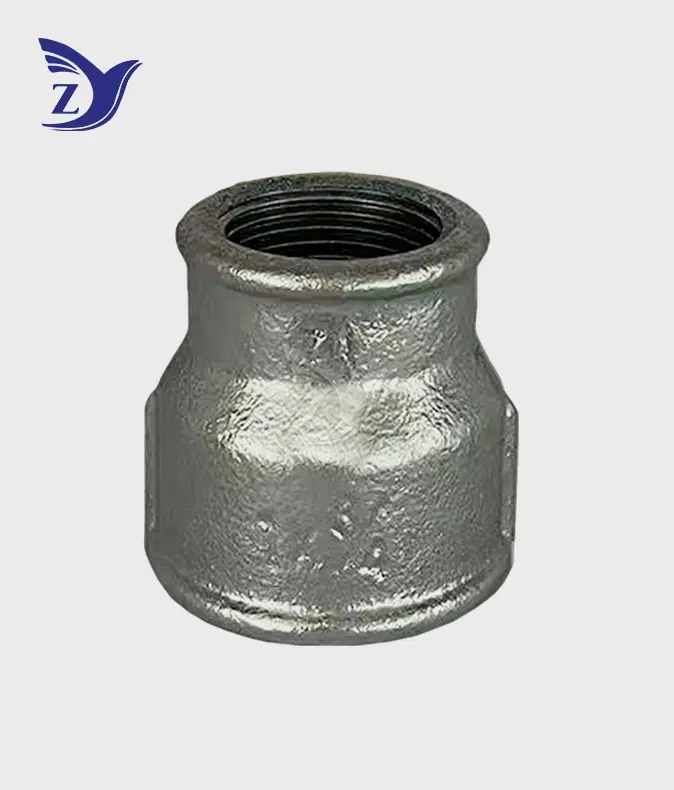
A threaded pipe fitting called a round face galvanized round edge reducing coupling pipe fitting is used to connect two pipes that have different outside diameters. It makes the connection between the pipes smooth. The "round edge" name refers to a reinforced bead at the opening of the fitting that spreads mechanical stress during wrench tightening and keeps the female end from splitting under torque. When workers use leverage in tight areas or when parts go through thermal expansion cycles, this design feature is important.
The pliable iron body is covered with a zinc layer that is usually more than 500 grams per square meter during hot-dipped galvanization. This provides about 70 micrometers of protection. This covering is metallurgically linked and sacrifices itself to protect the iron underneath. This makes it last longer in wet places where bare steel would rust in months.
Size Ranges and Thread Standards
Round face galvanized round edge reducing coupling pipe fittings can handle pipe sizes ranging from 1/8 inch to 6 inches. The bigger port can fit the bigger pipe, and the smaller port can connect to the smaller diameter. If you look at the thread shapes, they either follow the NPT (National Pipe Taper) angle of 60 degrees or the BSPT (British Standard Pipe Taper) angle of 55 degrees. The 1:16 taper ratio causes a wedging action that tightens the connection as you thread it. However, the correct sealant is still needed because metal-to-metal contact alone can't ensure a leak-free joint.
When you order a lot, measurement standards are important. A round face galvanized round edge reducing coupling pipe fitting that says "1 inch × 1/2 inch" means that the 1-inch end links to a 1-inch nominal pipe, not a pipe with a 1-inch outside diameter. Figuring out the difference between nominal and real sizing stops expensive design mistakes that cause projects to run behind schedule.
Industrial Applications Across Sectors
Round face galvanized round edge reducing coupling pipe fittings are used by fire protection contractors to split main distribution lines into smaller ones that connect to individual sprinkler heads. The main lines are 2 inches wide, and the branches are 3/4 inches wide. In dry-pipe systems, where trapped wetness speeds up rust, the galvanized finish meets NFM requirements for corrosion protection. Municipal water departments use diameter transition fittings to connect old infrastructure to new pipe networks. These fittings change the thread standards from old ones to new ones so that whole pipeline segments don't have to be replaced. In HVAC systems, these couplings handle changes in pressure by making pipes smaller as the air handler needs less airflow.
For process pipes that are subject to shaking and mechanical shock, petrochemical plants like the high strength of malleable iron, which can reach 350 to 400 MPa in tensile strength. The annealing process changes brittle white cast iron into malleable iron. This makes sure that the fitting deforms under extreme stress instead of breaking, which is a very important safety feature when moving flammable or toxic fluids.
Comparing Different Types of Galvanized Couplings for Procurement Decisions
Round Face Versus Square Face Design Differences
The difference between round face and square face profiles has effects on both how they look and how well they work as structures. Round face galvanized round edge reducing coupling pipe fittings have a smooth, rounded bead at the opening. They look traditional, which is why they are often used in outdoor plumbing setups where looks are important. The curvy shape spreads impact forces evenly around the diameter, which makes it less likely that the edges will chip when fittings are dropped while being shipped or handled.
In square face designs, there is a rectangular reinforcement band that makes the hoop stronger, which means it can resist pressure from inside the fitting that wants to make it bigger. Both types meet Class 150 pressure ratings, which are 300 psi for water, oil, and gas at room temperature and 150 psi for saturated steam. However, square face couplings are slightly better at resisting expansion forces in high-temperature situations. When aesthetic consistency is important for an obvious pipeline network, procurement managers should choose round face fittings. Square face choices should be saved for hidden systems that need the most mechanical strength.
Galvanized Versus Stainless Steel and Bare Threaded Options
Choice of material has a direct effect on lifecycle costs and how often maintenance needs to be done. For most commercial uses, galvanized malleable iron is the best choice because it is both cheap and resistant to rust. The zinc covering can handle being wet for decades, but it does react slowly with acidic water or places with a lot of chlorine. Stainless steel couplings are better at resisting rust in naval environments or food-grade systems, but they are three to five times more expensive than galvanized options.
Bare black iron threaded reducers are used indoors, where the humidity of the air is managed, for example to distribute natural gas inside buildings. They aren't good for outdoor installations, fire protection systems, or underground pipes, though, because they don't protect against corrosion. The extra cost of galvanization, which is about 15 to 20 percent more than bare iron, is more than made up for by fewer replacements and less work to do on them.
Selecting Coupling Sizes to Match Pipe Diameters
Accurate size selection prevents the most common bulk purchase error: ordering fittings that don't match your pipe's actual threading. Always verify whether your pipes use NPT or BSPT threading before specifying couplings, since mixing the two standards creates immediate leak paths. The 5-degree angle difference means threads engage only partially, damaging both components during installation.
Use thread plug gauges to physically verify your existing pipe threads when upgrading legacy systems. Many older installations used proprietary threading that doesn't conform to modern standards, requiring custom adapters rather than standard round face galvanized round edge reducing coupling pipe fittings. When transitioning between metric and imperial pipe sizes, consult conversion tools that account for wall thickness differences, not just nominal diameter.
Buying Galvanized Round Edge Reducing Couplings
Identifying Reputable Manufacturers and Certified Suppliers
Quality differences between manufacturers have a big effect on how well and how safely something works in the long term. Reliable providers give certificates that show they follow ISO 9001 quality management systems. This makes sure that production processes are always the same and that no faulty castings are made. For round face galvanized round edge reducing coupling pipe fittings going to be sold in Europe, look for the CE mark. For fire safety uses in North America, look for the UL and FM marks. For fittings that come into touch with drinkable water, look for the NSF/ANSI 61 marks.
Buying directly from well-known foundries can save you money and show you exactly what the quality is. Shanxi Taigu Zhiyuan Malleable Steel is an example of a company with a lot of production experience. They started their business in 2006 after 26 years of study into casting. Their 50,000-square-meter building has eight SN KGDX-3500 3-ton medium frequency electric furnaces for precise melting and two 100-ton natural gas annealing kilns that turn castings that are too hard to bend into fittings that are ductile. From molten metal to a galvanized finish, this vertical integration gets rid of the parts of the supply chain where quality control usually falls short.
Pricing Trends, MOQs, and Logistics Considerations
A company's annual production capacity shows how well they can handle big orders without affecting delivery times. Companies that make more than 30,000 tons of specifications every year can handle the different size combinations needed for complicated city projects or multi-phase industrial expansions. Smaller foundries often have trouble keeping enough inventory across the full size grid, so buyers have to settle for partial orders that push back installation dates.
The price of galvanized reducing couplings changes with the global markets for zinc and scrap steel. However, good manufacturers keep prices stable by buying goods in bulk ahead of time. Prices range from $2.50 to $15 per unit, based on the size. As the fitting diameter goes up, the cost per pound goes down. Bulk orders usually get 10 to 25 percent bulk savings when they have more than 5,000 pieces, but big price cuts could mean that quality control has been lowered.
Zhiyuan Malleable Steel's Competitive Advantages
Minimum order amounts depend on the brand and type of products being bought. The minimum order quantity (MOQ) for standard size pairs like 1 inch × 3/4 inch or 2 inch × 1-1/2 inch is often as low as 500 pieces. However, for odd size pairs, the MOQ may need to be 2,000 units to cover the costs of setting up the production line. Distributors offer mixed pallets with lower minimums for each item, but they charge 20 to 35 percent more than what the factory charges.
Lead times from well-known manufacturers are usually four to six weeks from the time an order is confirmed to the time a container is loaded. Ships carrying goods from Chinese ports to U.S. West Coast destinations add three to four weeks, and the current container rates and port congestion make logistics more difficult. Industrial goods freight forwarders are the best people to handle these issues.
Zhiyuan is in Taigu District, Jinzhong City, Shanxi Province. It takes advantage of the area's long history of metallurgy while still meeting current quality standards. Their way of making things is based on strict quality control: thread axis coaxiality checks, 100% pneumatic pressure testing at 0.6 MPa, copper sulfate dip tests per ASTM A239, and flattening tests to confirm malleable iron structure.
Conclusion
Selecting the right round face galvanized round edge reducing coupling pipe fitting requires balancing technical specifications, quality certifications, and supplier reliability. Round face galvanized round edge reducing coupling pipe fittings deliver proven performance across demanding applications when sourced from manufacturers maintaining rigorous quality standards and production capacity. The distinctions between thread standards, face profiles, and material grades directly impact installation success and lifecycle costs, making informed procurement decisions essential for project profitability. By understanding how these diameter transition fittings perform in real-world conditions and partnering with experienced suppliers offering transparent quality documentation, procurement professionals secure the components their systems need to operate safely and efficiently for decades.
FAQ
Can I connect a BSPT coupling to an NPT pipe?
Mixing BSPT and NPT threads creates immediate problems. The 5-degree angle difference between BSPT's 55-degree threads and NPT's 60-degree threads means only the first few threads engage, leaving gaps that spiral outward as you tighten the connection. This damages both components and creates leak paths that no amount of sealant can remedy. Use thread adapters specifically designed to bridge these standards, or ensure all components in your pipeline segment use consistent threading.
What pressure ratings apply to Class 150 fittings?
Class 150 galvanized reducing couplings typically handle 300 psi for water, oil, and gas at ambient temperatures, dropping to 150 psi for saturated steam due to thermal stress effects. These ratings assume proper installation with appropriate sealant and undamaged threads. Operating pressures approaching the rating limit require more frequent inspection, as fatigue accelerates when fittings work near maximum capacity. Applications exceeding these pressures need Class 300 fittings with heavier wall sections and reinforced designs.
Is galvanization safe for potable water systems?
High-grade galvanization using 99.99 percent pure zinc through lead-free processes meets NSF/ANSI 61 certification for drinking water contact. However, regional codes vary, with some jurisdictions phasing out galvanized iron for potable water in favor of brass, bronze, or stainless steel. Verify local regulations before specifying galvanized fittings for new potable water installations. Existing systems with established galvanized networks typically permit replacement-in-kind without material upgrades.
Partner with Zhiyuan Malleable Steel for Reliable Galvanized Reducing Couplings
Every round face galvanized round edge reducing coupling pipe fitting that Zhiyuan Malleable Steel makes is based on our 26 years of experience in casting. Our ISO 9001, CE, UL, and FM certifications and 30,000-ton yearly capacity make sure that your purchasing needs are met with high-quality goods supplied on time. As a reliable provider to fire protection contractors, city engineers, and industrial site managers around the world, we keep a large collection of over 1,000 specifications that can be shipped right away.
Our Taigu facility's vertical integration—from medium frequency melting through galvanization—gives you factory-direct pricing without compromising quality. Whether you need standard NPT configurations, custom BSPT threading, or specialized coatings for harsh environments, our ODM/OEM capabilities adapt to your exact requirements. We stand behind every fitting with our defective product replacement guarantee and responsive technical support team.
Contact our procurement specialists at q1236800000@gmail.com to discuss your project specifications, request samples, or receive volume pricing for your next pipeline installation. Visit zymalleablepipefitting.com to explore our complete product catalog and discover how partnering with an established round face galvanized round edge reducing coupling pipe fittings manufacturer streamlines your supply chain while ensuring the quality your reputation demands.
References
- American Society of Mechanical Engineers (ASME). ASME B16.3-2021: Malleable Iron Threaded Fittings - Classes 150 and 300. New York: ASME Press, 2021.
- British Standards Institution. BS EN 10242:2021 - Threaded Pipe Fittings in Malleable Cast Iron. London: BSI Group, 2021.
- National Fire Protection Association. NFPA 13: Standard for the Installation of Sprinkler Systems, 2022 Edition. Quincy, MA: NFPA, 2022.
- American Water Works Association. AWWA C606-20: Grooved and Shouldered Joints - Standard for Underground Water Mains. Denver: AWWA, 2020.
- ASTM International. ASTM A197/A197M-22: Standard Specification for Cupola Malleable Iron. West Conshohocken, PA: ASTM International, 2022.
- Occupational Safety and Health Administration. OSHA Technical Manual, Section III: Chapter 3 - Compressed Gas and Equipment. Washington, DC: U.S. Department of Labor, 2018.
Online Message