
Sep 28, 2026
Galvanized Cable Tray Elbows: Cost and Quality Factors
When sourcing galvanized cable tray elbows for industrial pipelines, the stakes are high. A wrong choice means costly replacements, downstream returns, and shrinking margins. The hot-dip galvanized round edge 90° elbow stands out as the go-to solution for bulk B2B buyers who need consistent quality, corrosion resistance, and thread precision across large-volume orders. Whether you're supplying water treatment facilities, gas distribution networks, or construction contractors, understanding what separates a reliable fitting from a liability is the first step toward protecting your profit margin.
Understanding Hot-Dip Galvanized Round Edge 90° Elbows
What Makes This Fitting Different
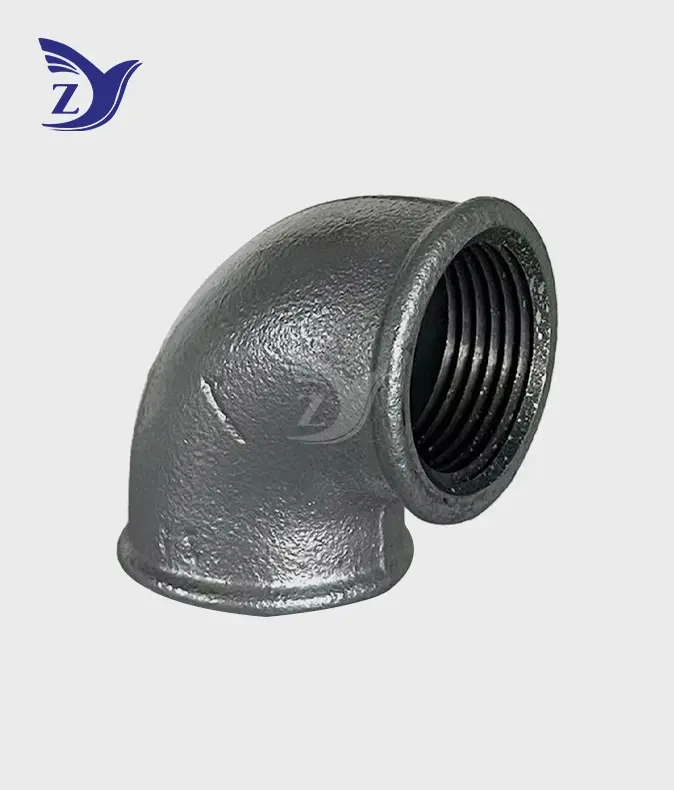
ASTM A197 Black Heart Malleable Iron is used to make the hot-dip galvanized round edge 90° elbow. This gives it a minimum tensile strength of 40,000 psi and enough flexibility to handle mechanical stress during fitting. If you call the "round edge" a "beaded rim," it adds mass to the area around the female opening to make it stronger. This keeps the opening from "bell-mouthing" during high-torque assembly or thermal cycling. This isn't just for looks; it's a structure part that has a direct effect on the pressure readings.
The Hot-Dip Galvanizing Process
When hot-dip galvanizing, the finished casting is put into a pan of melted zinc that is about 450°C. This makes a metallurgical bond between zinc and iron, not a coating on the top, with a zinc layer that is at least 1.3 to 2.0 oz/ft². This makes the corrosion protection 5 to 10 times stronger than electro-galvanized options, which use a thin film that flakes when exposed to the elements. This difference means that there will be fewer warranty claims for wholesalers who serve coastal, farming, or industrial markets.
NPT and BSPT Thread Compatibility
You can get these elbows in two different styles: NPT (ASME B1.20.1, 60° thread angle) and BSPT (ISO 7-1, 55° thread angle, 1:16 taper). It is important to know that NPT and BSPT threads cannot be switched out. Trying to use threads that are not compatible will cause leaks and damage to the threads. NPT is usually what buyers in the US market want, while BSPT is usually what buyers in the Middle East, Southeast Asia, and Africa want. Zhiyuan Malleable Steel keeps both thread standards in stock in more than 1,000 size specs so that wholesalers from different markets can buy everything they need in one place.
Cost and Quality Comparison: Hot-Dip Galvanized vs Alternative Elbow Materials
Upfront Price vs Lifecycle Cost
It costs three to five times more to buy stainless steel elbow than hot-dip galvanized round edge 90° elbow. That gap is a big difference in the margins for bulk wholesalers who buy by the container load. Black steel elbows are cheaper up front, but they rust quickly in damp or outdoor conditions, which costs more in the long run and cuts into earnings. When it comes to practicality, hot-dip galvanized elbows are in the middle. They are cheap on a large scale, and they last for decades under normal industrial conditions.
Round Edge vs Sharp Edge Design
Sharp-edge (plain-rim) fittings are a little cheaper and lighter than plain-rim fittings, but they are only rated for Class 125 uses that aren't very heavy-duty. The round-edge design meets Class 150 / PN20 pressure rates, which means it can handle up to 300 psi of water, oil, and gas (WOG) at temperatures between -20°F and 150°F, and 150 psi of full steam. If a distributor has customers like engineering builders and industrial installers, asking for Class 150 round-edge fittings lowers the chance of standard mismatches and site rejections.
Electro-Galvanized vs Hot-Dip Galvanized
The table below lists the most important differences in real life:
- Hot-Dip Galvanized: Metallurgical bond, zinc layer 1.3–2.0 oz/ft², can be used in wet, outdoor, and industrial settings, long service life 20–50 years, depending on how long they were exposed.
- Electro-Galvanized: Only a thin film of zinc on the surface; only good for dry, indoor settings; usually doesn't last more than 5 years outside.
Hot-dip galvanized is the minimum requirement for any distributor who works with construction, municipal water, or gas pipeline projects. These are not small differences. One of the most common reasons why pipe systems fail early from rust is that the wrong coating type was chosen. This leads to product returns.
Procurement Guide for Hot-Dip Galvanized Round Edge 90° Elbows
Certifications and Standards to Require
When you're looking at hot-dip galvanized round edge 90° elbow providers, make sure they have at least an ISO 9001 quality system certification. CE, UL, and FM approvals give goods that are exported to the US and Europe more trust with buyers. As long as the dimensions are in line with ASME B16.3 (Class 150 malleable iron fittings), the thread contact will meet technical standards. Distributors in regulated markets face a compliance risk when they deal with suppliers who can't provide traceable certification documentation.
Pricing Tiers and MOQ Strategy
The best price per unit is found at 20GP or 40HQ container-load pricing. Responsible sellers use tiered pricing, which means that the price per unit goes down as the number of orders goes up. This kind of pricing directly supports the 30%+ margin goals that many large building materials dealers have. For SKUs that don't move very quickly, getting a mixed-container plan with different fitting types (elbows, tees, couplings, unions, bushings, plugs, caps) can save money on shipping costs and keep you from having to keep too much of a single SKU in stock.
Customization and OEM Capabilities
To protect the value of their brand, distributors need OEM and ODM services from suppliers, such as private labeling, custom packaging, and thread configurations that are specific to each region. Zhiyuan Malleable Steel offers export-standard woven bag and wooden box packing that protects against moisture and rust, as well as marking choices for OEMs. With over 1,000 active product specifications, the company can buy everything from a single source, which cuts down on the costs of managing suppliers.
Installation and Maintenance Best Practices for Hot-Dip Galvanized Elbows
Correct Installation Procedure
Before putting the parts together, cover the tapered threads with PTFE tape or anaerobic pipe sealant. The taper makes a metal-to-metal seal that gets tighter as the part is put together. This is how NPT threads close. When you use a pipe wrench, don't put all of the force on the round edge; instead, use it on the fitting's body. First tighten by hand, then use a wrench to move the part two or three turns to get it in the right place without putting too much stress on the casting.
Maintenance and Inspection Schedule
Check hot-dip galvanized round edge 90° elbows once a year in places that are likely to rust, like coastal areas, chemical exposure, and underground service. If you see white zinc oxide layers, that means the active rust protection is doing its job. Red oxide, which is surface rust, means that the zinc layer is getting thinner and the fitting needs to be replaced. Use water and a soft brush to clean galvanized surfaces. Do not use acidic cleaners, as they will remove the zinc coating. In steam service, look for condensate buildup at the elbow bend. If you don't fix it, this will speed up internal corrosion.
Troubleshooting Common Issues
Most thread leaks at joints that have been put together are caused by one of three things: using the wrong thread standard (NPT into a BSPT port), not using enough sealer, or cross-threading while the joint is being put together. Check that the threads will work together before installing. If a fitting arrives with obvious casting porosity (sand holes), the batch should be thrown away. Porosity in the casting body is a failure in the manufacturing process that can't be fixed by galvanizing.
Real-World Applications and Case Studies
Municipal Water and Irrigation Infrastructure
Hot-dip galvanized round edge 90° elbow is commonly used in exposed water pipes for cities and irrigation systems for farms. Because they are made of malleable iron, they are resistant to mechanical impact. This makes them good for directional changes in above-ground and underground service where pipe movement and earth loads put cyclic stress on the fittings.
Industrial Steam and Gas Distribution
These valves are used on steam distribution lines in petroleum plants and textile factories, where heat expands and contracts all the time. The hot-dip zinc coating protects against the high humidity and industrial pollutants that quickly break down fittings that aren't coated or are only lightly coated. The round-edge support is designed to protect against bell-mouthing in female ports that are heated and cooled many times.
Residential and Commercial Gas Piping
For natural gas lines that go outside in coastal areas, NPT/BSPT round-edge elbows provide the gas-tight thread seal needed by safety codes. They are also galvanized, which stops salt-air corrosion, which is known to be the main reason why residential gas lines break in marine environments.
Conclusion
Choosing the right hot-dip galvanized round edge 90° elbow affects every part of your supply chain, from how much it costs to buy to how well your customer installs it. Round-edge fittings that are hot-dip galvanized have a good price-to-durability ratio that can't be beat by black steel, painted, or electro-galvanized options on a large scale. For bulk distributors who have to deal with demand from multiple markets, different thread standards, and logistics at the container level, the best way to protect their margins and keep customers is to choose a verified manufacturer with a full range of inventory and certifications that can be tracked.
FAQ
Can BSPT and NPT elbows be used interchangeably?
No, BSPT threads are 55° and NPT threads are 60°. Each size also has a different thread pitch. Forcing threads that don't work together to fit together hurts both fittings and makes leak points. Before you place a large order, you should always make sure that the downstream customer needs a certain thread standard.
What zinc coating thickness should I require?
For use in factories and outside, ask for hot-dip galvanized with a layer weight of at least 1.3 oz/ft² (ASTM A153). In humid, coastal, and chemically exposed areas, this is much better than electro-galvanized options and supports long-term corrosion resistance.
Does hot-dip galvanizing affect thread dimensions?
Yes. To keep up with ASME B1.20.1, good makers either slightly expand the threads before galvanizing them or chase them again afterward. When looking at a new provider, you should always ask for thread gage inspection records.
Is this fitting approved for potable water?
If the zinc used is high-grade (99.99% pure) and low-lead, it is legal in many places as long as it meets NSF/ANSI 61 or an equivalent regional standard. Check with your supplier about the certification paperwork before you ask for drinking water service.
What pressure rating applies to round-edge Class 150 elbows?
As per ASME B16.3, round-edge Class 150 malleable iron elbows can handle 300 psi WOG (Water, Oil, and Gas) and 150 psi full steam at temperatures ranging from -20°F to 150°F.
Source Your Hot-Dip Galvanized Round Edge 90° Elbow Supplier Directly
Since 2006, Zhiyuan Malleable Steel has been making pipe fittings out of malleable iron. They can make 30,000 tons of them each year and have more than 1,000 current specs. As a hot-dip galvanized round edge 90° elbow provider, we offer all common sizes in NPT and BSPT configurations that are certified to ISO 9001, CE, UL, and FM. To get factory prices, samples, or OEM packing choices, email us at q1236800000@gmail.com or visit zymalleablepipefitting.com. Standard items are sent out two hours after an order is confirmed.
References
- American Society of Mechanical Engineers (ASME). ASME B16.3: Malleable Iron Threaded Fittings, Classes 150 and 300. ASME, 2021.
- ASTM International. ASTM A197: Standard Specification for Cupola Malleable Iron. ASTM, 2020.
- American Galvanizers Association. Hot-Dip Galvanizing for Corrosion Protection: A Guide for Specifiers. AGA, 2022.
- NSF International. NSF/ANSI 61: Drinking Water System Components — Health Effects. NSF, 2023.
- American Society of Mechanical Engineers (ASME). ASME B1.20.1: Pipe Threads, General Purpose (Inch). ASME, 2022.
- International Organization for Standardization. ISO 7-1: Pipe Threads Where Pressure-Tight Joints Are Made on the Threads — Taper External Threads and Parallel Internal Threads. ISO, 2020.
Online Message