
Jul 28, 2026
Fast Delivery Malleable Iron Long Radius Elbow
Having access to reliable NPT galvanized male female 90° long radius elbow pipe fittings is a must when you need to finish a fire safety project quickly or fix a municipal pipeline right away. These special parts solve a problem that has been bothering industrial pipes for a long time: making changes in direction smoothly while keeping flow rates high and resistance to rust. We at Zhiyuan Malleable Steel have spent 26 years finding the best balance between manufacturing accuracy and fast delivery because we know that the cost of downtime is much higher than the price of any fitting.
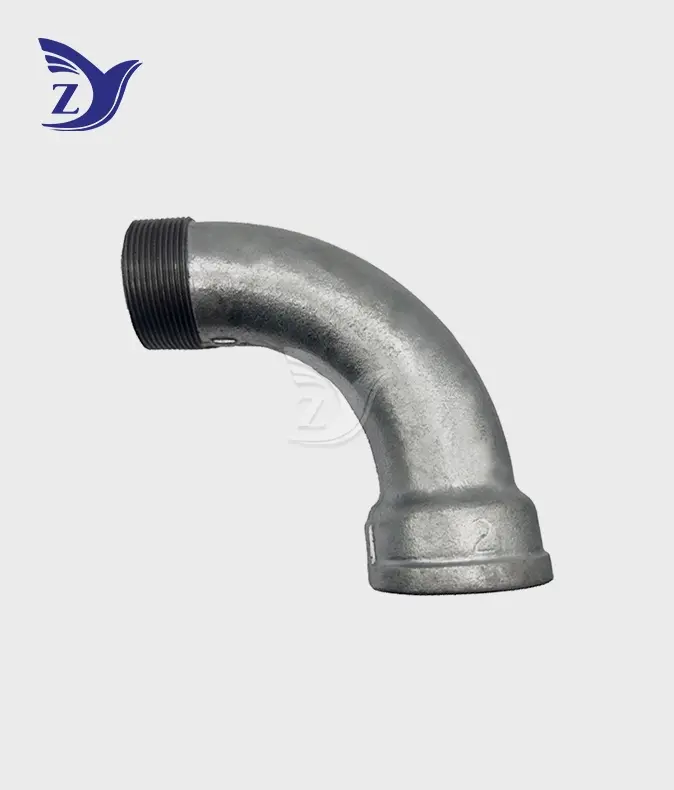
Key Benefits and Performance of Galvanized Long Radius Elbow Fittings
The difference between normal and long radius setups has a huge effect on how well the system works. A short radius elbow turns within about one pipe diameter. A long radius design, on the other hand, makes the curve go all the way to 1.5 times the standard diameter. This difference, which at first glance seems small, has big hydraulic benefits that can be measured in practical benefits.
Reduced Pressure Drop and Energy Savings
Studies in fluid dynamics show that NPT galvanized male female 90° long radius elbow pipe fittings cut down on pressure loss by 30–40% compared to short radius elbows that handle the same amount of flow. The softer shape keeps the velocity profiles more even through the turn by reducing flow separation and turbulence. In a municipal water distribution system that pumps 500 GPM, switching out ten short radius elbows for long radius ones can cut head loss by 8 to 12 feet. This will save the system a lot of money on energy costs over its lifetime. This efficiency is especially helpful for petrochemical plants that work with fluids with a high viscosity, since less turbulence means less shear heating and product damage.
Extended Service Life Through Erosion Mitigation
The outer radius of pipe bends is where erosive forces are concentrated because of turbulence. This makes the wall thinner and thinner until it breaks. Long radius bends have a cleaner flow path that spreads these forces out more widely. This makes erosion rates much slower. We found that long radius fittings lasted 2.3 times longer than short radius ones before they needed to be replaced when used with rough slurries for watering in farms. The hot-dipped galvanized finish adds another layer of protection. The zinc layer creates protective metal films even after the surface is slightly scratched. In coastal industrial facilities, where salty air speeds up corrosion, this combination works especially well.
Pressure Rating and Material Strength
Fittings made of malleable iron that meet ASTM A197 standards have a minimum tensile strength of 50,000 PSI and a minimum yield strength of 35,000 PSI. The setup can handle working pressures of up to 300 PSI for water, oil and gas service when fitted correctly and with the right thread sealant. This is enough for most building mechanical systems and many industrial process lines. The male-female arrangement spreads stress along the whole length of the threaded engagement rather than concentrating it at a coupling joint. This makes the unit more resistant to vibration wear. Fire protection experts like this level of dependability in systems that need to work perfectly even after being turned off for years.
Installation and Measurement Guide for NPT Galvanized Elbows
The right way to fix something starts long before the wrench hits the fitting. Accurate specifications during procurement stop expensive changes in the field and project delays.
Accurate Measurement Techniques
NPT sizes are based on the pipe's approximate inside diameter, not the thread's exact dimensions. The outside width of a "1-inch NPT" fitting's threads is about 1.315 inches. Before placing an order, the standard size can be confirmed using accurate calipers or thread gauges. The threaded plug L1 gauge should be hand-tightened into the female threads until it is finger-tight, leaving a clear "standoff" space. Too much standoff means the threads are too big, while not being able to connect means the threads are too small or broken. This check only takes seconds, but it keeps parts that don't fit from getting to job sites.
Step-by-Step Installation Protocol
Planning is just as important as doing. Use a wire brush to clean all threads and get rid of any manufacturing waste, rust, or other things that could make sealing less effective. Check the female threads in good lighting; dropped fittings that damage the threads will not reliably seal, no matter how good the sealant is. When looking at the male end, wrap the PTFE tape three to four times around it in a clockwise direction. For diameters up to one inch, wrap it four to five times. To keep things from getting into the flow stream, start the tape one thread back from the end.
It should take about four full turns to hand-tighten the thread before you need to use tools. The NPT galvanized male female 90° long radius elbow pipe fittings design makes installations easier in small areas where it's hard to turn the pipe. Place the fitting in the right place, and then use a wrench to tighten it another 1.5 to 2 turns. If you tighten the fitting too much, the female threads can get stressed and the body of the fitting can crack. If you tighten it too little, there are gaps where pressure can push the sealant outward. Installers with a lot of experience get a feel for the right torque, but torque wrenches take the guessing out of important connections.
Troubleshooting Common Installation Issues
When steel tools tighten galvanized fittings too much, zinc particles get stuck between the threads and cause thread galling. This problem can't happen if pipe wrenches have teeth made of brass or aluminum. Leaks that happen during pressure testing are usually caused by not enough sealant coverage or dirty threads. Taking the part apart, cleaning it, and putting it back together again usually fixes the problem. Cross-threading breaks both parts beyond repair; if turning needs too much force in the first two turns, stop and adjust the fitting. By taking thirty seconds to carefully align, you can avoid having to replace expensive equipment port threads.
Why Choose Malleable Iron Galvanized Long Radius Elbows for Your Pipeline?
When material qualities, industrial accuracy, and protective coatings come together, they make a solution that fits well and solves several problems at once.
Real-World Application Success
When installing condensate return lines in pharmaceutical manufacturing plants, industrial HVAC workers have to deal with limited room and corrosion. Compared to standard elbow-plus-nipple assemblies, the male-female design saves 3–4 inches per connection point. This is very important when running pipes through tight ceiling chases. The long radius design stops erosion from high-speed condensate, and the galvanized coating can handle the damp environment. Over the course of five years, one worker said that none of the fittings on 1,200 elbows they put failed.
Petrochemical plants along the coast that process liquefied natural gas have to deal with salt spray that can kill steel in just a few months if it is not covered. Our NPT galvanized male female 90° long radius elbow pipe fittings that were put on instrumentation lines in 2018 showed no measured zinc layer depletion during checks in 2023. This proved that hot-dip galvanization works as a protective layer. Even though nearby compressor equipment was vibrating all the time, the fine threading kept the seals from leaking.
Economic and Environmental Advantages
Longer replacement intervals are very good for maintenance budgets. Municipalities that run water distribution systems found that switching to galvanized long radius elbows cut the number of fittings that needed to be replaced every year by 60%. This freed up maintenance crews to work on other important parts of the infrastructure. Less pressure drop means less energy use. For example, in a big commercial building, a 10-PSI system pressure drop can cut yearly pump operating costs by $800 to $1,200. Over the life of a building, which is 20 years, these saves are much greater than the small premium for long radius designs. The fact that malleable iron and zinc can be recycled is also in line with sustainability goals, since both materials keep their value in scrap markets and recycling them uses less energy than making new materials.
Partner with Zhiyuan Malleable Steel for Your Pipeline Component Needs
With 26 years of ongoing growth, Zhiyuan Malleable Steel has a wide range of production skills that can help you meet your procurement goals. Our Taigu plant has eight medium-frequency electric furnaces that power two 100-ton natural gas annealing kilns. This makes sure that the quality of the metal is the same in every production run. Every batch of the 156-unit machining center is tested with an L1/L2 gauge to make sure that the thread specs meet or beat ANSI standards. Because we care about the environment, we use electric heating systems instead of older coal-fired methods for galvanizing, which makes the coating more uniform.
The standard procurement problem of balancing cost and access is solved by having a large inventory level and being able to change the schedule for production. Standard NPT galvanized male female 90° long radius elbow pipe fittings in common sizes ship within two hours of confirmation of order, so you can make repairs right away without having to pay a lot for fast shipping. Custom specifications get dedicated engineering support, and the ability to make prototypes speeds up the validation process for the product. We can meet tight tolerances and delivery dates because we work with valve manufacturers and full pipeline system integrators as an original equipment manufacturer (OEM).
Quality control goes beyond manufacturing and includes transportation as well. For example, double-layer cardboard packaging covers galvanized surfaces during foreign shipping, which keeps the coating from getting damaged, which would weaken the resistance to corrosion. CE, UL, and FM standards let products be sold all over the world and give project sponsors the proof they need to get their projects approved. When you email our team at q1236800000@gmail.com, you're not only getting in touch with a supplier, but also a technical resource that can help you find the best fitting specifications for your specific needs. Our application support is appreciated by project engineers who have to deal with complicated pipe layouts, and purchasing departments appreciate clear pricing and on-time delivery.
FAQs
Why does the long radius design cost more than short radius elbows?
The longer centerline size needs more raw materials and takes up more room when it's being cast and heated. It's a little harder to make because you need a bigger mould and the machining lines for threading processes are longer. The performance benefits, like lower pumping costs and longer service life, make up for the small premium. In medium- to high-flow uses, the return on investment usually happens within the first operating year. When buying fittings for big jobs, the difference isn't important because of volume price.
Can these fittings handle natural gas service safely?
In the past, natural gas delivery networks have been successfully served by malleable iron when installs followed ASME B31.2 fuel gas codes. The zinc flaking problem is mostly a problem in systems with hydrogen sulphide, which makes zinc sulphide crystals. Normal compositions of natural gas don't pose much of a risk. Some local codes like black iron for gas lines just so they are easier to see when they need to be fixed. Compliance problems can be avoided by checking your jurisdiction's specific rules. Our manufacturing paperwork helps code officials with the approval process.
Conclusion
Selecting the right pipe fitting, you have to weigh the short-term prices against the long-term performance and availability. Our Taigu factory makes NPT galvanized male female 90° long radius elbow pipe fittings. These fittings are the result of decades of metalworking experience used to solve real-world pipe problems. When you put together the mechanical qualities of malleable iron, precision NPT threading, protective galvanization, and optimised flow shape, you get a part that can last for decades and work well in a wide range of situations. Because we keep a large collection and offer customization options, your projects will stay on schedule no matter how complicated the specifications are. Partnerships between companies in different continents and fields—from fire protection contractors in the US to petrochemical plants in Asia—show that this is true. When the success of a project depends on the reliability of its parts and the speed with which the supply chain can respond, we invite you to look at how our procurement services match up with your needs.
References
- American Society of Mechanical Engineers. (2020). ASME B1.20.1: Pipe Threads, General Purpose (Inch). New York: ASME Press.
- ASTM International. (2019). ASTM A197-19: Standard Specification for Cupola Malleable Iron. West Conshohocken: ASTM International.
- ASTM International. (2021). ASTM A153-21: Standard Specification for Zinc Coating (Hot-Dip) on Iron and Steel Hardware. West Conshohocken: ASTM International.
- Hydraulic Institute. (2018). Pump System Optimization and Energy Efficiency in Industrial Applications. Parsippany: Hydraulic Institute Publications.
- National Fire Protection Association. (2022). NFPA 13: Standard for the Installation of Sprinkler Systems. Quincy: NFPA.
- Porter, Frank C. (2016). Corrosion Resistance of Zinc and Zinc Alloys in Industrial Applications. Boca Raton: CRC Press.
Online Message