
Jul 10, 2026
Does 340 union support both NPT and BSPT threads?
It's important to know about thread compatibility when buying industrial pipe fittings for important jobs like fire protection systems, city water lines, or petrochemical sites. This choice can stop problems that cost a lot of money, project delays, and safety risks. A common question among procurement workers and project engineers is whether a single 340 union can fit both NPT and BSPT threads. No is the short answer. Standard NPT galvanized union 340 pipe fittings are only made with National Pipe Taper (NPT) threads that meet ANSI/ASME B1.20.1 standards. If you try to mate NPT and BSPT (British Standard Pipe Taper) threads, the 60-degree NPT thread angle will not work with the 55-degree BSPT thread angle, which could cause the threads to strip and the system to fail. Knowing about this basic mismatch will protect your investment and make sure that the system works reliably.
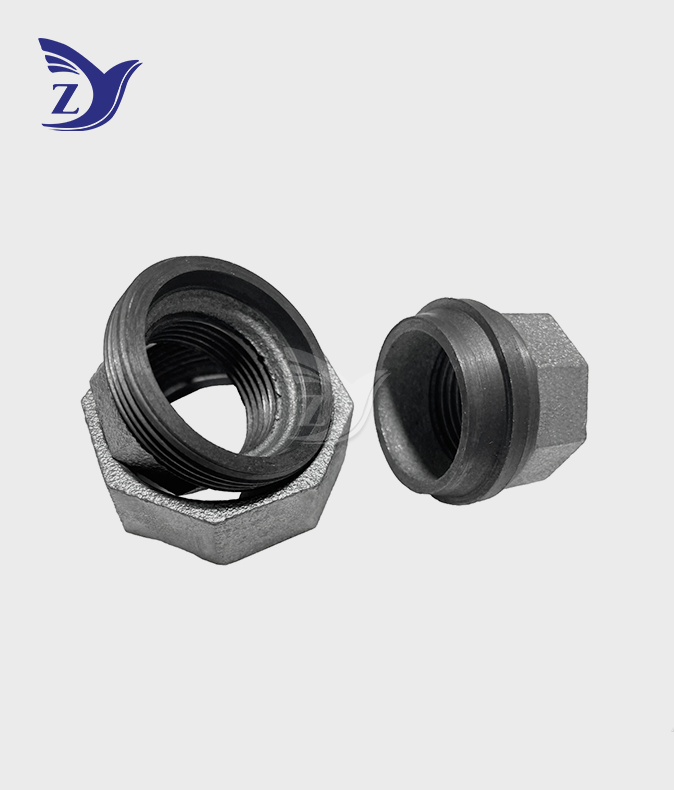
NPT and BSPT Threads in 340 Unions
What Makes NPT and BSPT Threads Different?
The difference between NPT and BSPT threads is not just based on where they are used. NPT threads have a flank angle of 60 degrees and smoothed crests and roots. They are made to make a wedging seal with pipe dope or PTFE tape and thread interference. BSPT threads are popular in Asia, Europe, and countries that used to be part of the Commonwealth. They have a flank angle of 55 degrees and smooth crests and roots. The pitch is also different. NPT uses threads per inch (TPI) standards, such as 11.5 TPI for 1-inch pipe, while BSPT uses Whitworth standards for threads per inch.
Because of these physical differences, you won't be able to force an NPT fitting onto a BSPT pipe. The threads won't connect properly along the sides of the pipe. This makes the connection weak and more likely to break when pressure is applied. This is especially dangerous in systems that distribute gas or put out fires because every connection point has to meet strict safety standards.
Why Thread Compatibility Matters in Industrial Applications
There are clear risks when you mix thread standards. We've seen buying teams order NPT galvanized union 340 pipe fittings for projects that had BSPT pipe equipment, which had to be replaced right away and caused the project to be delayed. Using threads that don't match can get you in trouble with your insurance and lose your certifications in fire protection engineering, where system stability is very important. When growing systems that were built decades ago with British-standard parts, municipal water supply companies face similar problems.
Regional Standards and Sourcing Implications
In North America, NPT threads are mostly used for HVAC, plumbing, and industrial pipes. People still use BSPT threads a lot in the UK, Australia, India, and many other African and Asian areas. Foreign trade companies and shippers that do business in more than one area need to keep separate stocks of NPT and BSPT fittings. This fact makes it even more important to be clear about what you need when you're buying things and to talk to sellers about your exact sewing needs.
Specifications and Material Characteristics of Galvanized Union 340 Pipe Fittings
Technical Specifications You Need to Know
There are three parts to the 340-series union: a tailpiece, a cap, and a threaded collar. It is made of pliable iron. The number "340" refers to the iron-to-iron conical seat form, which makes a seal between metals without the need for covers. Most standard pressure levels meet Class 150 standards, which allow up to 300 psi at water-oil-gas (WOG) working temperatures. The threading accuracy of NPT galvanized union 340 pipe fittings is held to ASME B1.20.1 standards, and sizes run from 1/4 inch to 6 inches.
Accuracy in measurements is very important. To meet strict standards, the thread depth, taper rate (1 in 16 for NPT), and cylindrical seat angle must all be made. Good makers, like Zhiyuan Malleable Steel, machine the threads after they have been galvanized or carefully control the thickness of the zinc covering to keep the threads from interfering with each other and make sure the gauge is met.
Why Hot-Dip Galvanization Makes the Difference
Finished iron parts that can be shaped are immersed in liquid zinc that is about 840°F during the galvanizing process. This forms a metallurgical link between the zinc coating and the base metal. This provides cathodic protection that greatly increases the service life compared to parts that are not galvanized. ASTM A153 standards set a minimum coating thickness that is usually higher than 86 microns. This makes sure that the coating will not rust over time, even in tough outdoor conditions or wet soil that is common in irrigation and waterworks.
This metal finish is especially useful for companies that provide water, gas, and heat that are in charge of equipment that is exposed to harsh weather. The zinc covering gives up its own electrical integrity to protect the pliable iron underneath from oxidation. We suggest steel unions for any situation where they will be regularly exposed to water or where repair is hard to get to and costs a lot.
Certifications That Build Confidence
Manufacturers with a good reputation use ISO 9001 quality control systems and test their goods against ASTM standards. For fire safety uses, look for UL and FM approvals that show the parts meet the requirements for fire safety performance. The CE mark shows that a product meets European safety and environmental standards, which is very important for companies that want to sell their goods in other countries. These certifications aren't just pieces of paper; they're proof that the products were made consistently, with good materials, and that they worked well under stress.
Procurement and Sourcing Strategies for NPT Galvanized Union 340 Pipe Fittings
Identifying Reliable Manufacturing Partners
Being good starts where it comes from. Getting ISO 9001 approval shows that a company is dedicated to using consistent methods and always making things better. Look for providers who have quality control teams that test for airtightness with pneumatics, thread tightness with NPT ring and plug gauges, galvanization thickness with magnetic gauges, and seat angle inspection with light for every NPT galvanized union 340 pipe fittings batch. These quality control rules keep bad goods from getting to your project places.
Customization and the ability to be an OEM
In addition to regular catalog things, being able to offer custom solutions is very valuable. For some projects, non-standard sizes, threading (parallel threads or custom pitches), covering requirements that aren't met by other projects, or marks that aren't used by anyone else are needed. These needs can be met by manufacturers with in-house tech teams and flexible production. OEM services let companies that make valves and whole pipeline equipment put their own labels on their goods or combine fittings into bigger units.
Logistics and Inventory Management
International buyers have special problems getting their packages shipped, through customs, and on time. Manufacturers that have been around for a while know how to handle export paperwork, packing needs, and shipping operations. Double-layer cardboard packing keeps fittings safe while they're being shipped and meets the standards of many countries that allow imports. Customs delays can be avoided by clearly marking the goods, putting them on pallets correctly, and having correct shipping paperwork.
Negotiating Terms That Protect Your Interests
Clear pricing systems help buyers stick to their budgets and compare sellers in a fair way. Quantity prices encourage merging with fewer sellers and reward promises to buy in bulk. Payment terms should be based on the size of the order and how long the connection has been going. Quality promises and policies for replacing broken goods properly spread risk—suppliers who are sure of the quality of their products stand behind them with clear warranty terms.
Conclusion
When asked if a 340 union works with both NPT and BSPT threads, the answer is clear: no single fitting can handle both standards because of differences in the way the threads are shaped. To make a successful purchase, you must describe the right thread type for your use and location. When bought from a good company and put together correctly, NPT galvanized union 340 pipe fittings work well and don't cost too much in water, gas, and steam uses in industry. The conical iron-to-iron seat shape seals better without covers, and hot-dip galvanization makes sure it will last for decades. Your projects will be successful in the long run if you understand the requirements, compare your options, and work with reputable sources like Zhiyuan Malleable Steel.
FAQs
Can I adapt an NPT 340 union to work with BSPT pipe?
No, connecting NPT fittings to BSPT pipe makes the joints dangerous. The thread angles (60° vs. 55°) and pitches are not the same, so they don't touch properly. When mixed threading is necessary, the right way to switch between standards is to use adapter bushings or joints, even though they add connection points and possible failure modes.
What pressure ratings should I expect from galvanized 340 unions?
Fittings in Class 150 can handle 300 psi at room temperature and can be used for gas, oil, and water. Check the manufacturer's pressure-temperature charts to see how pressure numbers change as temperatures rise. For tough jobs, you can get Class 300 unions that can handle higher pressures. Always make sure that the grades fit the needs of your system and the laws in your area.
How do I verify thread compatibility before installation?
You should use NPT thread gauges, with ring gauges for outside threads and plug gauges for inside threads. With the right NPT threads, the gauge can move forward a certain number of turns (which depends on the size) without using too much force or becoming free. All installs should start with a visual check for thread breakage, proper taper, and a clean state.
Partner with Zhiyuan Malleable Steel for Quality NPT Galvanized Union 340 Pipe Fittings
It's important to choose an expert NPT galvanized union 340 pipe fittings maker when your project needs threaded unions that you can count on. Every product made by Zhiyuan Malleable Steel is backed by their 26 years of experience casting and their strict ISO 9001 quality management. Our 30,000-ton-per-year ability helps industrial companies, fire defense contractors, and municipal building firms around the world. We are in Shanxi Province, which is close to the airport, and we can send standard goods within hours. For special needs, we can also do OEM customization. Before it is shipped, every fitting is tested for air pressure, thread marking, and galvanization thickness. Our double-layer cardboard boxes keep items safe while they're being shipped internationally, and our CE, UL, and FM ratings make sure they meet the standards in your area. You can email our team at q1236800000@gmail.com or go to zymalleablepipefitting.com to talk about your needs. Because your success is what makes us a trusted supplier in the pipe fitting business, we replace broken goods without question and offer expert help throughout the lifecycle of your project.
References
- American Society of Mechanical Engineers. ASME B1.20.1: Pipe Threads, General Purpose (Inch). New York: ASME Press, 2013.
- ASTM International. ASTM A153/A153M: Standard Specification for Zinc Coating (Hot-Dip) on Iron and Steel Hardware. West Conshohocken: ASTM International, 2016.
- British Standards Institution. BS 21: Specification for Pipe Threads for Tubes and Fittings Where Pressure-Tight Joints Are Made on the Threads. London: BSI Standards Publication, 2005.
- Nayyar, Mohinder L. Piping Handbook. 7th ed. New York: McGraw-Hill Professional, 2000.
- American Water Works Association. AWWA Manual M11: Steel Pipe—A Guide for Design and Installation. 4th ed. Denver: American Water Works Association, 2004.
- Smith, Peter R., and Thomas J. O'Brien. Malleable Iron Castings: Properties, Processing, and Applications. Materials Park: ASM International, 1998.
Online Message