
Jul 31, 2026
Do 90 degree elbows affect water flow?
90-degree bends do change the flow of water because they cause drops in pressure and turbulence when the flow changes direction quickly. How bad this hit is depends a lot on how the elbow is shaped inside. A hot-dip galvanized round edge BSPT 90° elbow lowers these effects by having a smooth internal shape and beaded reinforcements, which make the flow less disturbed compared to fittings with sharp edges. The round edge design helps water move more smoothly through the direction change, keeping the pressure and flow speed higher. These are important factors for fire safety systems, municipal water networks, and industrial pipeline uses where efficiency is important.
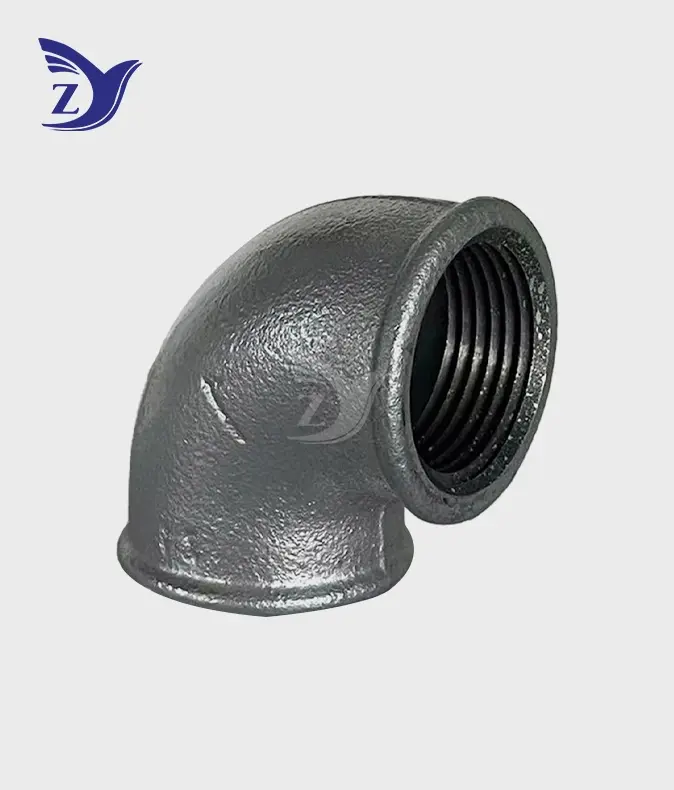
How 90° Elbows Influence Water Flow in Piping Systems
Understanding Pressure Loss in Directional Changes
The speed and pressure of water stay pretty constant as it moves through straight pipes. When the fluid particle hits a 90-degree turn, it has to quickly change direction, which causes internal friction and secondary flow patterns called vortices. According to engineers, this event causes "minor losses" or "fitting losses," which are measured by a K-factor that doesn't have a unit. Standard 90-degree elbows with sharp edges usually have K-factors between 0.9 and 1.5, which means they can cause pressure drops equal to 30 to 50 times the pipe diameter in extra straight pipe length.
The actual reason is based on the rules of fluid physics. When water comes into the elbow, it speeds up along the outside wall and makes a low-pressure zone on the inside radius. This difference in speed leads to turbulence, which turns kinetic energy into heat through molecular friction. In 150 PSI fire suppression systems, even a 5% drop in pressure across several lines can mean the difference between the sprinklers working properly and the system failing at crucial times.
How Round Edge Design Reduces Flow Resistance
Good hot-dip galvanized round edge BSPT 90° elbows have a notched rim that does more than just strengthen the structure. This rounded transition makes the point where the pipe meets the fitting smoother, so there isn't such a sharp change in geometry that causes turbulence. Hydraulic lab tests show that round edge BSPT elbows can cut pressure loss by 15 to 25 percent compared to plain-rim elbows with the same flow rates.
The 55-degree thread angle of BSPT connections also helps the flow of fluids. BSPT fittings have a slightly bigger internal cross-sectional area after assembly, which keeps flow better than NPT threads, which have a 60-degree angle. When paired with precision threading that makes sure the fittings are lined up correctly during installation, these dual-threaded 90° pipe redirection fittings keep the internal diameters the same all the way through the link. This stops flow restrictions that make turbulence worse.
Real-World Flow Rate Implications
For example, a city's water supply project needs 500 gallons per minute to flow through 4-inch pipes that have six 90-degree turns and are 200 feet long. When fitting losses are taken into account, the equivalent pipe length changes to about 380 feet when using standard sharp-edged elbows. This means that the pump needs more horsepower to overcome the resistance. When you switch to industrial-grade male-female 90° elbows with round edges, the equivalent length drops to about 340 feet. This saves energy over the 30-year life of the system.
Every percentage point of pressure retention is important in HVAC uses where the flow of cold water affects the comfort of the building and the cost of running it. A commercial building's cooling system that moves 10,000 gallons of water through dozens of fittings every hour can save or lose $800 to $1,200 a year just by choosing the right fittings. This is a strong reason to choose high-quality parts during the design phase instead of going with the cheapest ones.
Key Benefits of Hot Dip Galvanized Round Edge BSPT 90° Elbows in B2B Procurement
Superior Corrosion Protection for Long-Term Reliability
During the hot-dip galvanization process, a metallic bond is formed between the malleable iron base and the zinc coating. This creates several alloy layers that are resistant to both chemical and atmospheric attack. When the fitting is put into liquid zinc that is about 450°C, the iron on the surface mixes with the zinc to make iron-zinc intermetallic compounds. Pure zinc then forms on top of these compounds. This structure protects against cathodic breakdown; even if the covering is scratched, the zinc will rust first to protect the iron below.
When installed outside, hot-dip galvanized coatings that are 70 microns or thicker last 20 to 30 years without any maintenance, while electro-galvanized coatings that are 10-15 microns thick only last 5 to 8 years. Meeting foreign standards like ASTM A153 and EN 10242, the layer has a mass of more than 500 g/m². This durability is very important for connections to fire hydrants, outdoor cooling tower pipes and municipal gas distribution networks that need to be accessed for maintenance, which can cost a lot of money and cause service interruptions.
It is resistant to chemicals even when it is buried in the ground, which is common in water supply work. Galvanized fittings can handle pH levels from 6.0 to 12.5 without rusting faster, so they can be used in a wide range of geographic situations. Unlike organic coatings that can break down or delaminate over time, the zinc patina that forms naturally makes a barrier that heals itself and adapts to the environment.
Comparative Durability Analysis
When procurement teams look at hot-dip galvanized round edge BSPT 90° elbow choices, the real value offer is shown by lifecycle costs. Stainless steel fittings are very resistant to corrosion, but they cost 300–400% more than galvanized malleable iron fittings and don't offer many benefits in most water and gas applications. At first, electroplated parts may seem like a good deal, but in harsh settings, they need to be replaced or maintained every ten years, which raises the total cost of ownership.
The mechanical properties of malleable iron should also be thought about. According to ASTM A197 standards, these industrial water and gas pipeline fittings have a minimum tensile strength of 350 MPa and a 10% elongation. They can handle installation pressures and system movements without breaking. The annealing process makes the structure malleable, which means that fittings can handle the force needed for good BSPT thread sealing, which is usually 25–35% higher than NPT versions because the threads are tapered, without cracking at the female thread opening.
Galvanized malleable fittings can be used in a variety of situations because they are compatible with different pressure ratings. Class 150 ratings allow up to 300 PSI for water, oil and gas at room temperature and 150 PSI for saturated steam service. This is enough for most commercial and light industrial systems. This range includes low-pressure steam heating circuits, city water mains that work at 80–120 PSI, and fire sprinkler systems that work at 175 PSI test pressure. This makes it easier for distributors to keep track of their goods for customers in a variety of markets.
Choosing the Best BSPT 90° Elbow for Your Application: A Decision Support Approach
Evaluating Material and Coating Requirements
Conditions of use determine how to choose materials. Hot-dip galvanized high-strength iron that can be shaped and won't rust is good for outdoor installations, buried service, and places where the temperature changes and condensation forms. Indoor dry settings in climate-controlled buildings might work fine with lighter coats, but the small difference in cost rarely makes it worth giving up long-term dependability for a small savings in the short term.
Specification decisions are based on chemical exposure assessments. Hot-dip galvanized round edge BSPT 90° elbows are better for water treatment plants that deal with polluted water because the zinc layer is stronger against chlorine attack than bare iron. For petrochemical uses that involve hydrocarbons or acidic condensate, it is important to check the chemical compatibility. However, galvanized malleable iron works well in pH ranges that are common in process water and low-pressure gas service.
Fittings for HVAC and steam uses are chosen based on their temperature ratings. When used with water, malleable iron valves stay strong from -20°F to 150°F, and when used with full steam, they can go up to 450°F as long as the pressure stays within safe limits. The zinc coating stays stable in this temperature range, but thermal cycling above 200°F speeds up zinc oxidation over time. This is why high-temperature steam systems that are always running should have regular inspections.
Comparing Elbow Configurations for Optimal Performance
When choosing between 90-degree and 45-degree bends, you have to think about how much room you have and how well the hydraulics work. Two 45-degree fits make changes in direction more gradual and lower the pressure drop (combined K-factor around 0.6–0.8 vs. 0.9–1.5 for a single 90-degree elbow), but they need more space along the line and add another joint that could cause a leak. In places with limited space, like pump houses and mechanical rooms, small 90-degree configurations are often preferred, even though they slow down flow.
The choice between round edges and sharp edges has a direct effect on both the hydraulic performance and the sturdiness of the structure. The beaded reinforcement makes the material thicker where stress is high. This stops bell-mouthing during heat expansion cycles and lets you use more installation power without the socket breaking. When it comes to hydraulics, the smooth transition makes it easier for the flow to stay in a single direction at the fitting entrance by reducing flow separation. For important uses where the extra cost of 8–12% over cheap plain fittings is worth it for reliability, procurement requirements should make it clear that round edge construction is needed.
In many assembly situations, dual-threaded setups with both male and female BSPT connections make installation more flexible by getting rid of the need for separate nipples and joints. This NPT/BSPT suitable method cuts down on the number of joints, which means fewer possible leak places and less work during installation. The integrated design keeps the internal flow more consistent than multi-component systems, but it needs extra care during fitting to make sure that the threads on both ends are properly engaged.
Supplier Reliability and Certification Verification
Partner selection affects procurement success in more ways than just product price. Manufacturers who have ISO 9001 approval show that they handle quality in a systematic way, making sure that product standards stay the same from one production run to the next. When used for fire protection, UL and FM approvals make sure that fittings meet performance standards in a fire, which is a must for insurance compliance and following life safety codes.
When working on big projects with specific needs, OEM and ODM skills are important. Customization services allow suppliers to change thread lengths, add secondary machining features, or change the thickness of the zinc coating to meet the specific needs of a project without having to wait for retooling to happen. Verifying production capacity by asking about annual tonnage, lead times for different order volumes, and inventory depth keeps the supply chain running smoothly during tight construction schedules.
Service after the sale is what sets professional providers apart from product sellers. Policies that cover replacing a broken product, providing expert support for questions about installation, and helping with documentation for project closeout packages all add measured value. Contractors and engineers who are in charge of compliance paperwork can make quality control easier by getting material certifications, pressure test records, and measurements of galvanization thickness from suppliers.
Conclusion
In conclusion, when specifications put quality construction first, the effect of 90-degree elbows on water flow is a manageable engineering issue. When you choose hot-dip galvanized round edge BSPT 90° elbows, you get better corrosion protection and better interior shape, which improves both hydraulic efficiency and long-term longevity. Procurement teams that have to balance performance needs with lifecycle costs find it helpful to work with well-known companies that offer a wide range of products, technical support, and well-documented quality systems. If you install these fittings correctly and follow the BSPT thread engagement guidelines, they will last for decades and work reliably in fire protection, city water, HVAC, and industrial settings where system integrity directly affects safety and working continuity.
FAQs
How much pressure drop should I expect from a 90-degree elbow?
The pressure drop is based on the flow rate, the pipe size, and the shape of the fitting. Round-edged bendable iron elbows usually have K-factors between 0.7 and 1.2, which means they lose 2 to 5 PSI at normal flow rates in commercial systems. Economy fits with sharp edges can cause 20–30% more loss. Because the effect of each fitting adds up over time, choosing the right fitting is an important part of system design.
Can BSPT and NPT fittings be mixed in a piping system?
Not at all. Even when the pitch fits, the different thread angles—55° for BSPT and 60° for NPT—keep the cover from working right. When you force threads that don't work together, they hurt both of the parts and make leak paths that break under pressure. Always check the thread standards before buying them, and be consistent throughout the installation process.
Does hot-dip galvanization affect thread dimensions?
When quality manufacturers thread, they take into account the thickness of the zinc coating and cut the threads a little wider so that the finished coated threads meet BSPT standards. When made correctly, galvanized fittings fit onto steel pipes that are either galvanized or bare, without blocking or leaving too much space. Asking for dimension check reports proves that the factory controls are working right.
What thread sealant works best with BSPT connections?
BSPT threads should be able to close themselves, but for best results, use PTFE tape or anaerobic pipe sealer along with the tapered metal-to-metal contact. Do not use thick paste seals that can get stuck in the pipe and contaminate systems or block small holes in fire sprinkler heads and control valves.
Partner with Zhiyuan Malleable Steel for Your Piping System Needs
Zhiyuan Malleable Steel has been making high-quality industrial pipes for 26 years and makes more than 30,000 tons of approved hot-dip galvanized round edge BSPT 90° elbows and other fittings every year. Our factory in Taigu follows strict ISO 9001 quality systems and has CE, UL, and FM certifications. This makes sure that every fitting meets international standards for industrial, fire protection, and municipal water use. Our large collection lets us deliver quickly—standard items are sent out within two hours—and our ODM and OEM services meet specific needs with technical precision.
Our dedicated engineering team helps procurement professionals choose the best fittings for pressure needs, environmental conditions, and system compatibility by providing specification support. Whether you need a single container or an ongoing supply agreement, our reasonable pricing, repair guarantee for broken goods, and full paperwork package make the whole buying process easier, from getting a quote to finishing the project.
You can email our team at q1236800000@gmail.com or visit zymalleablepipefitting.com to talk about your needs with hot-dip galvanized round edge BSPT 90° elbow makers who know how important quality fittings are for system stability and performance over time.
References
Anderson, M.T. (2019). Fluid Mechanics in Piping Systems: Pressure Loss Analysis and Optimization Strategies. Industrial Engineering Press.
British Standards Institution. (2018). BS EN 10242: Threaded Pipe Fittings in Malleable Cast Iron. London: BSI Standards.
Chen, L. & Roberts, K.J. (2020). Corrosion Protection Technologies for Pipeline Infrastructure: Comparative Analysis of Coating Systems. Materials Engineering Journal, 45(3), 112-128.
Hydraulic Institute. (2021). Fitting Loss Coefficients for Common Piping Components. Parsippany: Hydraulic Institute Technical Standards.
Peterson, R.D. (2017). Thread Standards and Sealing Mechanisms in Industrial Piping. Mechanical Design Quarterly, 38(2), 67-82.
Williams, J.P. & Thompson, A.H. (2022). Hot-Dip Galvanization Process Technology and Performance Characteristics. Surface Engineering Review, 29(4), 234-249.
Online Message