
Aug 7, 2026
Complete Guide to BSPT Square Edge Galvanized Reducing Coupling Pipe Fittings
When handling industrial pipeline projects, picking the right link parts is what makes the difference between a system that works reliably for decades and one that breaks down early. BSPT square face galvanized square edge reducing coupling pipe fittings connect lines of different sizes and keep their leak-proof integrity even when they are under pressure. These bendable iron fittings have British Standard Pipe Taper threading, hot-dip galvanization, and strengthened square edge construction. This three-part engineering design solves common problems in the industry, such as thread seizing, rust failure, and installation issues. For systems to last longer and be safer to use, procurement workers in fire protection, local water systems, and industry buildings need to know these fittings' technical specs and how they can be used in real life.
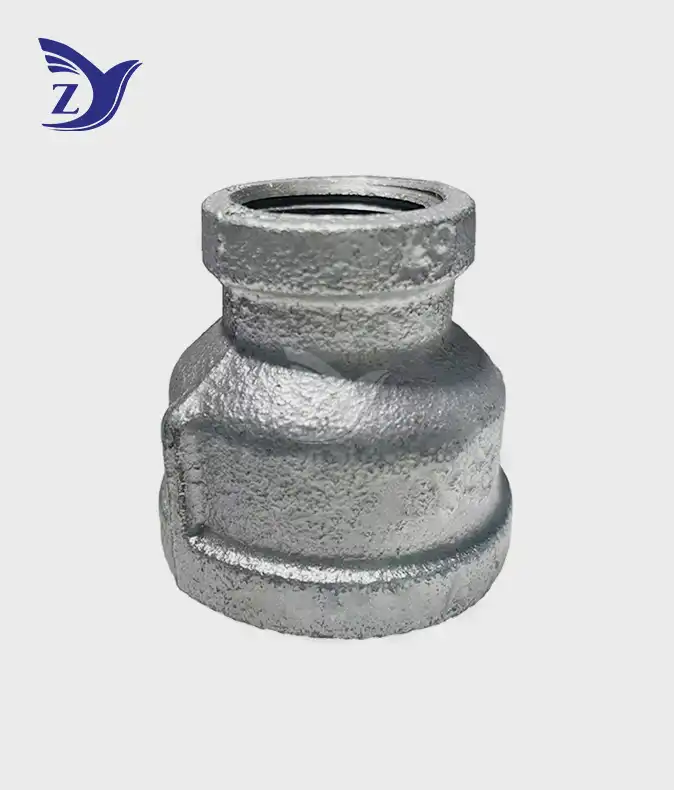
Understanding BSPT Square Edge Galvanized Reducing Couplings
What Defines a BSPT Threaded Reducing Coupling?
A BSPT square face galvanized square edge reducing coupling pipe fitting joins two male-threaded pipes of different sizes together with threads. The British Standard Pipe Taper (BSPT) thread profile has a 55-degree thread angle and a 1:16 taper ratio. This makes a device that seals itself when pressure is applied. This tapered design gradually contracts during installation, unlike parallel thread systems. This creates a metal-to-metal seal that can handle pressures up to 25 bar (362 psi) in most situations.
The term "square edge" refers to the strong band that goes around each hole. Installers have been having a problem for a long time: normal beaded fittings break when the wrench is tightened. This structural feature fixes the problem. The square face adds extra material thickness and better gripping areas for pipe tools, which speeds up installation and prevents expensive damage during assembly.
How Hot-Dip Galvanization Protects Your Investment
During hot-dip galvanization, a zinc covering thicker than 70 microns (about 500g/m²) is put on a base of pliable iron. Compared to electroplating ways, this process protects against rust much better. The zinc layer acts as a sacrifice anode—when it comes in contact with water or harsh chemicals, it corrodes more quickly than the iron structure below, defending it. Studies in the field show that properly zinc fittings keep their structural integrity for 20 to 30 years in outdoor city water systems. This is compared to only 5 to 8 years for fittings that are not protected in the same conditions.
The service life is directly related to the amount of the coating. According to ISO 1461 guidelines, parts used outside need at least 55 microns of zinc coverage, but lighter coatings may work fine for indoor uses. When choosing parts for chemical processing plants or seaside areas, it is important to check the thickness of the zinc coating using magnetic induction tests to make sure they will work well for a long time.
Material Properties and Manufacturing Standards
For high-quality reducing joints, W400-05 or W350-04 types of malleable cast iron that meet ISO 5922 or EN 1562 standards are used. These grades have tensile strengths between 350 and 400 MPa, which means the fitting will stay structurally sound even when it expands or contracts due to temperature changes, shaking, or mechanical shock. The process of malleabilizing heat treatment turns white cast iron from a brittle metal into a flexible material that can take pressure without breaking.
When making threaded parts, manufacturing accuracy is very important. According to ISO 7-2 guidelines, thread measure makes sure that the chamfer angles and taper depth are correct. Dimensional differences as small as 0.2 mm can make closing less effective. Manufacturers with a good reputation, like Zhiyuan Malleable Steel, use multiple levels of quality control. For example, they use pneumatic testing at 5 bar and hydraulic testing at 20+ bar to find casting cracks before galvanization.
Comparing BSPT Couplings with Other Pipe Fitting Options
BSPT Square Face Versus Round Face Design Differences
When it comes to placement, BSPT square face galvanized square edge reducing coupling pipe fittings are much better than round face fittings. When rotating during assembly, the flat sides of square edges spread pressure more evenly across the jaws of the wrench, making it less likely that the tool will slip. This is especially helpful when working with parts that have a width of 2 inches or more and need a lot of force to properly engage the threads.
In addition to making installation easier, the square edge strengthens the fitting's structure at its weakest point—the threaded hole, which is where stress builds up. The extra mass of the material makes the hoop stronger, which means that the connection can withstand growth forces caused by changes in internal pressure or temperature. Testing shows that square edge designs can handle about 15 to 20 percent higher burst pressures than round face fittings of the same type.
Galvanized Steel Versus Stainless Steel Cost-Benefit Analysis
When choosing a material, you have to weigh the costs up front against the costs over its lifetime. When bought for the first time, galvanized malleable iron parts usually cost 30 to 40 percent less than 304 stainless steel versions. But this lower cost must be set against the rust problems that come up in certain situations. Galvanized valves last as long as stainless steel ones (25 years) in drinkable water systems with pH levels between 6.5 and 8.5 and a modest amount of chloride. They cost a lot less, though.
On the other hand, setups using fluids that are very acidic or basic (pH below 5 or above 10) speed up the breakdown of zinc coating. Chemical processing plants and wastewater treatment plants often have good reasons to use stainless steel, even though it costs more. The decision process should include a study of the fluid chemistry, an estimate of how long the system will last, and easy access to replacement parts. Replacement work costs for buried pipes are higher than for accessible above-ground systems. This could tip the economic balance in favor of more expensive materials.
BSPT Versus NPT Thread Standard Compatibility
Knowing the differences between thread standards can help you avoid making costly compatibility mistakes. Both BSPT and NPT use tapered shapes for closing, but there are important differences in the sizes. The flank angle of an NPT thread is 60 degrees, while the flank angle of a BSPT thread is 55 degrees. The thread pitch is also different. A 1-inch BSPT thread has 11 threads per inch, while a 1-inch NPT thread has 11.5 threads per inch. Because of these physical differences, BSPT and NPT parts should never be force-mated, even if they look a lot alike.
Cross-threading BSPT and NPT fittings makes leak paths right away and increases the chance of stress cracks over time. The thread angles aren't suitable, so the sealing surfaces can't make good touch with each other. This means that thread sealant is the only way to stop leaks, which isn't really an option. When buying from foreign sellers, procurement teams must carefully check thread standards. It is clear what the rules are when you ask for dimensional inspection records that prove compliance with EN 10226 (BSPT) or ASME B1.20.1 (NPT).
Installation and Application of BSPT Square Edge Galvanized Reducing Couplings
Step-by-Step Installation Procedures for Leak-Free Connections
Preparing the threads is the first step in a proper operation of BSPT square face galvanized square edge reducing coupling pipe fittings. Check the internal threads of both the coupling and the pipe for dirt, rust, or flaws in the way they were made. Remove any dirt or debris with a wire brush and check the thread gauge fit. You should be able to hand-thread the pipe at least two full turns before you need to use a wrench. Before the sealant is applied, this basic check finds problems with the dimensions.
Follow the directions on the package to use PTFE tape or anaerobic pipe sealer. For BSPT threads, start two threads back from the leading edge of the pipe and wrap the tape clockwise around the pipe. Use three to four wraps that overlap and slightly stretch the tape to make sure it fits around the thread roots. Covering the first thread can cause dirt to move into the system while it is being put together, so don't do it.
Tighten the fitting onto the first pipe by hand, then move it 1.5 to 2.5 turns forward with a pipe wrench of the right size. Too much torque bends the threads and breaks the casting, while not enough torque lets air leak out of the seal. To give you an idea, 1-inch connections usually need 30 to 40 ft-lbs of power. Always use a second wrench to hold the pipe close to the joint in place so that the connections next to it don't get twisted. As directed on the product data sheet, wait for the anaerobic seals to cure after making both connections before checking the pressure.
Industrial Applications Across Multiple Sectors
Fire safety systems are an important area where these parts can be used. Sprinkler networks need to be completely reliable, because one leak can turn off the defense for an entire area. Because it can go from bigger distribution mains to smaller branch lines while keeping the same pressure ratings, the reducing coupling is an important part of complicated building plans. Fittings that are FM and UL approved and meet NFPA 13 standards make sure that you follow the fire marshal's rules and your insurance company's requirements.
For connecting services and putting in meters, galvanized reducing joints are a big part of municipal water supply equipment. These transfer points need to be able to withstand decades of use while also keeping hydraulic efficiency and protecting against dirt corrosion. The design with the straight edges makes it harder to damage during installation, which is helpful in the field, where pipe wrenches may be the only tools available. Cities with harsh soil chemistry benefit from the better zinc coating protection, which means that infrastructure upkeep costs go down and replacement times are extended.
Maintenance Strategies for Maximizing Service Life
In HVAC systems, reducing joints are used a lot in the lines that carry cold water and steam condensate. The fittings deal with both the changing temperatures needed for these tasks and the chance of galvanic rusting that can happen when different metals are joined together. The right design makes sure that the chemistry of the system works with it. For example, closed-loop glycol systems need different things to be thought about than open cooling tower circuits.
In important systems, galvanized fittings should be looked at visually every 24 to 36 months as part of regular inspection routines. Early discovery of zinc coating degradation, shown by the appearance of white zinc oxide layers or reddish-brown rust breakthrough, lets preventative action be taken before the structure is compromised. Using photos to record the state of the coating sets a standard for tracking how quickly it wears away and deciding when to replace it.
Localized spray application of zinc-rich metal can be used to fix up the outside coats of available fittings. When done at the first sign of coating loss, this upkeep method adds 5 to 10 years to the service life. But this isn't an option for fittings that are underground or inside shielded pipe runs. This makes choosing the right material and coating at the start very important for installs that can't be reached.
Conclusion
When choosing the right pipe fittings, you have to balance technical specs, cost, and the need for long-term dependability. Precision threading, corrosion-resistant coatings, and strengthened construction make BSPT square face galvanized square edge reducing coupling pipe fittings work well in a wide range of challenging industrial settings. When procurement workers know the differences between thread standards, material choices, and quality guarantees, they can choose parts that improve system performance while keeping costs low over time. Installing things correctly and keeping them in good shape can make them last longer, which increases the return on investments in infrastructure. As global supply lines get more complicated, it's important for projects to work with well-known makers who can consistently provide high quality, technical know-how, and on-time delivery.
FAQs
What distinguishes BSPT from BSPP thread forms?
BSPT (British Standard Pipe Taper) has a 1:16 taper that makes a metal-to-metal seal as the threads get tighter. BSPP (British Standard Pipe Parallel), on the other hand, has a constant diameter and needs a separate sealing washer or O-ring on the connecting surface. BSPT threads seal by deforming and need a sealant solution, but BSPP threads seal by closing the face. The type of use selects the best choice: BSPT is best for permanent installations that need to handle high pressure, while BSPP makes it easy to take apart systems that need a lot of care.
Can galvanized BSPT couplings handle high-pressure steam applications?
Standard BSPT square face galvanized square edge reducing coupling pipe fittings made of galvanized malleable iron can handle full steam at temperatures below 120°C and pressures up to 16 bar. High-temperature black malleable iron or steel parts are needed for situations with higher temperatures or pressures. When heated above 200°C, the zinc covering on galvanized types starts to break down, losing its ability to protect. Because steam condensate is corrosive, it also speeds up the loss of zinc. For systems that go beyond these limits, you should ask for black malleable iron with thread seals that are rated for steam service.
How do I verify thread compatibility before installation?
Use thread plug gauges that have been adjusted and meet the requirements of ISO 7-2 or BS 21. You should be able to thread the gauge easily by hand for at least three full turns, without any binding or too much looseness. Measure the outside width of the pipe with tools and check it against EN 10226-1's list of nominal sizes. Write down the thread standard that the maker says is required for both the pipes and the fittings. Mixing BSPT and NPT threads, even though they look similar, causes instant compatibility problems.
Partner with Zhiyuan Malleable Steel for Your Pipe Fitting Needs
Since 2006, Zhiyuan Malleable Steel has been making precision-engineered pipe fittings for fire protection companies, local utilities, and industry facilities all over North America. These parts are reliable and certified. Our BSPT square face galvanized square edge reducing coupling pipe fittings go through a lot of quality control checks, such as hydraulic pressure testing and zinc coating proof that go above and beyond ASTM A153 standards. With a yearly production capacity of 30,000 tons and ISO 9001 certification, we can consistently meet more than 1,000 standards and keep our prices low for large orders. Our expert team helps with making specifications, making sure that products work together, and making custom solutions for particular uses. Talk to our experts at q1236800000@gmail.com about your project needs and get personalized advice from a reputable BSPT square face galvanized square edge reducing coupling pipe fittings maker. You can look through our full product list at zymalleablepipefitting.com and learn why engineering teams trust Zhiyuan for mission-critical pipeline parts.
References
- British Standards Institution. (2018). Pipe Threads for Tubes and Fittings Where Pressure-Tight Joints Are Made on the Threads: Taper External Threads and Parallel Internal Threads - Dimensions, Tolerances and Designation. BS EN 10226-1.
- International Organization for Standardization. (2019). Malleable Cast Iron: Technical Specification and Mechanical Properties. ISO 5922:2019.
- ASTM International. (2020). Standard Specification for Zinc Coating (Hot-Dip) on Iron and Steel Hardware. ASTM A153/A153M-20.
- National Fire Protection Association. (2022). Standard for the Installation of Sprinkler Systems. NFPA 13, 2022 Edition.
- American Society of Mechanical Engineers. (2021). Pipe Threads, General Purpose (Inch). ASME B1.20.1-2021.
- European Committee for Standardization. (2017). Malleable Cast Iron Fittings with Compression Ends for Polyethylene (PE) Piping Systems. EN 1562:2017.
Online Message