
Aug 5, 2026
Common Mistakes in Installing 341 NPT Galvanized Male Female Thread Union
Even though it might seem easy to install NPT galvanized male female threaded union 341 pipe fittings, common mistakes can cause systems to fail, leaks that cost a lot of money, and unplanned downtime. Some of these mistakes are not engaging the threads properly, using the wrong sealer, not matching the standards, and tightening too much. For fire safety systems, city water lines, and industrial process pipes, it's important to understand the technical details of the 341 design, which has a precise circular seat for metal-to-metal fitting. This guide shows you the most common mistakes people make when installing things and gives you easy ways to fix them so that your links are always leak-proof and last a long time.
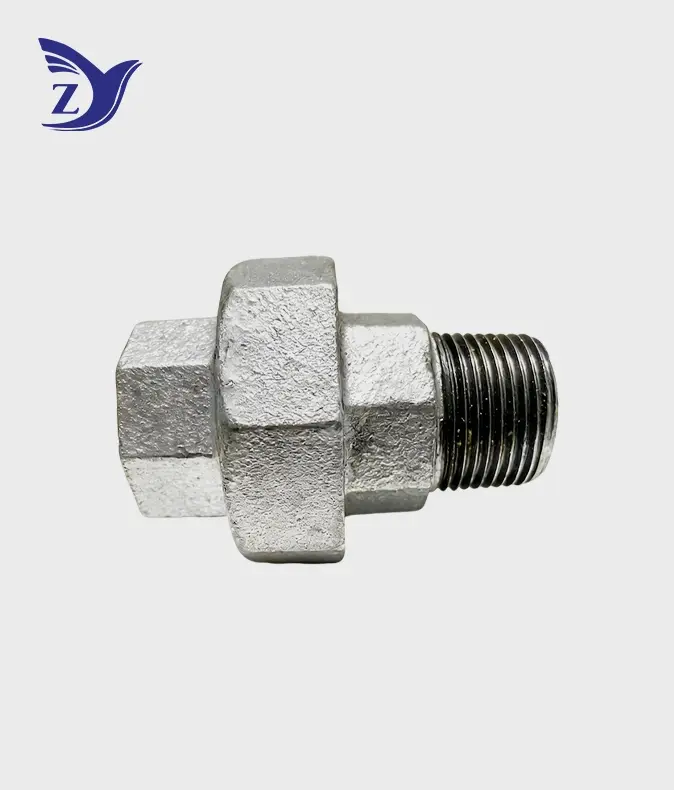
Common Mistakes in Installing 341 NPT Galvanized Male Female Thread Unions
Thread Misalignment and Cross-Threading
Cross-threading happens when the male and female threads meet at the wrong position, making them bind and distort instead of meshing easily. This mistake happens a lot when workers are in a hurry or are working in a small area where they can't see well. Cross-threading starts when one surface touches another and keeps rotating, making new, crooked thread tracks that damage both surfaces forever. This makes a joint that might look tight but isn't structurally sound and will leak when pressure is put on it.
It is important to do a visual check before fully engaging. It's important that the male thread fits easily into the female hole and can be turned at least three times without giving way. Any pushback in this first step means that the parts are not lined up correctly. On building sites, experienced techs often use a flashlight to check that the wrenches are engaged in the threads before using them. This is a simple step that saves thousands of dollars in replacement costs and system downtime.
Improper Torque Application
When we talk to fire protection system installers, over-tightening is probably the mistake we hear about most often. When there is too much pressure, the galvanized cover breaks. This lets the base iron rust and can even crack the union body itself. Remember that malleable iron can bend, but only up to a point. According to data from the industry, torque values higher than 150% of the suggested specs cause microcracks to form right away and spread over time, causing the product to suddenly fail months after it was installed.
On the other hand, under-tightening leaves the cylindrical seat without enough tension, which lets fluid move through it. To get metal-to-metal contact across the whole sealing area, the 341 design needs precise pressure. For a 1-inch NPT galvanized male female threaded union 341 pipe fitting, the suggested torque is usually between 40 and 50 foot-pounds, but this can change a little depending on the state of the threads and the type of sealant used. Not counting on "feel" but on calibrated torque wrenches guarantees consistency across installations. This is especially important for workers handling multi-site projects where responsibility for leaks lasts for years after the project is finished.
Thread Sealant Selection and Application Errors
People in the field are still arguing about whether PTFE tape or pipe dope is better, but both have specific uses that aren't always taken into account. To keep the PTFE tape from coming apart during assembly, it must be wrapped clockwise (when looking at the male thread end-on). When you wrap counterclockwise, the tape bunches up and tears as the fitting turns, leaving holes that can let water in. For NPT threads, three to four wraps of standard-density tape are enough. Too many layers can electrically lock the joint, stopping the threads from engaging properly and giving incorrect torque readings.
Pipe dope, also known as thread sealant compound, is useful in places where vibrations are likely to happen because it stays semi-fluid and fixes small thread flaws on its own. Dope shouldn't be put on female threads, though. It should only be put on male threads, starting with the second thread and leaving the first thread clean to keep contaminants out of the system. It is against NSF/ANSI 61 guidelines to use sealants that don't work with galvanized surfaces, like petroleum-based substances on drinkable water lines. This can cause contaminants to leak out.
Confusion Between NPT and BSPT Standards
NPT (American) and BSPT (British Standard Pipe Taper) threads look alike, but they can't be used together because their side angles are different: 60 degrees for NPT and 55 degrees for BSPT. When you try to mate these standards, the threads won't connect fully, putting extra stress on a few thread crests, and there will be leaking. Surprisingly often, this mistake is made on foreign projects where equipment from European makers has BSPT ports but local pipes have NPT fittings.
Zhiyuan Malleable Steel makes NPT galvanized male female threaded union 341 pipe fittings that work with both standards and clearly labels each fitting to avoid misunderstanding in the field. Our range of products includes BSPT steel male female threaded union 341 versions that meet ISO 7-1 standards, making sure they can be used anywhere in the world. When bidding on projects with partners from other countries, procurement managers should check the thread standards during the bid requirements to avoid having to make expensive changes in the field.
Installing Unions with Damaged Galvanized Coatings
Galvanized finishes can get ruined when they are shipped, stored, or handled roughly on the job site. When you install a union that doesn't have enough zinc protection, rust starts right away, especially in places that are underground or prone to condensation. White rust (zinc oxide) on new galvanized fittings is just for looks and doesn't affect how well they work. However, red rust (iron oxide) means that the base metal is being exposed, which means that the fitting needs to be replaced.
It only takes seconds to check each part before installation, but problems that show up years later can be avoided. We have records of building teams installing unions that were damaged during shipping, only to have pinhole leaks three years later when the damaged area rusted through. It should be normal practice to check the coating for consistency visually, especially around the thread roots where damage is hardest to see. Small scratches and abrasions are fine, but gouges that show bare metal are not.
How to Avoid Installation Errors: Step-by-Step Guide
Pre-Installation Verification Procedures
Before you put a wrench on a fitting, use thread gauges to make sure it fits properly. NPT thread gauges check the pitch width and taper to make sure the fitting meets the limits set by ASME B1.20.1. This step is especially important for big projects that use parts from more than one source. Different sizes build up in different parts, which could lead to alignment stress that shows up as leaks when the temperature changes.
Check the zinc finish in well-lit conditions. The zinc's surface should have a smooth, even crystalline pattern (spangle), with no bare spots, too much dross, or ash buildup. Make sure that the inside of the union's cylindrical sitting surface doesn't have any machining marks, burrs, or other foreign objects that might stop the metals from touching. Using a wire brush to clean threads gets rid of factory residues and checks the thread's strength. These steps take about two minutes each fitting, but they cut down on field calls by a huge amount.
Correct Threading Technique
Hand-thread the male part into the female hole to start putting it together. The fitting should be able to turn three or four full turns without any tools being used. This shows that it is properly aligned. If you run into resistance before this point, stop, pull the male thread all the way out, readjust, and start again. By forcing threads that aren't lined up right, you damage both parts beyond repair.
Follow the directions that came with the thread sealer you choose to use. Start one thread from the end of the PTFE tape and wrap it three to four times clockwise, leaving about half an inch of space between each layer. Firmly press the tape into the thread dips. For pipe dope, start from the second thread and run a continuous bead along the thread crests. Don't use too much sealant; when you squeeze it out during tightening, it can let waste into the system and block small holes in equipment further downstream.
Torque Application and Testing
Use a torque wrench that has been measured and is the right size for the fitting. About 45 foot-pounds are needed for a 1-inch NPT galvanized male female threaded union 341 pipe fitting and 80 foot-pounds are needed for a 2-inch fitting. The numbers given are based on threads that are clean, dry, and sealed properly. When threads are oily or dirty, they change the friction factors, which means that workers have to make judgment calls that they learn over time.
Tighten in steps: first, get the fitting to finger-tight plus a quarter turn. Then, check the alignment and move on to half the goal force. As you finish the last step, make sure that the nut moves smoothly and doesn't get stuck. Cross-threading or debris disturbance can cause sudden torque spikes. Once the desired torque is reached, use paint or a pen to mark the nut's position for review after the pressure has been released.
Pressure checking makes sure that the seals are still good before the device is turned on. For thirty minutes, pressurize water lines to 150% of their working pressure and check all of their joints for leaks or drips. For thermal growth to happen without putting too much stress on the joints, steam lines need to be heated up slowly. We suggest writing down torque values and test pressures in records during setup. This will give you a starting point for planning future maintenance.
Conclusion
To avoid making mistakes when installing NPT galvanized male female threaded union 341 pipe fittings, you need to pay close attention to every step, from checking them before they are installed to trying them under pressure at the end. Most field problems can be avoided by understanding how the conical seat seals, using the right pressure, the right thread sealants, and making sure that the thread standard is compatible. When put properly, these fittings will last for decades, but if you cut corners during assembly, you'll end up with leak paths and places where corrosion can start, which weakens the system. Spending time learning the right way to do things and working with sources who care about quality will make sure that your piping systems work as planned for as long as they are supposed to.
FAQ
How can I verify proper sealing during installation?
After tightening to the required pressure, use paint to mark where the nut is. Set the working pressure in the system and wait fifteen minutes. After that, look around the union body to see if there is any weeping. Check the torque mark. If the nut has turned, the joint is setting and may need another quarter-turn. During startup, thermal cycling can show weak seals, so check the unions again after the first cycle of heating and cooling. Mineral layers or persistent dampness around the joint are signs of a leak that needs to be taken apart and inspected.
Can I substitute galvanized unions with stainless steel while keeping NPT threads?
Yes, the size of an NPT thread is the same for all materials, so NPT galvanized male female threaded union 341 pipe fittings made of stainless steel will fit with galvanized pipe. When mixing metals, though, you should be aware of galvanic corrosion. Stainless steel is cathodic to zinc and iron, which means that when an electrolyte (like water) is present, the coated part corrodes more quickly. When you mix metals, use dielectric unions or insulation thread sealer. Also, make sure that the type of stainless steel you choose fits the needs of the job. For example, 304 stainless steel is fine for most water service, but 316 stainless steel is needed in chloride-rich settings to keep it from pitting.
What thread sealant works best for outdoor galvanized pipe installations?
Choose PTFE tape that is rated for chemical and temperature compatibility for outdoor uses that will be exposed to UV light and high temperatures. White tape is good for water and air up to 400°F; yellow tape, which is usually thicker, is better for gas. Pipe dope that has PTFE floating in a carrier makes links between mechanical equipment more resistant to shaking. If you want to use drinkable water systems, don't use petroleum-based pipe dopes on galvanized zinc coatings. Instead, use only NSF-61 approved sealants. When it freezes, anaerobic thread seals work better because they fix without air, filling in tiny holes that let freeze-expansion damage happen.
Partner with Zhiyuan Malleable Steel for Reliable Pipe Fittings
Zhiyuan Malleable Steel has been in the industrial piping business for more than 26 years, making corrosion-resistant NPT galvanized male female threaded union 341 pipe fittings and a wide range of malleable iron fittings that are trusted by fire protection workers, city engineers, and wholesalers around the world. As a top provider with ISO 9001, CE, UL, and FM certifications, we keep a lot of stock so that standard goods can be delivered within two hours. For unique project needs, we also offer OEM/ODM customization. The 30,000-ton annual capacity of our Shanxi production plant provides supply chain security for large orders, and our policy for replacing broken products and expert technical support show that we care about your success. You can email our team at q1236800000@gmail.com or visit zymalleablepipefitting.com to talk about your NPT galvanized male female threaded union 341 pipe fittings needs and get customized quotes that help you make the best decisions about how to buy them.
References
- American Society of Mechanical Engineers. (2020). ASME B1.20.1: Pipe Threads, General Purpose (Inch). New York: ASME Press.
- American Society for Testing and Materials. (2019). ASTM A197: Standard Specification for Cupola Malleable Iron. West Conshohocken: ASTM International.
- American Society for Testing and Materials. (2021). ASTM A153: Standard Specification for Zinc Coating (Hot-Dip) on Iron and Steel Hardware. West Conshohocken: ASTM International.
- National Fire Protection Association. (2022). NFPA 13: Standard for the Installation of Sprinkler Systems. Quincy: NFPA Publications.
- Smith, J.R. & Davidson, P.L. (2018). Piping Systems Manual: Design, Installation, and Maintenance of Industrial Pipe Networks. Houston: Gulf Publishing Company.
- International Organization for Standardization. (2021). ISO 7-1: Pipe Threads Where Pressure-Tight Joints Are Made on the Threads — Part 1: Dimensions, Tolerances and Designation. Geneva: ISO Standards.
Online Message