
Jul 16, 2026
Cast Iron VS Malleable Iron Fittings
When choosing pipe fittings for industrial projects, knowing the basic differences between cast iron and malleable iron pipe fittings can have a big effect on how reliable the system is and how much it costs to run overall. Cast iron fittings work well for low-stress, static setups, but malleable iron options are better at being flexible, resistant to impact, and able to handle pressure—all of which are important in fire protection, HVAC, and city infrastructure. This comparison looks at material science, performance standards, cost structures, and real-world applications to help procurement workers find the best answer for their needs.
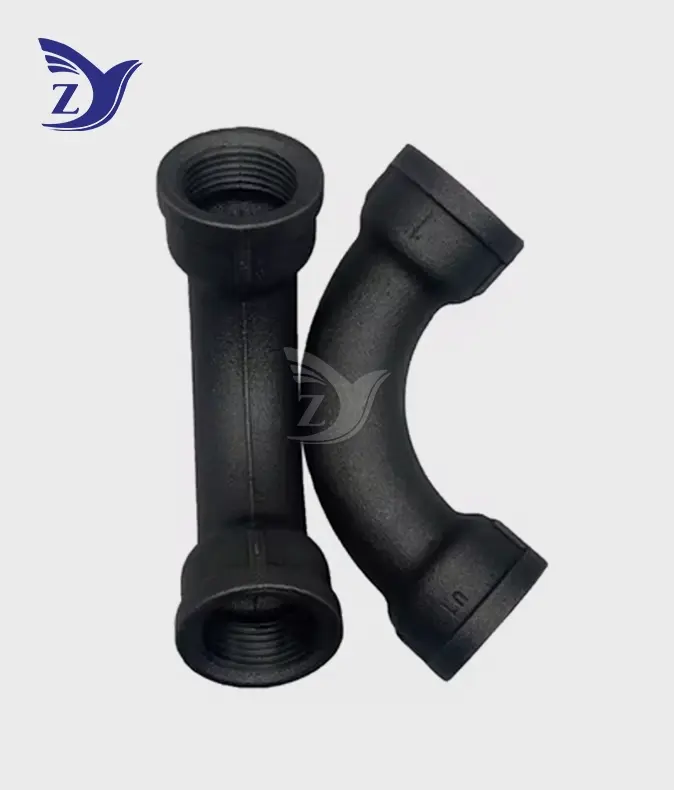
Understanding Cast Iron and Malleable Iron Pipe Fittings
Cast iron fittings are made by pouring melted iron directly into molds. This makes parts that are very hard and strong when compressed. The carbon stays in the form of graphite flake, which makes it hard but also makes it weak. These parts could break if they are suddenly hit by a force or their temperature changes, which makes them less useful in settings with a lot of movement or vibration. Cast iron is commonly used in traditional drainage systems and gravity-fed water lines because it is cheap and doesn't rust in harsh media.
Material Composition and Manufacturing Distinctions
Cast iron usually has between 2.5% and 4% carbon and between 1% and 3% silicon. There are big chunks of graphite in the substructure that concentrate stress and make cracks spread when tension loads are applied. Pouring liquid metal into sand molds is part of the manufacturing process. The metal is then cooled, and only minor post-processing is done. This simple way of making things makes cheap parts, but they can't be changed mechanically very easily.
White cast iron, which has between 2% and 2.6% carbon and smaller amounts of silicon, is the starting material for malleable iron pipe fittings. A solid-state change is caused by the annealing cycle, which lasts between 24 and 72 hours based on the length of the section. Carbon moves out of the iron carbide phase and forms spheroidal temper carbon clumps that stop cracks from spreading. Our two Blue Sky HTL-1 natural gas annealing kilns at Shanxi Taigu Zhiyuan Malleable Steel, each with a 100-ton capacity, make sure that the heat is evenly spread across all of our batches, so our 30,000-ton yearly output stays the same in terms of mechanical traits. Fittings made with this controlled method meet the requirements of ISO 49, ISO 7-1, and ASME B1.20.1. This means that the dimensions are correct and the threads are intact for both NPT and BSPT setups.
Identification and Standards Compliance
Visual recognition is often hard because the outside finishes of both materials look alike. When you look closely, the surfaces of cast iron may have rougher textures and some holes in them, while the surfaces of pliable iron have smaller grain structures. For final confirmation, damaging testing is needed. Compressed malleable iron will distort a lot without breaking, but cast iron breaks quickly. Industry standards make it easy to see how well something works. For example, ASTM A197 for malleable iron requires a minimum tensile strength of 345 MPa and 10% extension, but ASTM A126 Class B for cast iron only needs a 207 MPa tensile strength and almost no flexibility. When buying parts for fire safety systems that need to meet UL and FM approval standards, procurement teams should ask for mill test certificates and third-party proof to make sure the materials are compliant.
Performance and Durability Comparison
Any pipe part's practical limits are set by its mechanical performance. When it comes to important factors that directly affect system life and safety margins, malleable iron pipe fittings always do better than their cast iron peers.
Strength and Flexibility Under Load
The tensile strength of malleable iron is usually between 345 MPa and 450 MPa, which means it can work reliably in pressure classes from 150 psi to 300 psi. The material can stretch between 6% and 15%, which means that parts can work with small misalignments while they are being put together and absorb short-term pressure spikes without permanently changing shape. Cast iron's tensile strength is highest at about 210 MPa, and it stretches by less than 1%. This means that it can only be used in low-pressure situations where joint movement is small. When fire sprinklers are turned on, the system's temperature expansion can cause localized stresses. The malleability of iron keeps joints from breaking in terrible ways that could risk life safety systems.
Temperature resistance is another thing that sets these materials apart. The structure of malleable iron stays strong over a wider temperature range, from cold uses close to -40°C to steam systems working at 230°C, without becoming weak or oxidizing too much. Below 0°C, cast iron is less resistant to impact, which makes outdoor installs in cold regions riskier. Our zinc square NPT 90° reducing elbows are tested in cryogenic temperatures to make sure they work reliably in city water systems across a wide range of areas.
Corrosion Resistance and Surface Treatments
In neutral pH settings, both materials have some protection to corrosion, but surface treatments make them last a lot longer. Hot-dip galvanization puts on a zinc covering that saves the base metal by sacrificing itself. In normal air conditions, corrosion rates are less than 5 microns per year. The electric heating environmental protection galvanizing kilns at Zhiyuan Malleable Steel make coatings that are regular and between 55 and 85 microns thick, which is thicker than what is required by ASTM A153. This extra security is very important in seaside areas, chemical processing plants, and underground uses where chemicals and water damage materials more quickly.
In oil and gas work, where galvanic rust between different metals is a risk, locknuts made of pliable iron are finished with black oxide or lacquer. The bituminous layer stops rust temporarily while the product is being stored and put in place. The naturally anti-oxidizing nature of the base material ensures long-term performance in petroleum service. Cast iron fittings don't have enough structural room to handle wall thinning caused by rust, so they often break too soon when the protective coats wear off.
Cost Analysis and Procurement Considerations
Decisions about what to buy include more than just the original price. They also include lifetime costs, the reliability of the supply chain, and making sure that the rules are followed. A thorough analysis of the financial situation shows that the higher cost of malleable iron pipe fittings often results in better value when repair intervals, replacement frequency, and system downtime are taken into account.
Price Structures and Market Dynamics
According to recent market data, cast iron parts are priced 15% to 25% less than similar malleable iron components. This is because they are easier to make and cost less to process. A regular 1-inch cast iron elbow might cost between $2.80 and $3.50, while a similar iron joint that can be shaped costs between $3.80 and $4.60. When buyers negotiate annual contracts, they can often get even bigger discounts. For normal sizes, our minimum order numbers start at 500 pieces, and unit costs drop by 8% at 2,000 pieces and by 15% above 5,000 pieces.
During the installation and running steps, hidden costs show up. Cast iron fails more often, which costs more in labor for repair and material waste. If a fire protection contractor has to replace 5% of cast iron parts because of thread damage or field fractures, the money saved at the start may not be worth it, especially if the project plan calls for liquidated fees for delays. Installing malleable iron reliably cuts down on call-backs and guarantee claims, which protects contractors' names and profit margins.
Supply Chain Reliability and Lead Times
Changes in the prices of raw materials, limited shipping options, and government rules can all cause global supply lines to be unstable over time. Trading middlemen who rely on spot market sales are less reliable when it comes to supply continuity than established producers who can do everything themselves. Vertically linked activities at Zhiyuan Malleable Steel, from melting to galvanization, get rid of the need for third-party suppliers. This lets us supply standard items in two hours from our 50,000-square-meter plant. For example, BSPT square face galvanized square edge straight tee pipe fittings need 14 to 21 days for tooling and production runs. For important project deadlines, there are choices for faster production runs.
Another thing to think about when buying something is the certification paperwork. For example, ISO 9001 quality control systems, CE marking for European markets, and UL/FM listings for fire safety use strict testing and tracking rules. Suppliers who don't have these qualifications put the project at risk because not meeting the specifications can lead to expensive rework or replacement situations. Our 38-person technical team keeps detailed records of mill tests, material tracking, and third-party inspection certificates. This helps make sure that project approvals and regulatory checks go smoothly.
Conclusion
There are clear differences in performance between cast iron and malleable iron pipe fittings that affect how they are bought for use in fire protection, HVAC, public infrastructure, and industry processes. The higher tensile strength, ductility, and heat resistance of malleable iron make it worth the higher price by reducing installation problems, increasing system reliability, and extending service life. Cast iron still has some uses in low-pressure, static systems where cost is more important than performance. Instead of just comparing prices at first, successful buying requires a full technical assessment, seller qualification verification, and lifecycle cost analysis. When you work with ISO-certified makers that offer a wide range of products, engineering support, and a stable supply chain, you get real value in the form of faster project completion and better long-term operating performance.
Partner with Zhiyuan Malleable Steel for Reliable Piping Solutions
Zhiyuan Malleable Steel can help you with your pipe system needs because they have been casting for 26 years and have state-of-the-art production facilities. We keep our ISO 9001, CE, UL, and FM certifications to make sure that every part we make meets strict international standards. We are a top maker of malleable iron pipe fittings. Our 156-set machining production area, 30,000-ton annual capacity, and combined quality control systems make sure that our products always meet the performance standards set by over 1,000 catalog specs. Our expert team helps with application engineering from the design stage all the way through installation, whether you need NPT square face galvanized elbows, BSPT threaded tees, or custom OEM solutions. Email us at q1236800000@gmail.com to talk about group prices, delivery times, and the ability to make changes. Visit zymalleablepipefitting.com to explore our complete product portfolio and request detailed technical documentation. Our commitment to quality, responsive service, and a reliable supply chain, you can trust us to help you buy pipe fittings.
FAQ
Can malleable iron fittings directly replace cast iron components in existing systems?
The ability to switch materials relies on the pressure levels, the thread compatibility, and the accuracy of the dimensions. malleable iron pipe fittings that meet the same ASTM dimensions can be used instead of cast iron ones, which often increases the safety limits of the system. Make sure that the thread specs (NPT or BSPT) and pressure class rates of the new fittings match. Upgrading from cast iron to malleable iron in systems that are prone to shaking or that are under pressure is a reliable move, but budget decisions may need proof of expected long-term benefits.
What standard sizes and configurations are readily available?
Iron parts that can be shaped range in size from 1/4 inch to 6 inches and come in different shapes and sizes, such as elbows, tees, joints, unions, and more. Angles like 90°, 45°, and street shapes are very common. Reducing versions can handle changes in size. Our catalog has more than 1,000 SKUs with NPT and BSPT threads, zinc and black finishes, and thicknesses ranging from standard to heavy-wall. To make custom sizes and patterns, you have to pay for tools and commit to a minimum order quantity.
Which international certifications ensure product compliance?
Listings under UL 2544 and FM Approval are required for fire prevention uses. These listings check for pressure cycle, impact resistance, and dimensional conformity. The Pressure Equipment Directive says that products sold in Europe must have CE marking. ISO 9001 approval shows that the quality control system is strict. The North American compliance baselines are ASTM A197 material specifications and ASME B1.20.1 thread requirements. Instead of depending only on general capability statements, you should always ask for approved test results and tracking paperwork that prove batch-specific compliance.
References
1. American Society for Testing and Materials. (2023). ASTM A197: Standard Specification for Cupola Malleable Iron. West Conshohocken: ASTM International.
2. British Standards Institution. (2022). BS EN 10242: Threaded Pipe Fittings in Malleable Cast Iron. London: BSI Standards Publication.
3. Underwriters Laboratories. (2024). UL 2544: Standard for Malleable Iron Fittings for Fire Protection Service. Northbrook: UL LLC.
4. American Society of Mechanical Engineers. (2023). ASME B1.20.1: Pipe Threads, General Purpose (Inch). New York: ASME Press.
5. FM Approvals. (2023). FM 1630: Approval Standard for Malleable Iron Pipe Fittings. Johnston: FM Global.
6. International Organization for Standardization. (2022). ISO 49: Malleable Cast Iron Fittings Threaded to ISO 7-1. Geneva: ISO Central Secretariat.
Online Message