
Aug 3, 2026
Can you use 90 degree elbow in sewer line?
Whenever engineers and procurement specialists plan to install or fix sewer lines, they often check to see if 90-degree elbows will work. Yes, but there are some important things to think about first. When corrosion resistance, longevity, and safe links are important, the hot-dip galvanized round edge BSPT 90° elbow is a good choice. But choosing the right material, following the right fitting standards, and installing it correctly are very important. Choosing the right malleable iron fitting with strong surface protection is important for sewer settings where water, waste chemicals, and acidic soil are always a problem for pipe systems. This will ensure long-term dependability and lower upkeep costs.
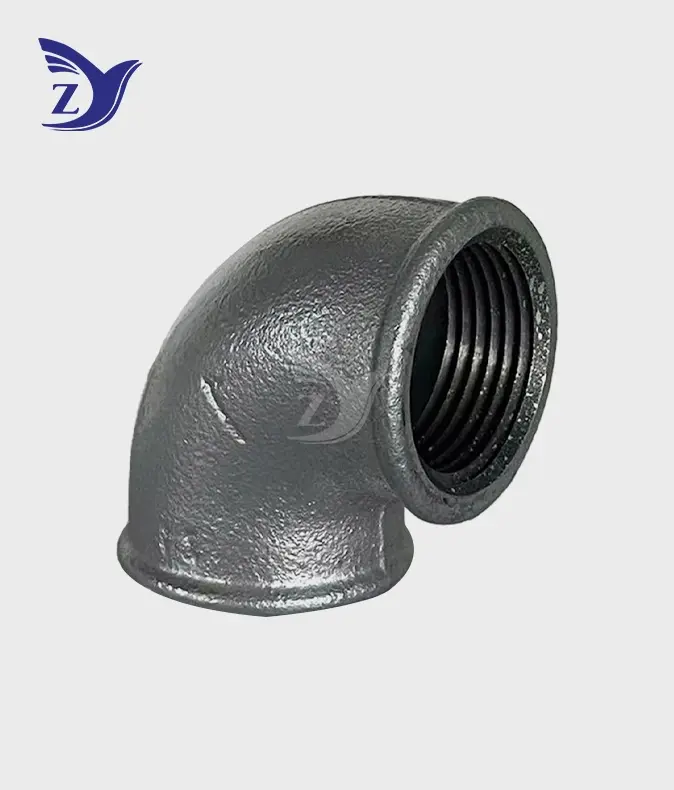
90 Degree Elbows and BSPT Threaded Fittings in Sewer Lines
What Makes Hot-Dip Galvanized Round Edge BSPT 90° Elbows Unique?
At Zhiyuan Malleable Steel, we make fittings out of malleable iron that are specifically made for tough pipeline environments. Although it is structurally sound, the hot-dip galvanized round edge BSPT 90° elbow is also very resistant to corrosion. This 90° pipe redirection fitting has two threads and is made of black heart malleable iron. It has a tensile strength of more than 350 MPa and an elongation rate of 10%, meeting ASTM A197 and EN 1562 standards. The round edge design, which is also known as a "beaded reinforcement," makes the material thicker where it connects to other pieces. This keeps it from breaking during installation and makes it more resistant to changes in internal pressure that are common in city sewer systems.
Decoding BSPT Threading Standards for Sewer Applications
The British Standard Pipe Taper (BSPT) threading has a 55° thread angle and a 1:16 taper ratio, which is the same as ISO 7-1. As force is applied, this shape makes a metal-to-metal contact that seals itself. BSPT threads have tighter seals than NPT threads because they don't need as many extra sealants. However, PTFE tape or anaerobic pipe sealant is still recommended for the best leak prevention. The precision-threaded design makes sure that it works with a number of different pipeline systems and keeps the gas-tight and water-tight integrity that is necessary for underground sewer setups where fixes are hard to get to and cost a lot of money.
Visual Identification and Measurement Techniques
To spot real hot-dip galvanized round edge BSPT 90° elbows, look at the strengthened bead along the female hole and make sure the tapered thread shape is correct. Fittings of good quality have a zinc covering that is more than 70 microns thick all over and has a smooth, silver-gray surface with no cracking or bare spots. Calipers measure the taper angle, while thread pitch gauges check that the specs are correct for BSPT. These steps of checking make installation mistakes less likely, which is important for large-scale municipal projects that connect miles of sewer lines with hundreds of fittings.
Evaluating the Suitability of 90 Degree Elbows for Sewer Lines
Corrosion Resistance: Hot-Dip vs. Electro-Galvanized Finishes
Pipe fittings in sewers are exposed to hydrogen sulfide, acidic condensates, and water from the ground. Immersion in liquid zinc at about 450°C for hot-dip galvanization forms a strong metal link between zinc and malleable iron. This process for industrial water and gas pipeline fittings makes a coating mass of about 500 to 700 g/m². This coating provides cathodic protection that makes the service life longer than 50 years underground. Electro-galvanized alternatives only have 10–20 microns of coating, which is fine for dry indoor uses but not for sewer line needs where constant moisture speeds up corrosion.
Material Strength and Service Life Comparisons
In sewer applications, black steel fittings rust within 5 to 10 years, so they need to be replaced often, which slows down work. Stainless steel is very resistant to rust, but it costs a lot more, and projects often end up costing three times as much. Our hot-dip galvanized round edge BSPT 90° elbows are made of malleable iron, which hits the perfect balance between strength and flexibility. They have a minimum tensile strength of 40,000 psi while still being able to bend, which keeps them from breaking during installation or ground settlement. Class 150 pressure standards allow 150 psi for saturated steam and up to 300 psi for water, oil and gas at room temperature. This is higher than the normal working pressures for waste lines by a comfortable amount.
Design Limitations and Flow Considerations
Every 90° bend adds hydraulic resistance, which slows the flow and makes it more turbulent. In sewer systems that are fed by gravity, too many sharp turns can make clog places where solid waste builds up. When there is room, engineers try to keep direction changes to a minimum and prefer gradual bends. When tight turns are needed near building foundations or under roads, however, the industrial-grade male-female 90° elbow is what you need. The round-edge design reduces turbulence more than square-edge designs, which lowers the risk of solid buildup and keeps the structure strong even when dirt loads and traffic noises happen.
Installation Guide for Hot-Dip Galvanized BSPT 90° Elbow in Sewer Systems
Surface Preparation and Thread Inspection
Before installing, check the threads for damage that happened while they were being moved or stored. Carefully take off the protective caps and look at the tapered threads in good lighting. To stop cross-threading, any burrs or deformations must be fixed with the right die set. Use a wire brush to clean the thread surfaces and get rid of any dust or other things that could damage the seal. The hot-dip galvanized round edge BSPT 90° elbow layer that resists rust shouldn't be flaking, and any damage should be fixed with zinc-rich paint that is allowed for use in potable water systems, if necessary.
Sealing Materials and Torque Specifications
BSPT threads should be able to close themselves through taper engagement, but for mounting purposes, PTFE tape or liquid pipe dope works better. To keep hydraulic lock from happening, wrap three or four times of tape around the thread in the direction of spin, covering about half of the thread's width. Using measured pipe wrenches, slowly apply torque until the joints are hand-tight plus 1.5 to 2 more turns. If you tighten the joint too much, the round-edge support may crack, and if you tighten it too little, sewer gases can escape. Using the right amount of force to connect pipes securely strikes a balance between mechanical power and sealing integrity.
Avoiding Common Installation Mistakes
Damage to the thread from using the wrong tools is one of the most common mistakes. To keep the coating from getting damaged, use strap wrenches on galvanized surfaces and chain wrenches on the pipe pieces that fit together. Cross-threading happens when the initial engagement isn't done right, ruining both the male and female threads. Hold the parts straight before they start to rotate, and check the alignment every quarter turn during the first contact. Forcing parts together is a sign that they don't work well together; never think that extra pressure will "work themselves out" on threads.
Maintenance and Inspection Protocols
Plan to check accessible joints once a year, looking for weeping at connections that could mean the seal is wearing down. Checking the condition of the zinc coating is part of keeping an eye on corrosion. When the shiny surface turns matte gray, the zinc layer wears away but still protects. Red rust means that zinc levels are low and needs quick treatment. Cathodic protection systems help underground installations by making fittings last decades longer. Keeping track of the times and materials used for installations helps with planning upkeep, especially for city systems that have to handle thousands of fittings across large service areas.
Choosing Reliable Suppliers and Brands for Hot-Dip Galvanized BSPT 90° Elbow Fittings
Quality Certifications and Standards Compliance
Reputable makers keep both ISO 9001 quality management certification and approvals for each product. For sales in Europe, our hot-dip galvanized round edge BSPT 90° elbow fittings meet CE standards, and they also have UL/FM ratings for fire safety uses that need third-party approval. These certifications show that the manufacturing process is consistent and that materials can be tracked, which is very important for city projects that need to show proof of compliance with regulations. Before parts leave the factory, they are tested to make sure they meet standards for tensile strength, coating thickness, thread sharpness, and pressure ratings.
Evaluating Supplier Credibility and Support Infrastructure
When choosing suppliers, you need to look at their manufacturing capacity, technical know-how, and support after the sale. Shanxi Taigu Zhiyuan Malleable Steel Co., Ltd. has production facilities that cover 50,000 square meters and have 156 pieces of machining equipment, 8 medium-frequency electric furnaces, 2 natural gas annealing kilns and environmental galvanizing furnaces. This infrastructure makes it possible to quickly grow for big city contracts while keeping quality the same from batch to batch.
Customization Capabilities for Specialized Requirements
Standard fittings work for most uses, but sometimes the threading, dimensions, or coating needs to be changed to fit the needs of a specific project. Our ODM/OEM services can meet specific needs, such as changing thread sizes to work with older systems or creating special alloys for harsh chemical conditions. When specifications are finalized early in the procurement cycle, customization doesn't have a big effect on lead times. It usually adds two to three weeks to standard delivery schedules.
Conclusion
When choosing the right parts for a sewer line, you have to think about how well they fight corrosion, how well they hold up structurally, how much they cost, and how easy they are to install. The hot-dip galvanized round edge BSPT 90° elbow meets these needs with its strong iron construction, thick zinc covering, precise threading, and strengthened design. Even though 90° bends add hydraulic concerns that need careful system planning, they are still necessary for getting around obstacles on the job site in underground installs. When you choose the right materials, do the installation right, and work with the right suppliers, your infrastructure will last for decades and work reliably. This will lower the costs and downtime for maintenance on important city infrastructure.
FAQ
Can hot-dip galvanized BSPT 90° elbows be used in all types of sewer lines?
When it comes to gravity-fed sewage systems, pressurized sewer mains, and effluent release lines, these fittings work great. With large safety margins, their Class 150 pressure grade can handle normal sewer working pressures. However, systems that move highly toxic industrial trash may need extra chemical compatibility checks. The zinc coating of the hot-dip galvanized round edge BSPT 90° elbow is resistant to most of the chemicals in municipal wastewater, but coatings or alloys that are made for high pH levels or concentrated sulfides might be needed.
What sealing materials work best with BSPT threaded connections?
PTFE tape that is approved for use with water and gas works well for most closing needs. Wrap the thread three to four times, covering half of its depth, and wind it in the direction of rotation. Anaerobic pipe sealant is better for systems that are likely to shake because it cures without air in the threaded link, locking the threads mechanically while closing tiny gaps. If your local health service doesn't say it's okay, don't use traditional hemp and paste in potable water uses.
How long do hot-dip galvanized fittings typically last in underground sewer conditions?
When fixed correctly, galvanized malleable iron parts usually last more than 50 years in normal soil. Service life is affected by the pH of the earth, the amount of water in it, and rogue currents that mess with the electricity. Monitoring rust during regular upkeep finds that the coating is wearing away before the base starts to corrode. When used in harsh conditions, cathodic protection systems can double the number of service years compared to passive protection alone.
Partner with Zhiyuan Malleable Steel for Reliable Sewer Line Solutions
Zhiyuan Malleable Steel can help you with your sewer infrastructure projects by making industrial-grade hot-dip galvanized round edge BSPT 90° elbow fittings that meet the highest standards. Our supply team can deliver right away from a large inventory, make adjustments to fit special needs, and provide technical help throughout the lifecycle of a project. With ISO 9001 certification, CE/UL/FM approvals, and 26 years of experience casting, we give engineering firms and municipal contractors the quality and dependability they need. You can email our purchasing team at q1236800000@gmail.com to talk about large sales, low prices, and how our corrosion-resistant fittings can help you with your toughest pipeline problems. You can look at all of our products and download detailed specs by going to zymalleablepipefitting.com.
References
- American Society for Testing and Materials. (2019). Standard Specification for Malleable Iron Castings. ASTM A197-19. West Conshohocken, PA: ASTM International.
- British Standards Institution. (2016). Pipe Threads for Tubes and Fittings Where Pressure-Tight Joints Are Made on the Threads. BS 21:1985 (ISO 7-1). London: BSI Group.
- American Water Works Association. (2021). Installation of Ductile Iron Water Mains and Their Appurtenances. ANSI/AWWA C600-17. Denver, CO: AWWA.
- National Association of Corrosion Engineers. (2018). Corrosion Control of Underground Piping Systems. NACE SP0169-2018. Houston, TX: NACE International.
- American Society of Mechanical Engineers. (2020). Malleable Iron Threaded Fittings: Classes 150 and 300. ASME B16.3-2019. New York, NY: ASME.
- Water Environment Federation. (2017). Design of Wastewater Collection Systems: Manual of Practice No. 9. Alexandria, VA: WEF Press.
Online Message