
Jul 6, 2026
BSPT Taper Thread vs BSPP Parallel Thread: Round Face Reducing Coupling Performance Showdown
When specifying threaded pipe fittings for critical industrial applications, the choice between BSPT taper threads and BSPP parallel threads can make or break system integrity. In my experience working with fire protection systems and municipal water projects, I've seen how BSPT round face galvanized round edge reducing coupling pipe fittings consistently outperform parallel alternatives in demanding environments. The taper design creates a metal-to-metal seal that tightens under pressure, while the round edge reinforcement prevents stress fractures during installation—a combination that delivers measurable leak prevention and structural reliability across water, gas, and steam applications.
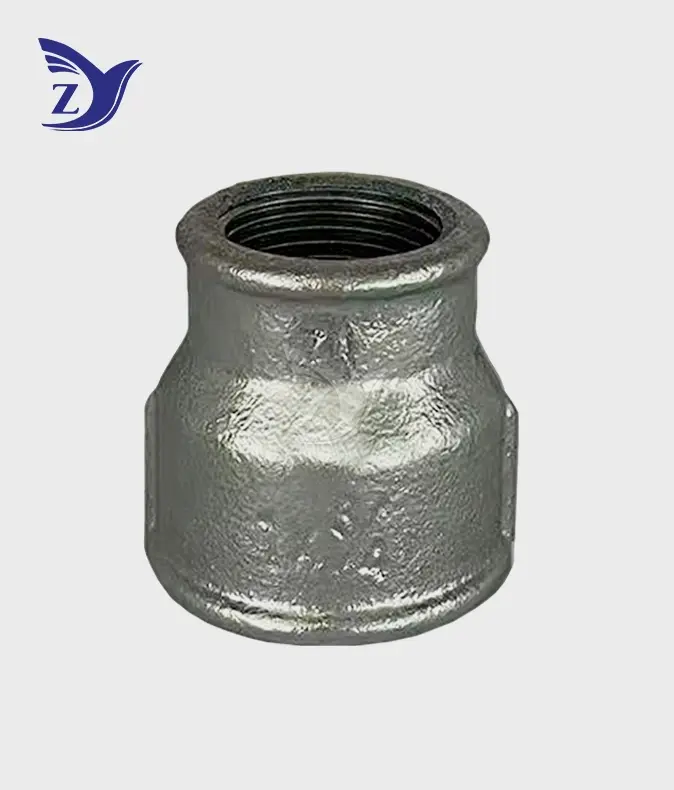
Understanding which thread type matches your project requirements saves costly field modifications and ensures compliance with regional standards. This performance comparison examines the technical differences, real-world applications, and procurement considerations that help engineering teams and distributors make confident specification decisions.
BSPT and BSPP Threads: Definitions and Standards
Thread Geometry Fundamentals
BSPT threads have a 55-degree thread angle and a 1:16 taper ratio, which is what the British Standard Pipe Taper standard (ISO 7-1, BS 21) calls for. Because of this shape, the thread diameter gets smaller as the fitting lengthens. This makes an interference fit that is the main cover. When the male thread slips into the female port, contact pressure builds up and gets stronger as the thread is tightened.
BSPP threads follow BS 2779 (ISO 228-1) and have the same 55-degree angle, but the walls stay aligned the whole time. Because these threads only provide mechanical retaining and not fluid closing, they need an extra sealing mechanism like an O-ring, bonded washer, or face seal.
Material and Coating Standards
Industrial pipes are mostly made of galvanized malleable iron fittings, which are strong, flexible, and resistant to rust. During hot-dip galvanizing, a zinc covering layer (usually 70–85 microns thick) is added. This layer corrodes before the base iron, which makes the metal last longer in wet places. Round-edge designs have a reinforced bead at the fitting hole that spreads the installation pressure and stops the brittle cracks that can happen with banded designs.
Precision-threaded iron parts that meet ISO 9001 standards are made by companies like Zhiyuan Malleable Steel. On important sealing surfaces, the dimensions are kept to +/- 0.2mm. This level of accuracy makes sure that all production batches have the same thread contact and closing performance.
Dimensional Compatibility Considerations
BSPT and BSPP have the same theoretical thread pitch and width at the gauge plane, but that's the only place where they can work together. When you try to connect BSPT male fittings to BSPP female ports (or the other way around), the threads don't fully join because the curve bottoms out too soon, leaving gaps that let leaks happen in a spiral pattern. Procurement teams need to check the thread specs on data sheets because just looking at them can't tell the difference between these types.
Performance Comparison: BSPT Taper vs BSPP Parallel in Round Face Reducing Couplings
Sealing Mechanism and Leak Prevention
In most industrial situations, the main benefit of taper threads is that they can seal themselves. When installation pressure is applied to a BSPT connection, the curved male thread squeezes into the female port. This deforms the thread in a very small way to fill in any gaps and make multiple contact lines along its edges. Adding PTFE tape or anaerobic pipe sealer fills in any tiny gaps that are still there, making a strong seal that can handle changes in temperature and pressure.
Corrosion Resistance in Harsh Environments
When it comes to atmospheric rust, hot-dipped zinc coats work really well, especially in places where the moisture level changes from wet to dry. This layer of protection is good for outdoor city gas distribution, fire sprinkler branch lines, and watering systems for farms. The zinc coating can stand up to pesticides, chlorinated water, and mild chemical amounts that would break down iron quickly.
Stainless steel options are better at withstanding harsh chemicals and high temperatures, but they are very expensive—usually three to five times as much as galvanized malleable iron. BSPT round face galvanized round edge reducing coupling pipe fittings and regular inspections are a better deal for projects that are on a budget and have minimal rust exposure.
Installation and Maintenance Realities
When installing BSPT fittings, you need to pay close attention to the thread contact depth. Too much tightening can damage the threads or crack the body of the fitting, and not enough contact leaves the taper seal unfinished. Experienced fitters know the feeling they get when the threads seat: at first, it's easy to turn, but as the taper engages, there is more resistance, and finally there is a hard stop. This tactile proof gives you instant quality guarantee that threads that are parallel can't match.
The BSPT design can handle shaking and thermal movement, which is good for maintenance processes. The angled taper keeps the binding force even when the temperature changes and the joint parts get bigger or smaller. When thermal cycling, parallel threads with face seals may need to be retorqued. This is especially true in steam condensate return lines, where repeated heating and cooling puts stress on the seal contact.
Procurement Guide: Selecting the Right BSPT or BSPP Reducing Coupling
Application-Specific Selection Criteria
Fire protection system designers choose which thread types to use based on what the local code says and what tools can work with it. In the US, NFPA guidelines mostly talk about NPT threads. However, BSPT round face galvanized round edge reducing coupling pipe fittings are often needed for foreign projects to make sure they work with sprinkler heads and valves from Europe. Reducing connections connect main distribution lines to branch water drops. The corrosion-proof galvanized finish makes sure that the system will work reliably for decades before it could be activated.
Bulk Order Dynamics and Lead Times
Manufacturers keep a lot of stock in standard sizes (1/4" to 4" nominal), which is good for plumbing dealers and distributors. Standard standards allow items to be shipped within days, which helps just-in-time inventory tactics and lowers the cost of keeping items in stock. Custom size combinations or thread configurations that aren't standard cause production runs with longer wait times, usually 4 to 6 weeks, but this can change based on the foundry's capacity and the depth of the finishing line.
Cost Structure Analysis
There are different price ranges for threaded reducers based on how they are made, the quality of the finish, and the cost of approval. Economy-grade galvanized couplings from uncertified sources may be 20–30% less expensive than elite brands, but buying teams have to worry about inconsistent sizes, differences in coating thickness, and not being able to return bad batches. Industrial-grade providers who offer material certificates, dimensional inspection reports, and replacement warranties for broken goods are able to charge small fees because they lower the total cost of ownership.
Why Partner with Zhiyuan Malleable Steel for Your Reducing Coupling Needs
After 26 years of hard work and study in Taigu District, Shanxi Province, Zhiyuan Malleable Steel has improved the way they make high-strength, anti-rust malleable reducers. Our factory has eight 3-ton medium-frequency electric ovens and two 100-ton natural gas annealing kilns. These are used to make precision-threaded iron parts that are the right size and shape so that the threads always connect and the sealing works as expected. Before it is packed and sent out, every BSPT round face galvanized round edge reducing coupling pipe fittings goes through a strict checking process based on ISO 9001 standards.
Our product line includes more than 1,000 different specs for water, oil, and gas pipelines used in fire safety, city infrastructure, and industrial process systems. The galvanizing workshop uses hot-dip coatings that are about 75 microns thick on average. Coating thickness scales and salt spray tests show that the corrosion protection is higher than the industry standard. The round edge reinforcement design that is unique to our production process spreads installation stress and stops the edge cracking that is seen in competing products when they are tightened with a lot of pressure.
Our OEM and ODM capabilities are flexible enough to support private marking, customized specs, and non-standard size pairs, which is helpful for procurement teams. We have 156 sets of processing equipment and 50,000 square meters of production space, so we can keep a wide range of typical sizes in stock and also make custom orders in 4 to 6 weeks. Our location 40 kilometers from Taiyuan helps with transportation. We have direct highway access to major ports and are only 30 minutes away from air freight facilities, which helps with both container shipping and quick small-lot orders.
Quality control goes beyond manufacturing. For example, we have a program to replace broken goods and offer technical help for questions about installation or application engineering. Our 38 technical experts help wholesalers and builders choose the right thread types, pressure grades, and coating choices for each job by giving them standard advice. Certifications like CE, UL, and FM show that a product meets foreign standards, which makes it easier to sell goods abroad and buy things from other countries.
Conclusion
In industrial pipe uses, choosing between BSPT taper threads and BSPP parallel threads has a big effect on how reliable the system is, how quickly it can be installed, and how much it will cost to maintain over time. Combining the self-sealing benefit of taper threads with galvanized corrosion protection and round edge structural support has been shown to work well in fire protection, public water, and industrial process settings. The best results are achieved by procurement professionals who match thread specs to equipment compatibility requirements, check maker certifications, and build relationships with suppliers who provide consistent quality control and helpful customer service. With the technical information and useful tips in this article, engineering teams and wholesalers can safely choose BSPT round face galvanized round edge reducing coupling pipe fittings and avoid expensive mistakes in the field.
FAQs
Can BSPT fittings connect to NPT threaded pipes?
Even though they look a lot alike, BSPT and NPT threads still can't be used together. The 55-degree BSPT thread angle compared to the 60-degree NPT angle makes it impossible to close properly—forced assembly breaks the threads and makes spiraling leak paths. When connecting pieces of equipment with different standards, you need to use thread adapters that are made to work with both of them.
What pressure ratings apply to Class 150 reducing couplings?
Standard Class 150 galvanized malleable iron valves can usually handle 300 PSI for water, oil, and gas (WOG) service at room temperature. For full steam uses, they can only handle 150 PSI because of thermal stress issues. Always check the manufacturer's instructions to make sure they apply to your unique service conditions.
How does round edge design improve fitting performance?
The round edge bead protects the mouth of the fitting from the focused hoop stress that comes from tightening the wrench. This support stops the radial splitting that can happen in designs without beads when too much pressure is applied, especially in bigger nominal sizes where installation leverage rises a lot.
Is galvanization suitable for potable water systems?
When done correctly, high-grade galvanizing that uses 99.99% pure zinc and lead-free methods meets NSF/ANSI 61 standards for drinkable water. Make sure that your seller gives you material certificates that prove the zinc is pure and testing records that show they follow local drinking water rules.
What causes persistent leaking despite using PTFE tape?
Leaks in BSPT round face galvanized round edge reducing coupling pipe fittings usually happen because the threads aren't engaged enough, they bottom out before making good taper contact, or the threads are broken. Make sure the pipe threads are cut to the right depth, apply the right amount of pressure without going overboard, and look for cross-threading or coating flaws that could affect the interference fit needed for taper thread closing.
Source Premium BSPT Galvanized Reducing Couplings from a Trusted Manufacturer
Zhiyuan Malleable Steel wants procurement professionals, system designers, and dealers to look at our full selection of industrial-grade reducing pipe joiners and diameter converters that won't rust. Our BSPT round face galvanized round edge reducing coupling pipe fittings give your important infrastructure projects the performance and dependability they need. They are backed by ISO 9001 certification and 26 years of specialized manufacturing experience. You can email our technical team at q1236800000@gmail.com to talk about your unique needs, ask for material certifications, or set up a review of a sample. You can look at our full catalog of specifications at zymalleablepipefitting.com. This is why top contractors and distributors across North America choose Zhiyuan as their BSPT round face galvanized round edge reducing coupling pipe fittings supplier for projects that need the highest level of quality and dependability.
References
- British Standards Institution. (2018). BS 21:1985 Specification for Pipe Threads for Tubes and Fittings Where Pressure-Tight Joints Are Made on the Threads (Metric Dimensions). London: BSI Standards Publication.
- International Organization for Standardization. (2019). ISO 7-1:1994 Pipe Threads Where Pressure-Tight Joints Are Made on the Threads — Part 1: Dimensions, Tolerances and Designation. Geneva: ISO Standards Catalogue.
- American Society of Mechanical Engineers. (2020). ASME B1.20.1-2013: Pipe Threads, General Purpose (Inch). New York: ASME Press.
- National Fire Protection Association. (2021). NFPA 13: Standard for the Installation of Sprinkler Systems, 2022 Edition. Quincy, MA: NFPA Publications.
- Metals Handbook Committee. (2017). Corrosion Performance of Hot-Dip Galvanized Malleable Iron Fittings in Industrial Environments. Materials Park, OH: ASM International Handbook Series.
- European Committee for Standardization. (2016). EN 10242:1994 Threaded Pipe Fittings in Malleable Cast Iron. Brussels: CEN Technical Standards.
Online Message