Apr 28, 2026
Best Practices for Installing Square Face Galvanized Square Edge Straight Tee Pipe Fittings
When installing square face galvanized square edge straight tee pipe fittings properly, they ensure long-term system stability, stop leaks, and keep the structure of industrial, municipal, and commercial pipeline projects strong. The threaded, ductile iron parts can be shaped and used as three-way branch connections for HVAC, gas, and water systems. When compared to beaded designs, square-edge reinforcements offer better mechanical strength and wrench-gripping surfaces. Hot-dip galvanization provides strong rust protection. To get safe, long-lasting connections that can handle practical pressures and weather challenges, the fitting must be carefully aligned, the right thread sealant must be used, and the NPT or BSPT threading standards must be followed.
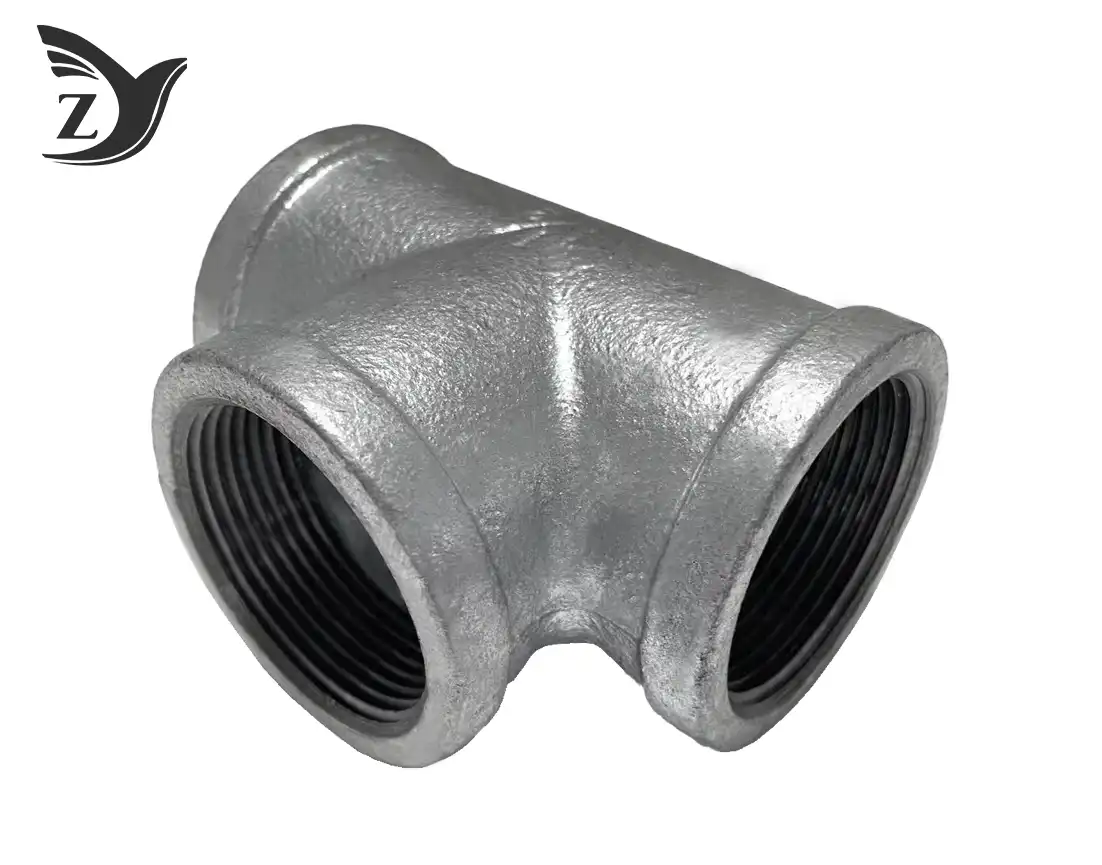
Best Practices for Installation
Pre-Installation Preparation and Inspection
A successful fitting starts with careful planning and checking of all the parts. When the parts are delivered, check them all for problems with the galvanization, the threads, and the casting. Check the ends of the pipes for burrs, rust, or changes in size that could affect the seal's integrity. Get the tools you'll need, like pipe wrenches that are the right size for the fitting, thread sealant (PTFE tape or pipe dope rated for your service medium), deburring tools, wire brushes for cleaning, and thread gauges to make sure the measurements are correct. Make sure that the thread type, pressure grade, and size designations in the fitting specs match the needs of the project.
Organizing your area correctly cuts down on installation mistakes and speeds up the process. Arrange the parts in a planned way, making sure that the angle of each fitting matches the pipeline route before starting to make threaded connections. Use wire brushes to clean all threaded surfaces and get rid of any manufacturing leftovers, dust, or protection coatings that might get in the way of the sealant sticking. The pipe threads should be cut smoothly, with no cross-threading marks, and they should match the taper shape of the square face galvanized square edge straight tee pipe fittings. This planning part takes a lot of time, but it keeps the field from changing and makes sure that the links meet the required pressure and leak-resistance levels.
Step-by-Step Installation Process
Thread Preparation and Sealant Application
Thread preparation has a direct effect on how reliable a link is. To keep sealer pieces from getting into the system, wrap the PTFE thread seal tape clockwise (from the pipe end) in two to three layers, beginning two threads from the pipe end. You could also use a brush to spread liquid pipe sealer equally on the male threads, being careful not to use too much as that could mess up the flow of fluid. The sealer covers up small flaws in the thread and adds to the protection against rust while making it easier for the metal-to-metal seal that tapered threads have.
Alignment and Threading
Hand-thread the pipe into the tee fitting, making sure the line stays straight to avoid cross-threading. The pipe should thread easily for a few turns before it needs help from a wrench. If the initial contact isn't done right, it can break the threads and weaken the seal. Once the link is hand-tight, use pipe tools to finish it off. Place one wrench on the tee body and the other on the pipe. Apply force that rotates counterclockwise to keep the fitting body from warping. Tighten until the resistance goes up a lot, which for NPT joints is usually two to three full turns past hand-tight. Do not over-tighten, as this can break the pliable iron or bend the threads, especially in fits with a smaller diameter.
Verification and Testing
Once everything is put together, check each link visually to make sure the threads are properly engaged and that the pipe penetrates to the right depth without bottoming out in the fitting hole. The square-edge band shouldn't change shape, and there should be the same amount of space between the fitting faces and the pipe shoulders. Before putting the pipeline into service, it should be put through pressure tests that follow the system design specs. Testing under 1.5 times the working pressure for one hour shows any leaks or weak joints that need to be fixed. Use inspection stamps or paint codes to mark connections that have been tried to keep track of the verification state during project commissioning.
Common Installation Errors and Prevention Strategies
Some mistakes that can be avoided hurt the quality of the work. Cross-threading happens when the original alignment is off, damaging the threads on both the fitting and the pipe and making leak routes. To avoid problems, carefully hand-thread until parts fit together smoothly before using tools. Over-tightening is another common mistake that can lead to thread stripping or casting cracks, especially with smaller fits. Installers should use measured torque tools or be taught how to spot changes in resistance that mean the bolt is tight enough. When there isn't enough thread sealant, parts leak, and when there is too much, it clogs up systems with dirt. Follow what the maker says about the type of sealer to use and how thick to apply it. Lastly, not cleaning the surface properly leaves behind oils, dirt, or galvanization dust that make it impossible for sealant to stick properly. Before every link, make sure that cleaning practices are followed by using wire brushes and approved solvents.
Benefits of Using Galvanized Square Edge Straight Tee Pipe Fittings
Superior Corrosion Resistance and Longevity
When compared to painting or bare iron, hot-dip galvanization is the best way to protect against rust. The zinc covering works as a sacrifice anode, corroding more quickly to protect the iron substrate below, even if the surface is slightly damaged and the base metal is shown. This electrical safety mechanism makes fittings last longer in damp places, along the coast, or in systems with irregular flow patterns that cause condensation to form inside. Field data from city water systems shows that square face galvanized square edge straight tee pipe fittings can last for 40 to 50 years in setups that are well taken care of. This lowers the cost of replacement and the time the system is down. The ability to fight corrosion is especially useful in places like fire sprinkler systems that are open to moisture in the air, outdoor pump stations, and buried service lines where digging up to fix them would cost a lot of money.
Mechanical Strength and Structural Reliability
There are clear improvements in the performance of the structure with the square-edge bracing design. The thicker band around each outlet makes the hoop stronger so it doesn't break when the fitting is tightened or when the operating pressure changes. The ductility of malleable iron lets it handle vibration and heat expansion loads without breaking easily, which is a very important trait for systems that are exposed to water hammer or temperature cycles. When compared to cast iron options, flexible fittings can handle more installation torques without breaking, which lets workers make tighter seals. The square face has bigger wrench contact areas, which spreads the tightening forces more evenly and lowers the risk of corner breaking that can happen with hexagonal designs. These mechanical qualities help keep systems reliable in tough situations like industrial process pipes, high-rise building plumbing, and heavy equipment coolant circuits, where a broken part could cause expensive production delays.
Cost Efficiency Through Reduced Maintenance
The initial cost of buying galvanized flexible fittings may be higher than the cost of buying basic black iron parts, but the total cost of ownership is much lower for galvanized goods. The corrosion-resistant layer gets rid of the ongoing costs of surface treatments, increases the time between replacements, and stops system shutdowns caused by contamination. When procurement managers request galvanized parts in damp or outdoor areas, upkeep costs drop by 30 to 40 percent over ten years. Because the square-edge design is less likely to get damaged during installation, there are fewer rejections in the field. This means less waste of materials and lower labor costs for re-work. Buying in bulk from well-known companies like Zhiyuan Malleable Steel can save you even more money by giving you discounts for buying more and making the shipping process easier.
Versatility Across Industrial Applications
These parts are used in a lot of different areas that have different technical needs. They are used by fire protection companies for spray branch lines, standpipe systems, and hydrant feeds, all of which have corrosion resistance and mechanical dependability that directly affect life safety systems. They are used by municipal engineers for water distribution networks, gas service lines, and district heating systems that need to last for a long time with little upkeep. The galvanized finish keeps heat exchange surfaces from getting rusty, so HVAC workers use them in cold water pipes, steam condensate returns, and refrigerant drain lines. They are used in industrial sites to distribute compressed air, cool processes, and clean areas that are exposed to poisons that eat away at metal. These fittings come in sizes from 1/8 inch to 6 inches and have NPT or BSPT threading, so they can be used with almost any type of pipeline. This makes them a standard item for procurement offices that are in charge of handling different types of facilities.
Comparing Galvanized Square Edge Tee Fittings with Alternatives
Galvanized vs. Black Iron Tee Fittings
Black iron tee fittings are cheaper to buy at first, but they need to be protected with coats or fluids that stop rusting in any situation where they will be exposed to water. Because they aren't galvanized, they can only be used in climate-controlled, sealed spaces or in hydrocarbon service where rust is okay. When used outside, in humid basements, near the coast, or in drinkable water systems, square face galvanized square edge straight tee pipe fittings are the best choice because they last longer and don't rust. The extra cost of galvanization is usually between 15% and 25% of the price of the part, but it gets rid of the need for regular coating upkeep and triples the service life, which is a clear economic benefit in most industrial and business settings.
Square Edge vs. Round Edge (Beaded) Designs
Instead of flat, block-like bands that square-edge designs have around the thread outlets, round edge or beaded fittings have supports that are shaped like radii. The beaded style has slightly lower production costs and better noise absorption because it is bent. But square-edge fittings have better surfaces for wrench grips, which speeds up installation and stops tools from slipping, which can damage galvanization. The flat sides make it easier to check the alignment during inspection and allow for closer mounting in small areas. When making a purchase choice, you should weigh the benefits of easy installation and wrench accessibility against small price differences. Square-edge specs are best for projects that require repeated installs or labor teams that aren't used to working with tools.
Material Selection: Galvanized Malleable Iron vs. Stainless Steel
Stainless steel tee valves are very resistant to corrosion in harsh chemical conditions, high-temperature settings, or systems that are so pure that even zinc contamination is not allowed. Depending on the material, there are big price differences. For example, galvanized malleable iron fittings are 300–500% cheaper than stainless steel ones. For water, gas, HVAC, and general industry services, galvanized malleable fittings are the best combination of resistance to rust, mechanical strength, and low cost. Specification of stainless steel should only be done when system chemistry or regulatory needs clearly call for it. Budget resources should be saved for parts where material advantages support higher prices.
Conclusion
To properly install square face galvanized square edge straight tee pipe fittings, you need to pay attention to thread compatibility, the right way to use lubricant, and precise alignment. These moldable iron parts that don't rust last a long time, are very strong, and don't cost a lot. They can be used in fire protection, city infrastructure, HVAC, and industry processes. Because they work better than black iron options and round-edge designs, they should be specified when they will be exposed to wet or have strict mechanical needs. To do a good job of procuring things, you need to look at more than just the prices of the parts you need. You also need to make sure that the materials you need are always available and that the quality stays the same as the project goes on.
Partner with Zhiyuan Malleable Steel for Reliable Pipeline Solutions
As a well-known company that has been making square face galvanized square edge straight tee pipe fittings for 26 years and has a 30,000-ton annual capacity, Zhiyuan Malleable Steel provides high-quality parts that meet international standards such as ISO 9001, UL, FM, and CE certifications. Our factory in Taigu District has high-tech production tools that let us customize NPT and BSPT threading, non-standard sizes, and OEM specs to meet the needs of a wide range of projects. Our standard inventory means that we can deliver quickly—often within two hours for popular sizes—and our technical team can help you with fitting and choosing the right materials. Send us an email at q1236800000@gmail.com to talk about your pipeline component needs, get detailed quotes, or set up a tour of our facility to see how our quality control procedures and manufacturing skills have made us a trusted supplier of square face galvanized square edge straight tee pipe fittings in the commercial, municipal, and industrial sectors.
FAQs
How do I determine the correct size for my application?
To size square face galvanized square edge straight tee pipe fittings, you need to match the standard pipe size (NPS) to the width of your pipeline and make sure that the thread types are compatible. Even though they look the same, NPT and BSPT threads cannot be switched out. Using calipers and thread gauges, measure the outside diameter and thread pitch of the current pipe. Then, compare the readings to ASME B1.20.1 (NPT) or ISO 7/1 (BSPT) standards. The system pressure values must match or go beyond the conditions of use. For example, Class 150 fittings are rated to 300 psi for water service at room temperature. To avoid problems in the field, engineering plans should include both the size and the type of thread.
Are galvanized fittings suitable for outdoor and corrosive environments?
Hot-dip galvanized fittings work great outside, near the water, and in wet places where bare iron would rust quickly. The zinc layer offers sacrificial protection that lasts for decades in normal air conditions, but it should still be checked every so often. Square face galvanized square edge straight tee pipe fittings should not be used in highly acidic or alkaline chemical services because zinc breaks quickly in those conditions. For more information, look at suitability charts for different fluid chemicals. Extra corrosion protection for underground installations, like pipeline wrapping or cathodic protection systems, is helpful in places with very acidic soil.
What maintenance is required after installation?
In normal use, galvanized flexible fittings don't need much upkeep. During regular system checks, look for rust that has broken through, mechanical damage, or leaky joints that mean the sealant has failed. If small amounts of seepage show up, retighten the links. Joints that are properly fitted rarely need to be adjusted, though. Systems that are likely to be affected by shaking or changes in temperature should be checked every six months at first, and then more often once stability is proven. Replace any parts that show a lot of galvanization loss, mechanical deformation, or cracks found by dye penetrant tests while the system is down for major maintenance.
References
American Society of Mechanical Engineers. (2020). Pipe Threads, General Purpose (Inch). ASME B1.20.1-2020.
ASTM International. (2019). Standard Specification for Cupola Malleable Iron. ASTM A197/A197M-19.
ASTM International. (2020). Standard Specification for Zinc Coating (Hot-Dip) on Iron and Steel Hardware. ASTM A153/A153M-20.
International Organization for Standardization. (2016). Pipe Threads Where Pressure-Tight Joints Are Made on the Threads—Part 1: Dimensions, Tolerances and Designation. ISO 7-1:2016.
National Fire Protection Association. (2022). Standard for the Installation of Sprinkler Systems. NFPA 13-2022.
Smith, J.R. & Thompson, K.L. (2021). Corrosion Prevention in Industrial Piping Systems: Materials Selection and Protective Coatings. Industrial Press Inc.
Online Message
YOU MAY LIKE
High quality furniture manufacturer