
Aug 4, 2026
Benefits of 341 Galvanized NPT Male Female Union for Maintenance Systems
The NPT galvanized male female threaded union 341 pipe fittings perform exceptionally well in maintenance systems that need dependability. Their corrosion-resistant design and carefully designed construction make them the best choice. Hot-dipped galvanized coating and high-strength malleable iron are combined in these dual-threaded, detachable pipe connections to make industrial-grade solutions that can withstand harsh conditions and allow for quick removal during regular maintenance. Following the rules set by ASME B16.39 and B1.20.1 guarantees leak-proof links by using metal-to-metal cone seating. This gets rid of the need for gaskets and increases the service life in water, gas, and steam uses. This technical edge directly leads to less downtime, lower maintenance costs, and better system stability for water supplies, HVAC installs, fire protection networks, and industrial process pipes.
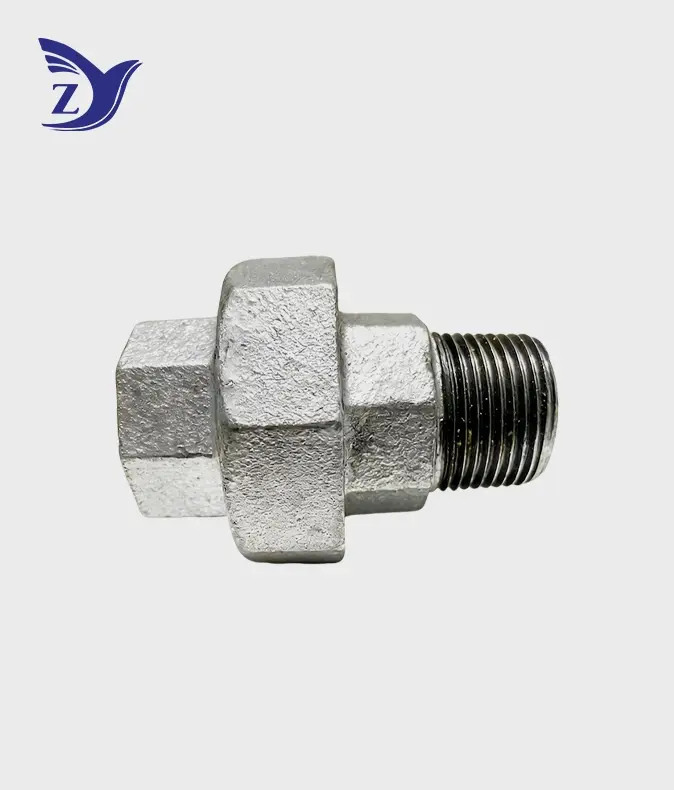
Key Benefits of Using 341 Galvanized NPT Male Female Unions in Maintenance Systems
Superior Corrosion Resistance Extending Service Life
Maintenance funds are always under pressure to keep systems in good shape while reducing the number of times they need to be replaced. This problem can be solved with NPT galvanized male female threaded union 341 pipe fittings, which have a zinc covering that protects against both barrier and cathodic damage at the same time. When water gets into the base metal through scratches or places where threads meet, the zinc covering gives up its charge, stopping iron from oxidizing and breaking down the structure.
Field performance data from water treatment plants shows that galvanized unions keep their pressure integrity for decades, while black pipe copies need to be replaced every three to five years because the threads rust and the walls thin. This longevity is especially useful in setups where getting to them involves shutting down the system, taking apart equipment, or following special rules for entering a confined area, which adds to the cost of work beyond just replacing parts.
Chemical resistance includes weak acids, alkaline solutions, and filtered water, all of which are common in city water systems and industrial cooling loops. The zinc patina that naturally forms adds another layer of protection, making it stronger over time instead of breaking down like organic coats do when heated and cooled.
Rapid Installation and Simplified Maintenance Access
The idea behind union design is to let pipes be disconnected without damaging the pipes next to them. This is very important for repairing equipment, replacing valves, or making changes to the system. Threaded unions can be taken apart with normal pipe wrenches, while welded or brazed joints need cutting tools and hot work permits. This cuts down on repair time from hours to minutes.
The male-female thread design makes installation even easier by getting rid of the close nipple that is usually needed to join two female-threaded parts together. This simplifies things so that fewer parts need to be kept on hand, there are fewer places where leaks could happen, and systems can be made smaller when room is limited. Installation teams like being able to pre-assemble unions on pieces of equipment or valve kits before they are finally connected. This lets them test how well the parts work before putting them into active systems.
The metal-to-metal cone seat design means that the pressure testing capabilities stay the same even after many assembly rounds. This is because the seat seals effectively without the need for a new gasket. Maintenance teams say that unions work well for 10 to 15 disassembly rounds before the seat wears out and needs to be replaced. This is in contrast to flat-seat designs, which need new seals every time they are opened.
Comparative Analysis: Why Choose 341 Galvanized NPT Unions Over Other Options?
Galvanized Malleable Iron vs. Black Pipe Unions
Black malleable iron unions work well in safe places, like oil transfer lines or internal steam heating systems, where they don't get wet very often. The lack of galvanization lowers the cost of the material by about 15 to 20 percent. This makes black pipe appealing for uses where rust is not a problem. But outdoor installations, drinkable water systems, and fire protection networks quickly show that black pipe has its limits. Within months, surface rust shows up, and within 2 to 4 years, thread corrosion makes closing impossible.
When it comes to maintenance, black pipe needs to be inspected every 6 to 12 months, while galvanized pipe only needs to be checked every 3 to 5 years. Rust also pollutes system fluids, making particles that hurt equipment further down the line, like control valves, meters, and heat exchanges. Fire protection systems are especially at risk because when they're not in use, standing water can speed up internal rust, which could make the system less reliable when it needs to be used in an emergency.
As more building managers adopt sustainable programs that aim to cut down on maintenance waste, extend the lifecycles of equipment, and lessen the damage that comes from replacing parts too soon, galvanized materials become more appealing from an environmental point of view. Because of these things, black pipe is only economically possible in certain situations where the restrictions are necessary because of the environment.
Performance Comparison with Brass Unions
Copper-zinc metals used to make brass unions are very good at resisting corrosion and looking good. This makes them popular in water systems in homes and businesses where pipes can be seen. The material has natural antimicrobial qualities that make it useful for installations in drinking water systems and hospital facilities. But brass costs 200–300% more than coated malleable iron for the same sizes, which makes it hard for big industrial projects to stick to their budgets.
Mechanical strength limits also make it hard to use brass unions for certain things. Their tensile strength is usually only 50 to 60% of that of pliable iron versions. High-pressure systems like steam, compressed air, and hydraulics often put more pressure than brass can handle. This is especially true for sizes bigger than 2 inches, where the wall thickness needed to keep safety factors high becomes too thick. Brass and steel pipes have very different thermal expansion coefficients, which can cause stress to build up at unions and cause joints to loosen or crack when temperatures change.
In industrial settings where fittings are likely to be hit by machinery, vibration, or accidental damage, malleable iron is better because it is tougher and can withstand more impact. Brass, on the other hand, is softer and deforms when a wrench is used for maintenance, which can stop it from sealing properly as thread damage builds up. Because of these issues, brass is more of a specific solution for certain situations than a general alternative to NPT galvanized male female threaded union 341 pipe fittings.
Threaded Unions vs. Compression Fittings
Compression fittings with ferrules or compression rings can be installed without tools and can be moved around during assembly. This is helpful for situations where adjustments need to be made often or where skilled workers are hard to find. However, compression joints need to be inspected and retightened on a regular basis because vibration and temperature changes can loosen the ferrule grip. This is something that properly installed threaded unions don't have to do.
Compression fittings can only be used in low-demand situations, usually below 150 psi and 250°F. Class 150 threaded unions, on the other hand, can reliably handle 300 psi WOG and steam applications up to 400°F. The mechanical grip of compression ferrules also creates stress concentrations that can cause tube wall cracking in situations where pressure changes or water hammer events happen.
Long-term dependability favors threaded unions in permanent installations where the better sealing integrity, pressure capacity, and maintenance-free operation make up for the extra installation labor. Compression fittings are best for instrumentation tubing, temporary connections, and situations where the layout is likely to change in the future. Knowing these application boundaries helps procurement professionals choose the right joining methods that meet the needs of the system.
Procurement Considerations for 341 Galvanized NPT Male Female Unions
Supplier Qualification and Quality Assurance
Finding manufacturers of NPT galvanized male female threaded union 341 pipe fittings with consistent quality through third-party certification and documented quality management systems is the first step to successful procurement. For example, ISO 9001 certification means that there are systematic process controls in place for material selection, manufacturing procedures, inspection protocols, and nonconformance management. Buyers shouldn't just rely on what suppliers say about their certifications; they should ask for the documents themselves and make sure that the scope of coverage includes the products they are looking for.
Technical compliance with ASME B16.39 dimensional standards and ASTM A197 material specifications should be checked through mill test reports or material certificates that are sent with shipments. These documents make it possible to track down specific production lots by linking them to specific melts, heat treatments, and mechanical property testing results. Reputable manufacturers keep these records for years, which lets failure investigations happen if problems happen in the field.
Extra certifications, like FM approval for fire protection applications or NSF/ANSI 61 compliance for potable water contact, show that the manufacturer has put in the time and effort to meet the specific needs of the application. These certifications do add a little to the cost of the materials, but they remove the risk and possible liability that come with installing non-compliant parts in regulated systems.
Ordering Logistics and Volume Purchasing Strategies
When custom sizes, special markings, or delivery schedules need to be coordinated, it's better for big projects to work directly with manufacturers instead of relying on distributors' stock. Manufacturers like Zhiyuan Malleable Steel, which has an annual capacity of 30,000 tons and more than 1,000 product specifications, can handle large infrastructure projects while still being able to handle smaller custom orders.
When planning lead times, you should keep in mind that manufacturing cycles for standard products usually last between 2 and 4 weeks, and for custom specifications that need pattern development or special galvanizing procedures, they last between 6 and 8 weeks. Strategic buyers keep framework agreements with qualified suppliers, negotiating prices, quality standards, and delivery protocols ahead of time so that orders can be filled quickly once the project is approved.
Shipping costs and product safety are affected by the type of packaging used. For example, double-layer cardboard packaging is better at protecting products during international transport than bulk packaging. Optimizing container loading maximizes transportation efficiency, which is especially important for international shipments where freight makes up a big part of the total landed cost.
After-Sales Support and Documentation Requirements
Installation crews and maintenance teams can use detailed installation instructions, torque specifications, and material compatibility guidelines to avoid common mistakes that damage joints. Manufacturers who offer multilingual documentation and technical support access show that they care about their customers' success in more ways than just delivering products.
Warranty terms should make it clear what the warranty covers, how long it lasts, and how to file a claim. It is standard practice in the industry to replace any defective materials within 12 months of delivery, and forward-thinking companies like Zhiyuan Malleable Steel stand behind the quality of their products with helpful customer service and quick defect resolution processes. Knowing what the warranty doesn't cover, like improper installation, use outside of the rated parameters, or unauthorized modifications, keeps everyone from having unrealistic expectations.
Building long-term relationships with suppliers adds value by letting you learn more about what customers want, making the reordering process easier, and working together to solve problems when an application runs into trouble. Procurement professionals who build these partnerships gain competitive advantages by getting special treatment during supply shortages, early access to new products, and technical advice to help them come up with specifications for new projects.
Conclusion
The technical advantages and practical benefits of NPT galvanized male female threaded union 341 pipe fittings make them indispensable for maintenance systems requiring reliability, longevity, and serviceability. Their hot-dipped galvanized coating delivers corrosion resistance extending service life far beyond black pipe alternatives, while the precision-engineered cone seat ensures leak-proof connections through repeated assembly cycles. The male-female thread configuration simplifies installation and reduces leak paths compared to traditional union designs requiring additional nipples. Procurement professionals who prioritize quality suppliers providing certified products, comprehensive documentation, and responsive technical support position their organizations for operational success through reduced maintenance costs, enhanced system reliability, and streamlined inventory management. The modest additional investment in galvanized malleable iron unions generates substantial returns through extended replacement intervals, decreased emergency repairs, and improved overall system performance across diverse industrial and commercial applications.
FAQs
What pressure rating applies to standard 341 galvanized unions?
For most NPT galvanized male female threaded union 341 pipe fittings, Class 150 ratings mean 300 psi for water, oil, and gas service at room temperature, but only 150 psi for steam service. Applications that need higher pressure can ask for Class 300 unions, which are rated for 600 psi WOG service. Before installing in high-pressure systems, always check the manufacturer's embossed markings on the fitting body to confirm the pressure class, as mixing pressure ratings can be dangerous and lead to liability issues.
Does the cone seat design require gaskets for proper sealing?
The 341 taper seat union uses precision-machined spherical and conical surfaces that engage when the union nut is tightened to create a metal-to-metal seal. This design gets rid of the need for a gasket, which is especially helpful in high-temperature steam applications where traditional gasket materials break down. For the metal-to-metal contact to work properly, the seating surfaces must be clean and undamaged, so they must be handled carefully during storage and installation to ensure leak-free performance.
Can galvanized unions be used in potable water systems?
If NPT galvanized male female threaded union 341 pipe fittings are made with high-purity zinc (usually 99.99%) and meet regional lead-free standards like NSF/ANSI 61 in North America, they can be used with potable water. However, buyers shouldn't assume that all galvanized fittings meet drinking water standards; different suppliers use different manufacturing processes and the quality of the zinc varies. Getting the right certification protects against health risks and breaking the law.
How does the male-female configuration benefit installation compared to female-female unions?
When you connect two female parts with a traditional female-female union, you need a close nipple or short pipe section with male threads on both ends. The male-female union gets rid of this middle piece, which cuts the number of connections from four threaded joints to three. This makes the assembly simpler, which is helpful in places with limited space, like mechanical rooms and equipment skids, where space is limited.
Partner with Zhiyuan Malleable Steel for Reliable 341 Galvanized Union Supply
Zhiyuan Malleable Steel stands ready to support your procurement needs with NPT galvanized male female threaded union 341 pipe fittings manufactured to exacting international standards. Our 26 years of casting expertise and 30,000-ton annual production capacity ensure consistent quality and reliable delivery for projects ranging from small maintenance requirements to major infrastructure installations. ISO 9001 certification, along with CE, UL, and FM approvals, demonstrates our commitment to quality management systems meeting global expectations. We offer comprehensive product lines exceeding 1,000 specifications, bulk purchasing advantages, and ODM/OEM customization capabilities addressing unique application requirements. Our double-layer cardboard packaging protects products during international shipping, while ample inventory enables standard products to ship within two hours of order confirmation. Contact our technical team at q1236800000@gmail.com to discuss your specific requirements, request material certifications, or arrange sample evaluation. As a trusted galvanized union manufacturer serving fire protection contractors, municipal engineering firms, and industrial maintenance departments worldwide, we provide the quality, service, and reliability your projects demand. Visit zymalleablepipefitting.com to explore our complete product catalog and discover why procurement professionals choose Zhiyuan Malleable Steel as their preferred supplier.
References
American Society of Mechanical Engineers. (2018). Pipe Unions: ASME B16.39 Standard Specifications. ASME Press.
ASTM International. (2020). Standard Specification for Cupola Malleable Iron: ASTM A197. West Conshohocken: ASTM Standards.
Harris, J. M. (2019). Corrosion Protection Through Hot-Dip Galvanizing: Technical Principles and Industrial Applications. Materials Engineering Publications.
National Fire Protection Association. (2021). Installation of Sprinkler Systems: NFPA 13 Handbook. Quincy: NFPA Press.
Roberts, D. & Chen, L. (2020). Threaded Pipe Connection Systems: Design, Installation, and Maintenance Best Practices. Journal of Pipeline Engineering, 45(3), 112-128.
Williams, T. E. (2017). Malleable Iron in Industrial Piping: Material Properties and Performance Characteristics. Industrial Materials Review, 32(4), 67-83.
Online Message