
Sep 18, 2026
Are there different radii of long radius elbows?
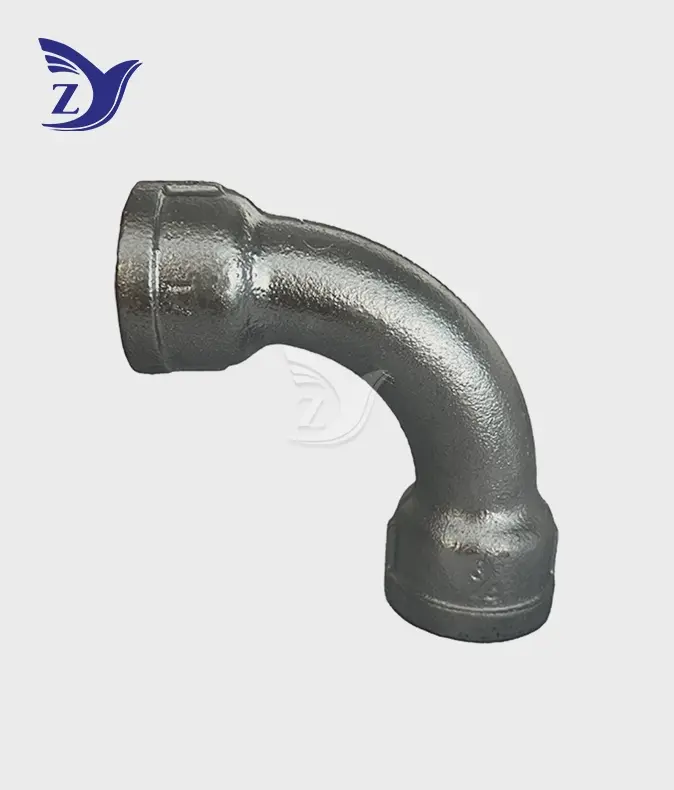
Yes, there are different radii among long-radius elbows, even within the same 90° configuration. While the industry standard defines a long radius elbow as having a centerline radius equal to 1.5 times the nominal pipe diameter (1.5D), dimensional tolerances, pipe size scaling, and manufacturer-specific production standards all introduce measurable variation across product lines. When selecting NPT galvanized female-female 90° long radius elbow pipe fittings for water or gas systems, understanding these radius differences is critical — they directly affect pressure drop, flow velocity, and long-term pipe integrity.
Understanding Long Radius Elbows: Definitions and Specifications
What Makes an Elbow "Long Radius"?
An elbow with a long radius is defined by its centerline-to-end length, which is 1.5 times the nominal pipe diameter. For example, an elbow with a 2-inch long radius has a 3-inch centerline radius. When compared to short radius elbows, which use a 1.0D centerline ratio, this shape makes an arc that is smoother, which lowers noise and frictional resistance. In situations where fluids or gases move quickly, this difference means that less energy is used and the fitting doesn't wear down as quickly.
NPT Threading and Galvanized Coating Standards
ANSI/ASME B1.20.1 sets the rules for NPT galvanized female-female 90° long radius elbow pipe fittings. It has a 60° thread angle and a tapered shape that make a physically interference-fit seal. This threading standard is used by most plumbing and gas distribution networks in North America. Hot-dip galvanization covers the malleable iron base with a zinc coating by submerging it in molten zinc, which meets the requirements of ASTM A153. The zinc layer acts as a sacrificial anode, keeping the base metal from oxidizing even when it's wet, outside, or in a chemically harsh environment. At room temperature, the pressure values for common threaded 90° long radius elbows made of malleable iron are usually between 150 and 300 PSI, but this depends on the pipe size and wall class.
Dimensional Analysis: Are There Variations in Radii Among Long Radius Elbows?
Yes, and those differences are more important than many people think. Many people use 1.5D as a starting point, but the actual centerline radii can be different depending on the pipe size, material, and production tolerances. Because tolerance bands in standards like ASME B16.3 are given as proportional ranges instead of fixed millimeter values, the absolute differences in machined dimensions are bigger for nominal pipe diameters.
Here are the main things that cause variations in radius between long radius elbow products:
- Pipe diameter scaling: For example, a ½-inch long radius elbow has a centerline radius of about 0.75 inches, and a 4-inch elbow has a radius of 6 inches. The proportional 1.5D ratio stays the same, but the actual dimensional spread gets a lot bigger. This means that plans for installation layout and pipe routing must take into account the sizes of the pipes at each diameter class.
- Manufacturer production tolerances: ASME B16.3 allows angular tolerances of ±1° for threaded malleable iron joints and measurement tolerances that are bigger for bigger pipes. Some makers keep tolerances tighter by using CNC-controlled machining. This directly improves the accuracy of thread contact and the trustworthiness of the seal.
- Material influence on geometry: Carbon steel and malleable iron elbows have the same stated radius, but their casting shrinkage rates are slightly different. After being made, hot-dip galvanized malleable iron fittings need to be checked for size to make sure the zinc layer doesn't change the thread pitch width.
These changes make a difference in the field. The pressure drop across the elbow is higher when the radius is even slightly shorter than what is stated. This is because the resistance coefficient (K-value) goes up. In the engineering fluid mechanics literature, it has been shown over and over that changing the radius-to-diameter ratio from 1.5 to 1.0 raises the K-value by about 40 to 50%. This means that the pump uses more energy and the fittings wear out faster. Choosing the right-sized long radius fitting is not a small detail in the specifications; it is a decision that affects the whole system.
Material and Performance Comparison of NPT Galvanized Female-Female 90° Long Radius Elbows
Galvanized Malleable Iron vs. Stainless Steel
Long radius galvanized iron elbows are a good combination of mechanical strength and rust protection, and they are a lot cheaper than stainless steel options. The tensile strength of KTH350-10 malleable iron is at least 350 MPa, which meets the structural needs of water distribution and low-pressure gas lines. Stainless steel elbows are better in chemically corrosive environments, but they cost three to five times more for the same sizes. The most cost-effective specification choice for threaded 90° long radius fittings is hot-dip galvanized malleable iron. This is because it can be used for industrial plumbing, HVAC condensate returns, and city gas distribution.
Threaded vs. Welded Elbows: Installation Implications
NPT double-female elbows connect two pipe ends by threaded engagement. This means that there is no need for welding equipment, heat permits, or post-weld inspections on the job site. This is a huge benefit for small to medium-sized installation companies that work on multiple projects at the same time. Welded elbows have stronger permanent joints for high-pressure uses, but they need to be welded by certified welders, which costs a lot of money. The NPT galvanized female-female 90° long radius elbow pipe fittings configuration gets rid of the need for a close nipple between the elbow and the valve or equipment port next to it. This lowers the number of places where the assembly could leak.
Practical Installation and Procurement Insights for B2B Clients
Preparing the threads is the first step in installing a corrosion-proof 90° long radius fitting correctly. PTFE tape or a rated pipe thread sealant must be put on the male threads of NPT threads before they can be put together. A measured torque wrench can be used to prove that the contact range is two to three turns past finger-tight. If you overtighten a female fitting made of pliable iron, the socket will crack. This is a regular field failure that can be avoided.
For procurement managers evaluating NPT galvanized female-female 90° long radius elbow pipe fittings at volume, the following criteria are the most reliable quality indicators:
- Thread gauge compliance: Reliable providers use L1 and L2 ring and plug gages to check the conformance of NPT threads according to ANSI B1.20.1. Ask for gage records as part of the quality paperwork that comes in.
- Zinc coating thickness verification: ASTM A153 says that threaded items must have a minimum average coating weight. Before goods come into your warehouse, magnetic thickness testing is a quick and non-destructive way to make sure they are in compliance.
- Hydrostatic test records: Reliable makers test sampled production lots for hydrostatic strength at 1.5 times the maximum working pressure. This checks the casting for holes and empty spaces inside before it is shipped.
These quality controls directly stop the two most expensive failures that can happen in the field: threaded joint leaks during pressure testing and rust failures after installation that need to redo the whole section. All three of these checkpoints can be checked against records kept by certified providers who follow ISO 9001 quality management systems.
Conclusion
There are changes in the sizes of long radius elbows based on pipe sizes, clearance bands, and types of material. These differences affect how well the system works in the real world. The 1.5D midpoint ratio is the standard, but choices about what to buy should be based on more than just that one criterion. If a 90° elbow works consistently through years of service and pressure tests, it depends on how well the threads are made, how well the zinc coating is applied, and how well the casting is done. When contractors and purchasing managers are looking for industrial-grade threaded elbows for water and gas pipelines, the best long-term value comes from a mix of precision NPT galvanized female-female 90° long radius elbow pipe fittings threading, hot-dip galvanization, and high-strength malleable iron construction.
FAQ
1. Does the radius of a long radius elbow affect pressure drop?
In a useful way. When compared to short radius elbows, the long radius shape lowers the resistance coefficient (K-value) by about 30 to 40%. When K values are low, there is less energy loss across the fitting. This is important in systems where the fluid is moving quickly or changing directions a lot.
2. Can NPT and BSPT threads be mixed on the same fitting?
No, the thread angle for NPT is 60°, and the angle for BSPT is 55°. When you mix the two standards, the threads don't engage fully, which can cause leaks and damage to the threads. Before you buy, you should always check the male pipe thread standard.
3. Are galvanized malleable iron elbows suitable for natural gas lines?
Fittings that are galvanized are used for gas applications, but local codes may be different. In some places, gas lines must be made of black iron so that they can be seen. Before selecting zinc fittings for fuel gas service, make sure they meet the requirements of ASME B31.2 and your local gas authority.
4. What size range covers most commercial plumbing projects?
Standard long radius elbows made of malleable iron come in sizes ranging from ⅛ inch to 6 inches, which can be used for a wide range of plumbing, HVAC, and low-pressure gas distribution tasks in homes and businesses.
5. How do I verify a supplier's thread quality before ordering?
Ask for records of thread gage inspections that follow ANSI/ASME B1.20.1 and hydraulic test results. Manufacturers who are ISO 9001-certified keep these records as standard paperwork.
Partner With Zhiyuan Malleable Steel for Reliable Long Radius Elbow Fittings
Since 2006, Zhiyuan Malleable Steel has been making precision pipe fittings. They can make up to 30,000 tons of them each year and have ISO 9001, CE, UL, and FM certifications. Our NPT galvanized female-female 90° long radius elbow pipe fittings supplier stock ranges from ⅛ inch to 6 inches in both galvanized and black iron finishes. We can ship most orders within two hours. You can get OEM and ODM services. For details and prices, email us at q1236800000@gmail.com.
References
1. ASME B16.3 — Malleable Iron Threaded Fittings: Classes 150 and 300, American Society of Mechanical Engineers, 2021.
2. ANSI/ASME B1.20.1 — Pipe Threads, General Purpose (Inch), American National Standards Institute, 2013.
3. ASTM A153/A153M — Standard Specification for Zinc Coating (Hot-Dip) on Iron and Steel Hardware, ASTM International, 2016.
4. Crane Co. — Flow of Fluids Through Valves, Fittings, and Pipe, Technical Paper No. 410, Crane Co., 2013.
5. ASME B31.2 — Fuel Gas Piping, American Society of Mechanical Engineers, 2019.
6. NSF/ANSI 61 — Drinking Water System Components — Health Effects, NSF International, 2022.
Online Message