
Nov 11, 2026
Are galvanized bushings available in NPT and BSPT threads?
Galvanized bushing pipe fittings are manufactured in both NPT and BSPT thread configurations. NPT (National Pipe Taper) follows ANSI/ASME B1.20.1 with a 60° thread angle, while BSPT (British Standard Pipe Taper) follows ISO 7-1 with a 55° Whitworth angle. Both versions use hot-dipped galvanized malleable iron as the base material, delivering corrosion resistance and mechanical strength across water, gas, and industrial pipeline systems. Whether you source for North American projects or global markets, the right threaded pipe reducer is available to match your system's pressure requirements and regional compliance codes.
Understanding Galvanized Bushings and Thread Standards
What Is a Galvanized Bushing?
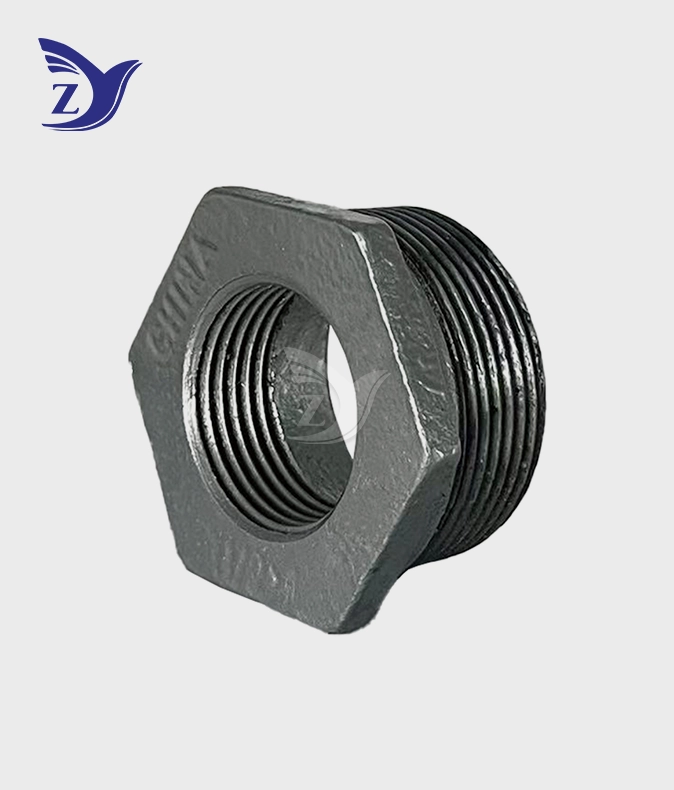
A zinc bushing is an industrial-grade part that changes the width of two pipes so that they can be connected in one run. On the outside is a male thread, and on the inside is a smaller female thread. ASTM A197 malleable iron is usually used as the base material. This iron is hot-dip galvanized to add a zinc layer about 70 to 85 microns thick. The zinc layer acts as an anodic shield, stopping the iron base from rusting in wet, chemically active, or outdoor areas. A pipe fitting that won't rust and will last a long time is the result. It can be used in water, oil, gas, and HVAC systems all over the world.
NPT Thread: The North American Standard
It is the same as ANSI/ASME B1.20.1 that NPT threads have a 60° thread angle and a 1:16 taper ratio. When you connect two NPT fittings, the taper creates radial compression. This makes a pressure-tight seal that is usually made stronger with PTFE tape or anaerobic sealant. All water and gas pipeline links in the US and Canada use this kind of thread. Most of the time, projects that follow ASME, ASTM, or UL codes will need NPT.
BSPT Thread: The International Standard
BSPT threads follow ISO 7-1 (which used to be called BS 21) and have the same 1:16 taper and a 55° Whitworth angle. The contact geometry is a little different because the thread angle isn't as steep as NPT. They can't be switched because doing so could lead to a leak or a mechanical failure. For many people in Europe, Southeast Asia, the Middle East, and the Commonwealth, BSPT thread is the best choice. Because it has a hexagonal head and precision threads, the BSPT fitting lets the worker use the right amount of force without damaging the female thread inside.
Availability of Galvanized Bushings in NPT and BSPT Threads
Market Availability
Most companies that make and sell things around the world keep both NPT and BSPT galvanized bushing pipe fittings in stock. As you might expect, these fittings come in sizes ranging from 1/8" to 4", which is the full range of pipe widths used in building, gardening, fire safety, and gas distribution. The specs we have at Zhiyuan Malleable Iron cover more than 1,000 different thread standards. You can buy by the lot or by the container.
Certification and Compliance
NPT-threaded bushings made to ASTM A197 and ASTM A153 meet the 300 PSI pressure rating for Class 150 fittings. Based on EN 10242, BSPT types can handle pressures of up to 25 BAR (362 PSI). Zhiyuan's goods have been approved by CE, UL, and FM, which means they meet the standards for quality, safety, and fire protection that purchasing teams in controlled markets look for. The quality system we use for production is based on ISO 9001. It covers everything from casting to galvanizing to packaging.
Thread Mismatch Risks
Before you buy, you should know that you can't mix NPT and BSPT threads. Both are narrow at 1:16, but their thread angles are different (60° vs. 55°), so they can only connect partially. When there is only some touch, stress builds up, and the bond breaks down in the end. Make sure you know whether the downstream client's system uses NPT or BSPT before you order anti-rust flexible bushings for a global project with different regional needs.
Choosing the Right Thread Type for Your Application
Geography and Code Compliance
The easiest way to make decisions is to look at the map. Projects in North America, especially those that follow NFPA 13, IPC, or UL rules, need NPT. People in Europe, the Gulf Cooperation Council, Southeast Asia, and Sub-Saharan Africa often need BSPT for their projects. When they serve both NPT and BSPT markets, it is normal for wholesalers to keep both types of bushings in stock.
Pressure, Temperature, and Environmental Conditions
The pressure class and the work setting also play a role in finding the right fit. Class 150 galvanized bushing pipe fittings can handle low working pressures in water and gas lines that are not frozen. When the fitting hits the ground in underground irrigation lines or near the coast where there is a lot of humidity, the zinc coating directly extends its useful life. There are two types of fittings: malleable iron and stainless steel. If you work with harsh chemicals, you should decide which one is better in terms of cost and durability.
Material Comparison: Malleable Iron vs. Alternatives
If you anneal cast iron, you make it less rigid and more pliable. It also makes iron that can be stretched to at least 350 MPa. Even though brass is softer and costs more, iron that can be shaped can handle the stress of tapered threads being woven together without breaking. When used outside or in an industrial setting as a water/gas pipeline adaptor, the galvanizing version will not rust as easily as the black iron version. For most business and industry jobs, a flexible bushing that is strong and won't rust is the best value for money.
Technical Specifications and Dimensions of Galvanized Bushing Pipe Fittings
Standard Dimensions and Pressure Ratings
In the table below, you can see typical information about regular Class 150 galvanized malleable iron bushings:
- Size range: 1/8" to 4" nominal pipe size
- Thread standards: NPT (ANSI/ASME B1.20.1) or BSPT (ISO 7-1)
- Max working pressure: 300 PSI (NPT Class 150) / 25 BAR (BSPT PN25)
- Zinc coating thickness: 70–85 microns (hot-dip, ASTM A153 / EN 10242)
- Base material tensile strength: ≥ 350 MPa (ASTM A197 malleable iron)
- Head design: Hexagonal, for precise torque application
Maintenance and Service Life
If you put the galvanized bushing pipe fittings on the right and keep it in a moderate climate, the American Galvanizers Association says it should last 20 to 50 years before the zinc wears off and needs to be replaced. You should check for red rust or white zinc oxide layers often because they show early signs of wear. If PTFE tape wasn't used to close the threads, they should be checked for galling. Fixed a broken joint in a live gas or water line costs a lot more money than replacing a single fitting that can be easily changed to fit different sizes.
Procuring Galvanized Bushings: Tips for B2B Buyers
To get a lot of corrosion-resistant threaded pipe reducers, you need to do more than just find the best price per unit. These four things are the most important for big purchases:
- Factory-direct pricing: Buying directly from a manufacturer with an annual production capacity of 30,000 tons eliminates middle-tier markups and improves your margin on resale.
- Batch consistency: Ton-level orders should carry zero-defect tolerance. Zhiyuan enforces ISO 9001 quality controls at every stage — from the medium-frequency electric furnace through galvanizing to final thread gauging — to eliminate sand holes and off-spec threads.
- Packaging for export: Our double-layer cardboard packaging with woven bags protects corrosion-proof bushings from moisture and physical damage during sea freight, reducing claims on arrival.
- Flexible MOQ and tiered pricing: We offer graduated pricing structures that reward volume, with standard products available from bonded inventory for urgent orders.
Conclusion
Galvanized bushing pipe fittings are available in both NPT and BSPT thread standards, covering virtually every regional market and industrial application from HVAC and fire suppression to gas distribution and agricultural irrigation. The choice between NPT and BSPT depends on your market's code requirements and your downstream clients' existing pipe systems. What matters equally is galvanization quality, thread precision, and batch-to-batch consistency — factors that directly determine your return rate and client retention. Sourcing from a certified manufacturer with the capacity and quality controls to back up every order is the most direct path to protecting your margins.
FAQ
Can NPT and BSPT galvanized bushings be used interchangeably?
No. Despite sharing the same 1:16 taper, NPT uses a 60° thread angle while BSPT uses 55°. Mixing the two produces incomplete thread engagement, which leads to leaks or fitting failure under pressure. Always confirm the thread standard required by the downstream system before ordering.
How do I identify whether a bushing is NPT or BSPT?
Check the thread pitch and angle with a thread gauge. NPT threads have 60° flanks; BSPT threads have 55° flanks. Most manufacturers also stamp the thread designation directly on the hex head. If no marking exists, request a material test report or product certificate from your supplier.
Are galvanized bushings suitable for potable water systems?
Standard galvanized fittings may not meet NSF/ANSI 61 and 372 lead-free requirements for drinking water unless specifically certified. Confirm with your supplier that the fitting carries the appropriate certification before specifying it in potable water applications.
What sealant should I use with galvanized NPT or BSPT bushings?
Use PTFE tape or an anaerobic pipe thread sealant rated for metal pipe threads. This lubricates the joint during tightening, reduces galling risk, and ensures a leak-free seal without requiring excessive torque that could crack the fitting.
What is the standard zinc coating thickness for hot-dipped galvanized bushings?
Per ASTM A153 and EN 10242, the minimum average zinc coating mass for threaded fittings is typically ≥ 500 g/m², corresponding to a coating thickness of approximately 70–85 microns. This level of protection is sufficient for most atmospheric and fluid-contact industrial environments.
Source Your NPT/BSPT Galvanized Bushings Directly From the Manufacturer
Zhiyuan Malleable Iron has been making approved galvanized bushing pipe fittings for stores all over the world since 2006. It takes them more than 1,000 hours to make something that weighs more than 30,000 tons. The hot-dipped galvanized malleable iron bushings we sell are approved by CE, UL, and FM, and they come in boxes that are safe for export. Our company makes galvanized bushing pipe fittings and you can trust us. We have prices that come straight from the plant, variable order sizes, and OEM/ODM services. Email us at q1236800000@gmail.com or visit zymalleablepipefitting.com right away to get a copy or price.
References
- American Galvanizers Association. Hot-Dip Galvanizing for Corrosion Protection: A Specifier's Guide. 2020.
- American Society of Mechanical Engineers. ASME B16.3: Malleable Iron Threaded Fittings, Classes 150 and 300. 2021.
- ASTM International. ASTM A153: Standard Specification for Zinc Coating (Hot-Dip) on Iron and Steel Hardware. 2023.
- ASTM International. ASTM A197: Standard Specification for Cupola Malleable Iron. 2020.
- British Standards Institution. BS EN 10242: Threaded Pipe Fittings in Malleable Cast Iron. 2019.
- International Organization for Standardization. ISO 7-1: Pipe Threads Where Pressure-Tight Joints Are Made on the Threads — Taper External Threads and Parallel Internal Threads. 2022.
Online Message