
Jul 17, 2026
Are 340 galvanized unions detachable pipe connectors?
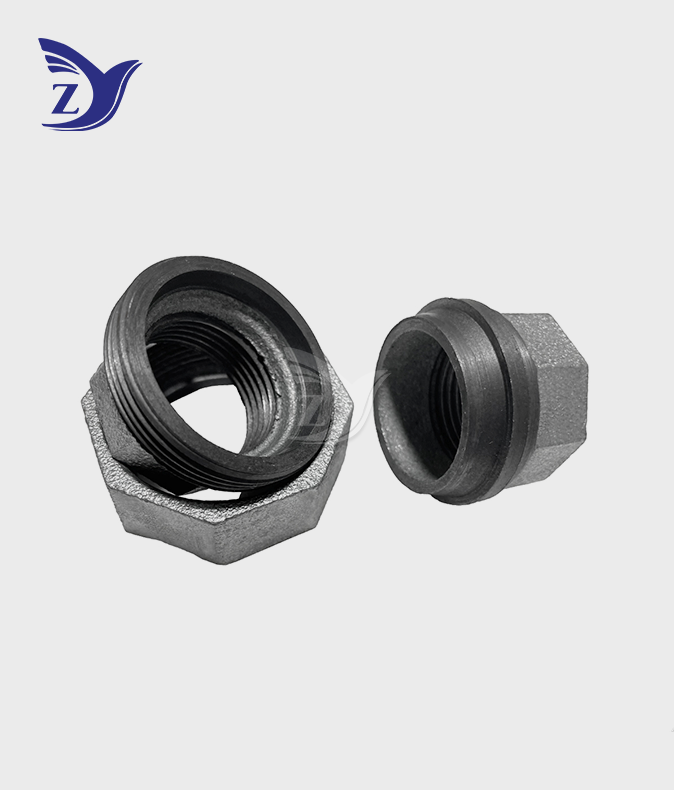
340 galvanized unions are removable pipe fittings that were made for industrial uses that need to be taken apart often. The three-piece design of these NPT galvanized union 340 pipe fittings includes an iron-to-iron conical seat that lets techs separate pipe sections without having to cut or rotate fixed pipes. The NPT threading standard makes sure a leak-tight seal through thread interference, and the hot-dip galvanized finish gives them great corrosion resistance. This makes them essential in water, gas, and HVAC systems where easy upkeep is needed.
What Are 340 Galvanized Unions and Are They Detachable?
Understanding the Three-Piece Modular Design
NPT galvanized union 340 pipe fittings are made at our factory in Taigu District, Shanxi Province, from black heart malleable iron that meets ASTM A197 standards. The number 340 refers to a certain internal structure: a precisely made conical joint that seals metal to metal without the need for covers. This design fixes a common problem in hard piping systems: to replace pumps, valves, or filters, lines had to be cut or complicated steps had to be taken to take the system apart.
The fact that these joints can be detached changes how servicing is done. When a fire protection system pump breaks, repair crews can quickly disconnect the two halves, unscrew the union's collar nut, and replace the broken equipment. When compared to welded joints, this modular method cuts down on work costs by about 60% and gets rid of the need for special cutting tools.
Core Functional Advantages in Industrial Settings
These threaded unions solve specific practical problems in a number of different fields. Technicians in petroleum plants like being able to separate and service parts of pipelines during planned turnarounds without stopping processes that are happening next to them. The conical taper seat design can handle thermal expansion cycles in boiler systems where temperatures range from room temperature to 366°F. It keeps the seal's integrity even after being heated and cooled many times.
In city water systems, the ability to be detached is especially useful. When filter tubes need to be replaced every three months in irrigation networks, workers can hand-tighten unions apart, replace parts, and get service back up and running in less than ten minutes per connection point. This working efficiency directly leads to less downtime and a higher uptime of the system.
Key Specifications and Dimensions of NPT Galvanized Union 340 Pipe Fittings
NPT Threading Standards and Dimensional Compliance
The way we make things is very careful to follow the rules set by ANSI/ASME B1.20.1 for National Pipe Taper threads. When two male threads connect with each other, the 60-degree thread angle and flattened crests and roots form interference sealing. We make regular sizes from 1/8 inch to 4 inches, and all of them meet the ASME B16.39 tolerances for malleable iron joints.
Precision ring and plug gauges are used for thread measuring at three steps of production. To keep cross-threading from happening during installation in the field, the taper angle, pitch width, and thread depth of each batch are checked. This care for accuracy in measurements makes sure that the system can work with pipe systems made all over the world, which avoids expensive fitment problems during the project's completion.
Material Composition and Protective Coating Properties
The base material, ASTM A197-compliant malleable iron, is more flexible than gray cast iron and can handle impact loads without breaking. In our hot-dip galvanizing process, finished parts are submerged in liquid zinc at 840°F. This creates a coating that is more than 86 microns thick, which meets ASTM A153 standards.
This zinc layer acts as a cathode and gives up its own protection to keep the iron below from oxidizing in hard conditions. When installed near the coast, where salt spray speeds up rust, properly zinc unions keep the structure strong for 25 years or more. The covering weight is usually 2.0 oz/ft², which is much heavier than electroplated options, which are usually only 0.3 oz/ft².
For projects that need to be compatible with British Standard Pipe Tapers, we also make versions with BSPT threads. The 55-degree thread angle with rounded curves is very different from NPT geometry. Choosing the right thread standard is very important when trying to buy something.
Installation, Maintenance, and Compatibility of NPT Galvanized Union 340 Fittings
Step-by-Step Installation Protocol
Preparing the threads is the first step in a proper operation. We suggest using a wire brush to clean the threads and get rid of any production dust or protection oils. Don't use seals that are based on petroleum on oxygen lines; instead, use PTFE tape or pipe dope that is made for the service fluid. Tighten the union tail piece into the first pipe section by hand, and then use a pipe wrench on its sides to tighten it another 1.5 to 2.5 turns. This will keep the NPT galvanized union 340 pipe fitting from distorting.
Connect the union nut to the tail piece first, then put the head piece into the second pipe section. Align both halves and tighten the nut by hand until the metal seats on the cones touch. Use tools of the right size to apply the final pressure, which is usually 30 to 50 ft-lbs for 1-inch unions and goes up proportionally with size. Too much torque hurts the threads and bends the conical seat, while too little torque lets leaks happen.
As a safety measure, make sure the line is depressurized before taking it apart, wear gloves that won't cut when working with parts that have sharp threads, and make sure there is enough air flow when using seals. Before adding process fluids, pneumatic airtightness tests at 0.6 MPa air pressure should be done as part of system commissioning to make sure the seals are still in good shape.
Maintenance Best Practices and Service Life Extension
How often routine inspections are done depends on how the service is running. We suggest that outdoor public water systems be checked visually once a year for white rust, which is a powdery zinc corrosion result that shows active cathodic protection. When the zinc covering wears off and reveals the base metal, which usually happens after 20 to 25 years in normal conditions, joints need to be replaced to keep the iron from oxidizing and leaking.
When used indoors in climate-controlled areas, HVAC systems last longer than 30 years. Inspections should be done every three months to make sure there is no weeping at the union contact and that the fittings don't move, which could mean that the connections are weak. Most of the time, retightening the collar nut an extra quarter-turn fixes small leaks.
Check the conical seat areas for scoring or rust pitting when taking unions apart for service. Small surface flaws up to 0.010 inches deep can usually be fixed by resealing, but greater damage needs to be replaced. To keep the leak-tight performance, clean and reapply thread sealer when putting the parts back together.
Cross-Standard Compatibility and Adapter Solutions
Even though they look a lot alike, NPT and BSPT threads are not interchangeable. Because the thread angles and taper rates are not all the same, they don't fully connect, which causes leaks when pressure is applied. BSPT unions or NPT-to-BSP adapter valves are needed for projects that call for British Standard parts.
Our 50,000-square-meter facility makes both thread standards, and it helps foreign projects with a variety of pipe specs. Our expert team helps engineers choose the right fittings to connect NPT parts to BSP pipe systems. This makes sure that the seal geometry and pressure ratings are correct throughout the installation.
Procurement Guide: Buying and Sourcing NPT Galvanized Union 340 Pipe Fittings
Supplier Selection Criteria and Certification Requirements
To find trusted suppliers, you need to look at their manufacturing skills and quality qualifications. Check that the ISO 9001 license shows that the quality management is organized. For fire safety uses, make sure the product has UL and FM approvals that show it meets safety standards. The CE mark, which shows European compatibility, is helpful for international projects.
Supply chain dependability is directly linked to the amount of goods that can be made. With a yearly production capacity of 30,000 tons across more than 1,000 product specs, we can quickly meet the needs of both small custom orders and large-scale project needs. With eight medium-frequency electric burners and 156 processing equipment units, the company can make things in ways that smaller companies can't.
Ask for specific quality control paperwork, like pneumatic test records, thread gauge certifications, and measures of the thickness of the galvanization. These records show that each batch of products meets certain performance standards before they are shipped.
Pricing Factors and Volume Purchasing Strategies
Unit pricing is based on a number of factors, including changing prices for raw materials like malleable iron and zinc, the number of orders that come in, which affects how efficiently each unit is made, and the need for customization, which affects the cost of tools. Standard catalog items get cheaper as more of them are bought, but items with non-standard measurements or threading patterns cost more to build and set up.
When you buy in bulk, the cost per unit goes down by a lot. For orders of more than 5,000 pieces, there are usually tiered pricing systems that offer discounts of 15 to 25 percent compared to small-lot sales. Price stability is provided by annual supply deals, which protect project budgets from changes in commodity prices and ensure the availability of inventory.
When sending things internationally, you need to think about how long the packaging will last. Our double-layer cardboard packing keeps metal surfaces safe during shipping while keeping the overall weight low to save money on freight costs. The effectiveness of loading containers goes up if you choose the right size. Work with your sellers to figure out the best way to package your goods so that you can make the most of each container.
The warranty terms depend on the producer, but they should cover replacing any fittings that are broken during installation or the first repair. We stand behind our goods with rules for replacing any that aren't working right. This lowers the risk to the project from manufacturing flaws.
Conclusion
NPT galvanized union 340 pipe fittings are a tried-and-true way to connect pipes in industrial gas, water, and HVAC systems in a way that can be easily disconnected. With its three-piece design and iron-to-iron cylindrical seats, this product doesn't leak and can be quickly taken apart for repair. Hot-dip galvanizing protects against rust for decades in harsh locations, and meeting ANSI/ASME threading standards makes sure that it works everywhere. The reliability of a system and its lifetime costs are directly affected by the materials used, how they are installed, and the relationships between suppliers. For this reason, making smart purchasing decisions is important for the success of any project.
FAQs
Can NPT galvanized union 340 fittings handle high-pressure steam applications?
It is common for malleable iron unions to have Class 150 pressure ratings, which means they can handle up to 150 psi of full steam and 300 psi of water, oil, and gas service. Check the pressure-temperature values against the ASME B16.3 norms that are relevant to your working conditions. The iron-to-iron cylindrical seat works better than designs that depend on gaskets in thermal cycle settings, where steam systems repeatedly expand and contract.
Do these unions require gaskets for sealing?
The form shown in Figure 340 only uses precisely cut metal-to-metal contact between the conical sides, so there is no need for a gasket. This design lowers long-term upkeep costs because it doesn't need gaskets to break down, harden, or be replaced as often as other sealing methods do.
Are galvanized unions reusable after disassembly?
When placed and kept correctly, these fittings can handle being taken apart and put back together many times. Before using again, check the curved seat surfaces for damage and put on new thread sealer when putting the part back together. To keep the system working properly, any fittings that have seat cutting, thread damage, or a zinc covering that is wearing off need to be replaced.
Partner with Zhiyuan Malleable Steel for Reliable Industrial Pipe Fittings
Zhiyuan Malleable Steel has been making for 26 years, so they can help you with any NPT galvanized union 340 pipe fittings order. Our factory in Shanxi Province is ISO 9001-certified and uses modern medium-frequency electric ovens along with strict quality control measures such as pneumatic airtightness testing and precise thread gauging. We keep a lot of products in stock so that we can deliver standard products within two hours for urgent project needs. Our ODM/OEM capabilities also allow us to meet the unique needs of foreign markets.
As a reputable company that makes NPT galvanized union 340 pipe fittings for fire protection companies, local engineering firms, and industrial businesses, we know how important it is for systems to have reliable pipe connections. Our CE, UL, and FM approvals show that we are committed to meeting global quality standards, and our policies for replacing broken products reduce the risk of buying from us.
For more information on specifics, bulk prices, or unique engineering help, please email our technical staff at q1236800000@gmail.com. You can look at our full selection of moldable iron fittings, grooved joints, and casting goods at zymalleablepipefitting.com. Our supply chain works well, and we offer professional service.
References
American Society of Mechanical Engineers. (2017). ASME B16.39: Malleable Iron Threaded Pipe Unions, Classes 150, 250, and 300. New York: ASME Press.
ASTM International. (2019). ASTM A197/A197M-19: Standard Specification for Cupola Malleable Iron. West Conshohocken: ASTM International.
ASTM International. (2016). ASTM A153/A153M-16a: Standard Specification for Zinc Coating (Hot-Dip) on Iron and Steel Hardware. West Conshohocken: ASTM International.
American National Standards Institute. (2013). ANSI/ASME B1.20.1: Pipe Threads, General Purpose (Inch). Washington: ANSI.
McGuire, J.T. (2018). Piping Systems Manual. New York: McGraw-Hill Professional.
Nayyar, M.L. (2020). Piping Handbook, 8th Edition. New York: McGraw-Hill Education.
Online Message