
Jul 30, 2026
90 Degree Long Radius Elbow From China Manufacturers
The NPT galvanized male female 90° long radius elbow pipe fittings are a reliable choice for industrial projects that need accuracy, longevity, and safe fluid handling. Specialized hydraulic and pneumatic parts do an important job: they change the direction of the fluid by 90 degrees as they go from internal to external connection points, which are commonly known as "street elbows" in the industry. The long radius design, in which the radius of curve is about 1.5 times the standard pipe diameter, makes the line much smoother by lowering frictional resistance, pressure drop, and turbulence. The hot-dip galvanized coating protects against rust very well, which is why these parts are needed for fire safety systems, city water systems, HVAC installations, and petrochemical plants all over the United States.
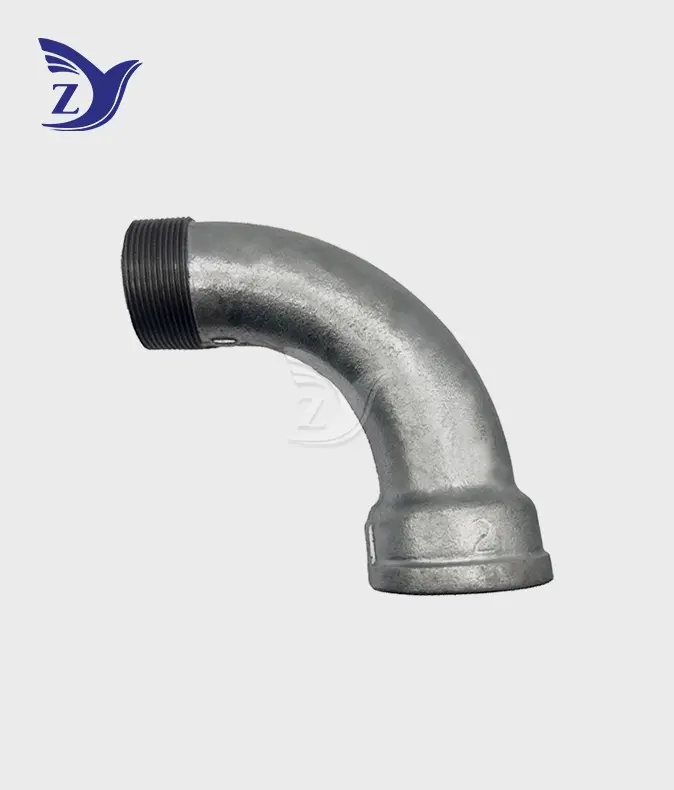
Key Advantages and Applications of NPT Long Radius Elbow Fittings
Superior Fluid Dynamics Performance
There are measured performance gains from the extended radius design that have a direct effect on how efficiently the system works and how much it costs to run. When fluid hits a sharp bend in a short radius elbow, it creates turbulence that loses energy as heat and noise and wears down the inside of the fitting faster. The NPT galvanized male female 90° long radius elbow pipe fittings make the flow move more easily through the turn, which lowers these losses and makes the parts last longer.
Here are the main ways this design improves performance:
Reduced Pressure Drop: The path with a softer curve lets fluid particles keep their speeds more evenly, so less energy is lost to turbulence. This feature becomes very important in systems that change directions a lot or that are close to pump capacity limits.
Lower Erosion Rates: Abrasive fluids or slurries wear down the inside of the fitting less because the particles move more smoothly and don't hit surfaces at sharp angles. This is especially helpful for agricultural irrigation systems that move water that is full of sediment.
Decreased Noise and Vibration: The smoother flow path causes less turbulence-induced vibration, which puts less stress on pipe supports and linked equipment and makes the operation quieter, which is important for sites close to places where people are.
Prevention of Sediment Accumulation: The constant curve stops dead zones where particles could settle, so the flow rate stays at full capacity over time. This benefit is useful in sewer systems or industrial process lines that deal with fluids that are full of particles.
Because of these performance benefits, pumping costs go down, maintenance needs go down, and the system lasts longer. This means that the slightly higher initial investment in long radius fittings is worth it over the lifecycle of the project.
Critical Industrial Applications
Because galvanized male female 90° elbows are so flexible, they can be used in a wide range of demanding situations. In condensate return lines, these fittings are used a lot in industrial HVAC and boiler feed systems. The male-female configuration lets you connect directly to equipment ports without having to use intermediate nipples. This saves installation space, and the long radius stops steam hammer, which is a destructive effect that happens when condensate suddenly changes direction, creating pressure spikes that can break pipes or damage equipment.
Petrochemical monitoring lines that are outside have to deal with tough conditions like corrosive air, changing temperatures, and constant shaking. The galvanized layer keeps the structure strong in coastal areas where salt spray speeds up rusting. The NPT tapered seal keeps its leak-tight performance even when it's heated up or shook around. This stops fugitive emissions that could be dangerous or break the law.
Fire protection contractors like these fittings because they work well in sprinkler systems where something going wrong is not an option. Corrosion resistance and the ability to handle pressure make sure that the item will be ready for use for decades. They are used by municipal water companies in community distribution networks. The galvanization protects them from both dirt corrosion and changes in the water chemistry inside the network.
Comparison and Decision-Making: Choosing the Right Elbow Fitting
NPT versus BSP Threading Standards
Knowing the differences between thread standards can help you avoid making mistakes that cost a lot of money. NPT threads have a 60-degree angle and drop at a rate of about 3/4 inch per foot. This makes a mechanical contact because the thread deforms. There are two types of BSP threads: BSPT (tapered) and BSPP (parallel), which have an angle of 55 degrees. The thread profiles can't be switched around; trying to connect NPT to BSP connections will either leak or damage the threads.
For projects in North America, NPT threading is usually required, but for projects in other countries, BSPT support may be needed. We have fittings that are compatible with both standards and are clearly marked to keep installation mistakes from happening. Early on in the specification process, procurement teams should check thread needs to avoid delays caused by buying parts that don't work with each other.
Galvanized Steel versus Stainless Steel Material Selection
When choosing a material, you have to think about how much it costs, how resistant it is to rust, and how strong it is. NPT galvanized male female 90° long radius elbow pipe fittings protect well against rust and don't cost too much, so they're perfect for uses that will be exposed to corrosion on a regular basis. Through galvanic protection, the zinc layer fixes small scratches on its own, keeping its rust resistance even after damage to the surface.
Stainless steel is better at resisting rust in places that are very acidic or high in chlorides, like chemical plants on the coast or evaporation plants. The material can also handle higher temperatures without losing its cover. But parts made of stainless steel usually cost two to three times more than ones made of galvanized steel. Instead of making too many rules for worst-case situations that might never happen, the choice should be based on how the service actually works.
Long Radius versus Short Radius Selection Criteria
Choosing between long radius and short radius elbows depends on how much space you have and how well you need the flow to work. Short radius elbows take up less room and cost a little less, so they are good for low-speed systems or setups where space constraints force designers to make choices about what to use.
The extra space and cost of long radius elbows are worth it in systems with high flow rates, fluids that wear down or abrasive surfaces, pressure-sensitive equipment further downstream, noise restrictions, or goals to maximize efficiency. As a general rule, long radius configurations should be used for pump discharge lines, main distribution heads, and process pipes that carry slurries or particles.
Male-Female versus Female-Female Configurations
The male-female elbow gets rid of one pipe tip, which cuts down on the number of places where pipes can join and leak. This setup works great when connecting straight to male-port devices or when there isn't enough room to use different fittings and nipples. Female-female elbows need nipples on both ends, but they let you change the total length of the joint more easily during installation.
Procuring NPT Galvanized Male Female 90° Long Radius Elbow Fittings from China Manufacturers
Identifying Reliable Suppliers
China is very good at making pipe parts out of malleable steel, and their prices are very low compared to other countries. The quality they give meets international standards. Shanxi Taigu Zhiyuan Malleable Steel is an example of this change in manufacturing. The company was founded in 2006 by people with 26 years of experience in casting, and it now has modern facilities that cover 50,000 square meters and can make up to 30,000 tonnes of steel each year, meeting more than 1,000 different product specifications.
Check to see if an NPT galvanized male female 90° long radius elbow pipe fitting manufacturer is certified by the ISO 9001 quality system. This makes sure that the controls on the processes are always the same. Products that have certifications like UL, FM, and CE have been checked by a third party to make sure they meet foreign standards. Ask for test reports on the material that confirm the iron composition and galvanization requirements set out in ASTM A197 and ASTM A153. Reliable makers keep these papers easy to find and offer batch-specific tracking.
Quality Control Protocols
Knowing how suppliers inspect their goods can help make sure that the products that are provided meet standards. Thread thread gauging with L1 and L2 ring and plug gauges confirms NPT conformance, and stand-off distances must be within ANSI B1.20.1 tolerances to make sure the threads engage properly. Axis alignment and perpendicularity checks make sure the 90-degree angle is within a range of 0.5 degrees. This keeps the pipe from being stressed and leaking.
Testing the thickness of a zinc coating uses non-destructive magnetic methods to make sure that the galvanized layers meet the minimum requirements set by ASTM A153. This ensures that the coating will last as long as it was promised. Random samples are put under 1.5 times their working pressure during hydrostatic testing. This finds shell porosity or casting flaws before they are shipped. Verification of the dimensions shows that the long radius shape meets the requirements, confirming the stated flow performance.
Pricing Structures and Bulk Purchase Benefits
The price of galvanized fittings relies on how much the materials cost, how many are made, and how they need to be customized. The most competitive prices are for standard sizes from established production runs. On the other hand, tooling costs apply to non-standard sizes or special requests. When you buy in bulk, you save a lot of money. Container-load amounts lower per-unit costs by making production more efficient and moving more efficiently.
Ask for specific quotes that break down unit prices, tooling costs (if any), and shipping costs. Make it clear how to pay and how long it usually takes to get both stock and special things. Building relationships with manufacturers that offer OEM/ODM services gives you options for future projects that need custom fittings.
International Shipping and Logistics
Shipping in containers is still the cheapest way to send large amounts of goods. It usually takes three to five weeks for containers to get from China to big U.S. ports. Documents like commercial invoices, packing lists, and certificates of origin are taken care of by manufacturers who have experience with export markets. Good sellers use double-layer cardboard with moisture barriers to protect galvanized surfaces during ocean travel. This keeps the packaging from getting damaged during shipping.
Lead times are the sum of production plans and delivery times. Standard items that are kept in stock can be shipped within days, but items that are made to order may take four to eight weeks, based on production schedules. Logistics problems don't cause project delays when buying schedules are planned with enough extra time.
Conclusion
In difficult industrial settings where flow efficiency, rust resistance, and long-term dependability are important, the NPT galvanized male female 90° long radius elbow pipe fittings have been shown to work well. The engineering behind their long radius shape, precision NPT threading, and protective galvanization solves real-world problems that fire protection contractors, municipal engineers, HVAC specialists, and industrial maintenance teams face on the job. Buying from well-known Chinese companies like Zhiyuan Malleable Steel gives you access to goods that are approved by international organisations at reasonable prices, with strict quality controls and the ability to make changes as needed. The technical details, installation requirements, and buying factors explained here will help decision-makers choose the right fittings and build relationships with suppliers that will help the project succeed.
FAQs
What specific advantages do long radius elbows provide over short radius alternatives in fluid systems?
At the same flow rate, long radius elbows lower pressure drop by about 30 to 40 percent compared to short radius elbows of the same size. The longer curve reduces noise and makes the speed spread more even through the turn. This feature lowers wear and tear from rough fluids, lowers noise and vibration, stops sediment from building up in the curve, and makes the whole system work better. In most medium- to high-speed uses, these benefits make up for the slightly higher cost and room needs.
Can galvanized elbows handle high-pressure applications reliably?
Most galvanized malleable iron elbows have Class 150 pressure ratings, which means they can handle 300 psi at normal temperatures. For higher pressures, there are Class 300 options. The galvanized layer doesn't change the pressure that can be applied; the malleable iron underneath gives the structure strength, and the galvanization stops rust. Make sure that the fittings you've chosen have the right pressure numbers for the job, and make sure that the work is done correctly to keep the seal's integrity.
How can I verify that supplied products meet international quality standards?
Ask for material certifications that say the iron meets ASTM A197 standards and the galvanization meets ASTM A153 standards. Ask for thread gauge proof records that show they meet ANSI/ASME B1.20.1 standards. Manufacturers with a good reputation keep their ISO 9001 certification up to date and can provide documentation specific to each batch. Third-party proof is shown by independent approvals like UL, FM, or CE. A final check is made before installation by using thread gauges and measuring tools to do a sampling exam upon delivery.
Partner With a Trusted NPT Galvanized Male Female 90° Long Radius Elbow Pipe Fittings Manufacturer
Zhiyuan Malleable Steel can help you with your piping projects because they have been casting steel for 26 years and can make things today. Our factory in Shanxi Province follows strict ISO 9001 quality controls and makes parts that are approved internationally and meet ASTM and ANSI standards. We keep standard sizes in stock and offer OEM/ODM customization for unique needs. Our yearly capacity is 30,000 tonnes and we meet more than 1,000 specs. Our goods have CE, UL, and FM certifications, as well as a lot of quality paperwork and guarantees that you can get a new product if the first one breaks.
Whether you need a certain number of containers for distribution, specific project details for engineering uses, or a steady supply for city infrastructure, our team can help you with technical issues and make sure you know when your deliveries will arrive. Our location near Taiyuan makes it easy to get to Chinese ports, and our experience exporting makes it easy to do business with other countries. You can talk to our purchasing team at q1236800000@gmail.com about your needs for NPT galvanized male female 90° long radius elbow pipe fittings, get specific quotes, or set up plant visits. You can look at our full line of products at zymalleablepipefitting.com and learn how working with an experienced seller can help your projects get the quality, volume, and service they need.
References
American Society of Mechanical Engineers. (2013). ASME B1.20.1: Pipe Threads, General Purpose (Inch). New York: ASME Press.
American Society for Testing and Materials. (2016). ASTM A197: Standard Specification for Cupola Malleable Iron. West Conshohocken: ASTM International.
American Society for Testing and Materials. (2017). ASTM A153: Standard Specification for Zinc Coating (Hot-Dip) on Iron and Steel Hardware. West Conshohocken: ASTM International.
Crane Co. (2013). Flow of Fluids Through Valves, Fittings, and Pipe (Technical Paper No. 410). Stamford: Crane Co.
Nayyar, M.L. (2019). Piping Handbook (8th ed.). New York: McGraw-Hill Education.
Smith, P.R., & Zappe, R.W. (2004). Valve Selection Handbook: Engineering Fundamentals for Selecting the Right Valve Design for Every Industrial Flow Application (5th ed.). Oxford: Gulf Professional Publishing.
Online Message