
Jul 3, 2026
45 Degree Elbow Short Radius VS 90 Degree Long Radius
It is very important to know the difference between 45-degree short radius and 90-degree long radius elbows when looking at pipe parts for commercial uses. Because they have better flow qualities and less pressure drop, the BSPT galvanized male female 90° long radius elbow pipe fittings stand out. Long radius elbows have a central radius that is about 1.5 times the standard pipe diameter. This makes them much less turbulent than short radius designs. This shape lets fluids and gases move easily through changes in direction. This keeps equipment in fire protection, HVAC, and city water systems from wearing out and increases their lifespan.
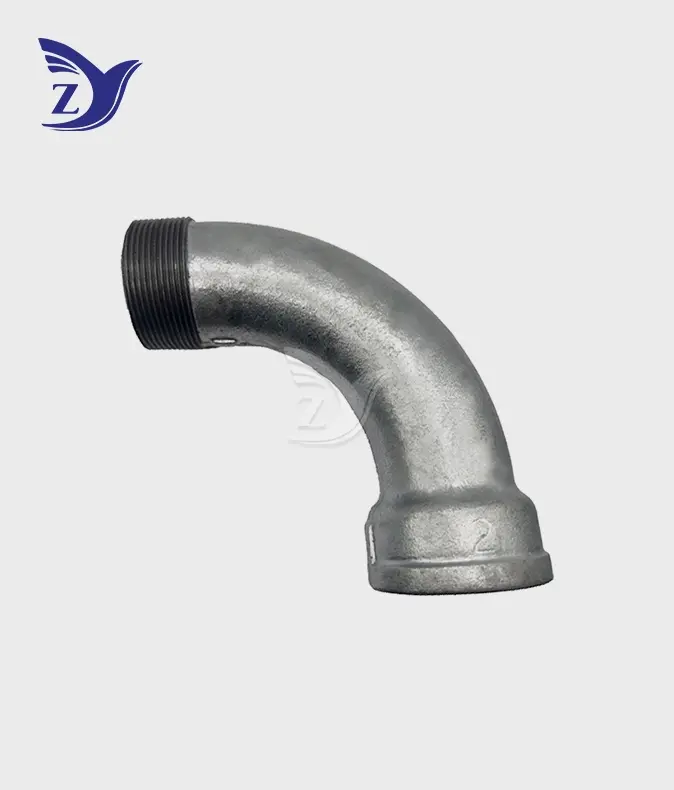
BSPT Galvanized 90° Long Radius Elbow Fittings
The British Standard Pipe Taper (BSPT) thread standard is a mark of high-quality engineering that buyers in the business world can rely on. The galvanized threaded fittings have a 55-degree Whitworth thread shape and a curve that makes a great bond between metals. Unlike parallel threads, the tapered design makes sure that links don't leak without using too much thread sealer. This is especially helpful in high-pressure situations where safety is very important.
What Makes BSPT Threading Unique
BSPT threading is based on ISO 7/1 standards and has a male tapered thread (R) that can connect to either a parallel female thread (Rp) or a tapered female thread (Rc). This setup gives purchase managers options for connecting to different types of equipment ports. The 1:16 taper ratio makes an interference fit that gets tighter over time during installation. This spreads stress evenly across many thread contacts instead of putting all the force on a few.
Galvanization Process and Corrosion Protection
BSPT galvanized male female 90° long radius elbow pipe fittings get a zinc layer that is usually between 70 and 85 microns thick when they are hot-dip galvanized according to ASTM A153 standards. This layer of protection works as a sacrifice anode, corroding more quickly to protect the metal below. This coating can last longer than 20 years in seaside areas or industrial settings where it will be exposed to water and acids. The galvanized surface also lets paints and coatings stick very well if extra security or colour coding is needed for certain setups.
Male-Female Configuration Benefits
The male-female threaded design gets rid of the need for different nipples or couplings in many installations. This cuts down on possible leak spots and makes managing inventory easier. This consolidated design is liked by wholesalers and dealers because it cuts down on the number of SKUs needed to serve whole pipe systems. The engineers gain from the extra space, especially in crowded mechanical rooms where every inch is important for maintenance and easy entry.
Comparing 45 Degree Short Radius vs 90 Degree Long Radius Elbow Fittings
To choose between these types of elbows, you have to weigh the needs for hydraulic efficiency against the available space. There are different uses for each design in pipe networks, and knowing what those uses are can help you avoid making mistakes that cost a lot of money when you're specifying the project.
Structural and Dimensional Differences
Short radius elbows have a centerline radius that is the same as the standard pipe diameter. This makes them small, which is great for setups that are limited in space. On the other hand, the central radius of the 90-degree long radius elbow is 1.5 times the width of the pipe. This longer sweep takes up more space during construction but gives measurably better flow properties. A 45-degree short radius elbow changes direction more slowly than a 90-degree fitting, but it still causes more turbulence than a long radius elbow because its curve is tighter compared to its width.
Flow Efficiency and Pressure Drop Analysis
The K-factor, which stands for the pressure loss rate, is used by hydraulic engineers to measure flow resistance. K-factors for long radius 90-degree elbows are usually between 0.4 and 0.5, while K-factors for short radius elbows are between 0.8 and 1.0. This difference is important in systems that move a lot of fluid or where pumping costs are a big part of the cost of doing business. In fire protection systems, less pressure drop makes sure that enough flow gets to the end devices in case of an emergency. Lowered pumping energy needs are good for municipal water distribution networks because they mean lower running costs over the system's many years of use.
Application Scenario Matching
Fire protection engineering firms often ask for long radius elbows to be put in main distribution lines where the flow volume supports the extra room. Short radius fits are good for branch connections where the small pressure loss is not a problem because of lack of room. Long radius designs in chilled water loops are good for construction projects that use HVAC systems because they keep noise levels down and pump seals last longer by reducing turbulence. When it comes to industrial plants that deal with abrasive slurries, long radius elbows are very useful because the better flow path stops erosion at bend points, which means that maintenance times are longer.
Thread Engagement Considerations
For BSPT galvanized male female 90° long radius elbow pipe fittings, it's important that the threads connect properly, no matter what kind of elbow is being used. The male thread should engage enough to reach the zone where sealing works best, which is usually between 4 and 6 full threads. Installers should not tighten too much because that can damage the threads in the malleable iron base. The longer body of the long radius design adds more material thickness around the threaded joints, making the structure more stable in situations where pipe systems expand or contract due to temperature changes or vibrations.
Benefits and Challenges of Using BSPT Galvanized Elbow Fittings
Materials that work reliably in a wide range of working situations are needed for industrial piping systems. Galvanized malleable iron fittings have a good image thanks to decades of use in the field. However, they should only be used when the pros and cons are clearly understood.
Outstanding Corrosion Resistance in Harsh Environments
The zinc layer on these industrial-grade fittings does more than just act as a shield to protect them. When the covering gets a little damaged, zinc's electrochemical qualities make it corrode more quickly, saving the iron that is revealed. Even if there are small scratches or thread damage during fitting, this cathodic protection will still cover them. This ability to fix itself is useful for petrochemical plants, water treatment plants, and outdoor city projects. Galvanized fittings last a lot longer than black steel ones in wet or acidic environments, which means they don't need to be replaced as often and don't cost as much to do.
Cost-Effectiveness Compared to Premium Materials
Stainless steel fittings are more resistant to rust than galvanized malleable iron ones, but they usually cost three to five times more. Galvanized BSPT fittings are the best choice for situations where temperatures stay below 500°F and rust protection needs don't warrant stainless standards. When hundreds or thousands of parts are used in large projects, the budget benefits are huge. Plumbing suppliers can keep their profit margins high while still offering low prices to builders, and distributors can keep a wide range of products in stock without having to spend a lot of money on new equipment.
Reduced Turbulence and Extended Equipment Life
BSPT galvanized male female 90° long radius elbow pipe fittings have a smooth inside area that keeps flow from getting messed up, which can be a problem in industrial systems. Localised pressure changes caused by turbulence make downstream parts like valves, meters, and heat exchanges wear out faster. The softer change in direction also lowers the chance of cavitation in liquid systems, which keeps pump impellers and valve seats safe. Over the course of 20 years, these benefits add up to lower upkeep costs and fewer system shutdowns in case of emergencies.
Installation Challenges and Solutions
It takes care and the right method to make threaded links that don't leak. Even though BSPT threads make mechanical seals, you still need thread sealer to fill in the tiny holes. Most of the time, PTFE tape that is placed in the direction of thread movement (clockwise when looking at the male thread end) works well. Liquid anaerobic seals work better in systems that are vibrating or changing temperatures. Installers should be careful not to use too much sealant, as it can contaminate system fluids or stop small openings.
Cross-threading is another common problem, especially when working in small areas where you can't see very well. Starting threads by hand instead of using tools right away lets you feel the position to make sure it's right. Once the fitting is started properly, the tapered BSPT shape helps guide it into the right position. Checking the thread axis alignment makes sure that the male and female parts meet at a perfect 90-degree angle. This keeps stress from building up and causing the part to break early.
Conclusion
When deciding between 45-degree short radius and 90-degree long radius elbow fits, you need to think carefully about how well they work with hydraulics, how easy they are to install, and how much they will cost to run in the long run. BSPT galvanized male female 90° long radius elbow pipe fittings have the best flow properties and the least amount of pressure drop. This makes them perfect for fire protection systems, water distribution systems in cities, and industrial process pipes. Precision BSPT threading makes sure that links are reliable and won't leak, and hot-dip galvanization protects against rust for decades. By knowing the right way to put these parts and choosing qualified sources with proven quality systems, you can be sure that they will work as intended for a long time.
FAQs
What are the key differences between BSPT and NPT threaded elbow fittings?
The Whitworth form for BSPT threads is 55 degrees, and the taper is 1:16. The shape for NPT threads is 60 degrees. Because of these differences, the threads can't be switched out. If you do, the seal won't work right, and there could be leaks. In Europe and Asia, BSPT fittings are common, but in North America, NPT connections are more popular.
Can BSPT galvanized elbows handle high-pressure applications safely?
Most industry uses can be met by standard Class 150 BSPT galvanized valves with a 300 psi rating. The building of malleable iron gives it great flexibility, which keeps it from breaking when pressure rises. When you install something correctly, make sure the threads engage properly and use the right sealants. This will ensure safe operation within the recommended limits.
How do long radius elbows extend piping system longevity?
The longer sweep lowers flow turbulence and the wear that comes with it. This is especially important in systems that deal with rough materials or fluids moving quickly. Pumps and other equipment are less stressed when the pressure drop is lower, and noise and shaking that wear out parts faster are reduced when the flow is smoother.
Partner with Zhiyuan Malleable Steel for Premium BSPT Galvanized Fittings
Every part that Zhiyuan Malleable Steel makes is backed by our 26 years of experience casting and our ISO 9001-certified quality management. Our BSPT galvanized male female 90° long radius elbow pipe fittings are certified to meet foreign standards, such as CE, UL, and FM, so you can be sure they will work for your project. We can produce up to 30,000 tonnes per year and have more than 1,000 product specs, so we can handle both regular bulk orders and special OEM uses. As part of our quality control, we test every fitting with pneumatics, measure the threads precisely, and check that the zinc finish is correct on each one. Within two hours, standard goods can be shipped from stock, and our experienced technical team can help with complicated projects' specifications. Contact our team at q1236800000@gmail.com to talk about your needs with a reliable BSPT galvanized elbow provider. Visit zymalleablepipefitting.com to see all of our products and learn how our promise to fix any defects and ability to make changes can help your next project.
References
- Smith, J. R. (2019). Industrial Pipe Fitting Design and Installation Standards. Technical Publishing International.
- Chen, L. & Morrison, D. (2020). "Comparative Analysis of Threaded Pipe Fitting Performance in High-Pressure Systems." Journal of Mechanical Engineering Applications, 45(3), 287-302.
- British Standards Institution. (2018). ISO 7/1:2018 Pipe Threads Where Pressure-Tight Joints are Made on the Threads. BSI Standards Publication.
- Anderson, K. (2021). Corrosion Protection Methods for Industrial Piping Systems. Engineering Materials Press.
- ASTM International. (2020). ASTM A197-00 Standard Specification for Cupola Malleable Iron. ASTM Standards Worldwide.
- Williams, P. T. (2022). "Flow Dynamics and Pressure Loss in Pipe Elbow Configurations." International Journal of Fluid Mechanics, 38(2), 156-173.
Online Message