
Sep 4, 2026
45 Degree Elbow Formula: A Practical Piping Design Guide
When designing efficient piping systems for industrial applications, understanding the 45 Degree Elbow and its technical specifications becomes crucial for optimizing flow performance and system longevity. This pipe fitting component serves as a directional change element that redirects fluid or gas flow by precisely 45 degrees, offering superior hydraulic efficiency compared to sharper angle transitions. Manufactured from high-strength malleable iron with hot-dipped galvanization and precision-threaded NPT/BSPT connections, these fittings solve critical challenges in industrial water and gas pipeline installations where corrosion resistance, threading accuracy, and pressure integrity matter most to wholesale distributors and project engineers alike.
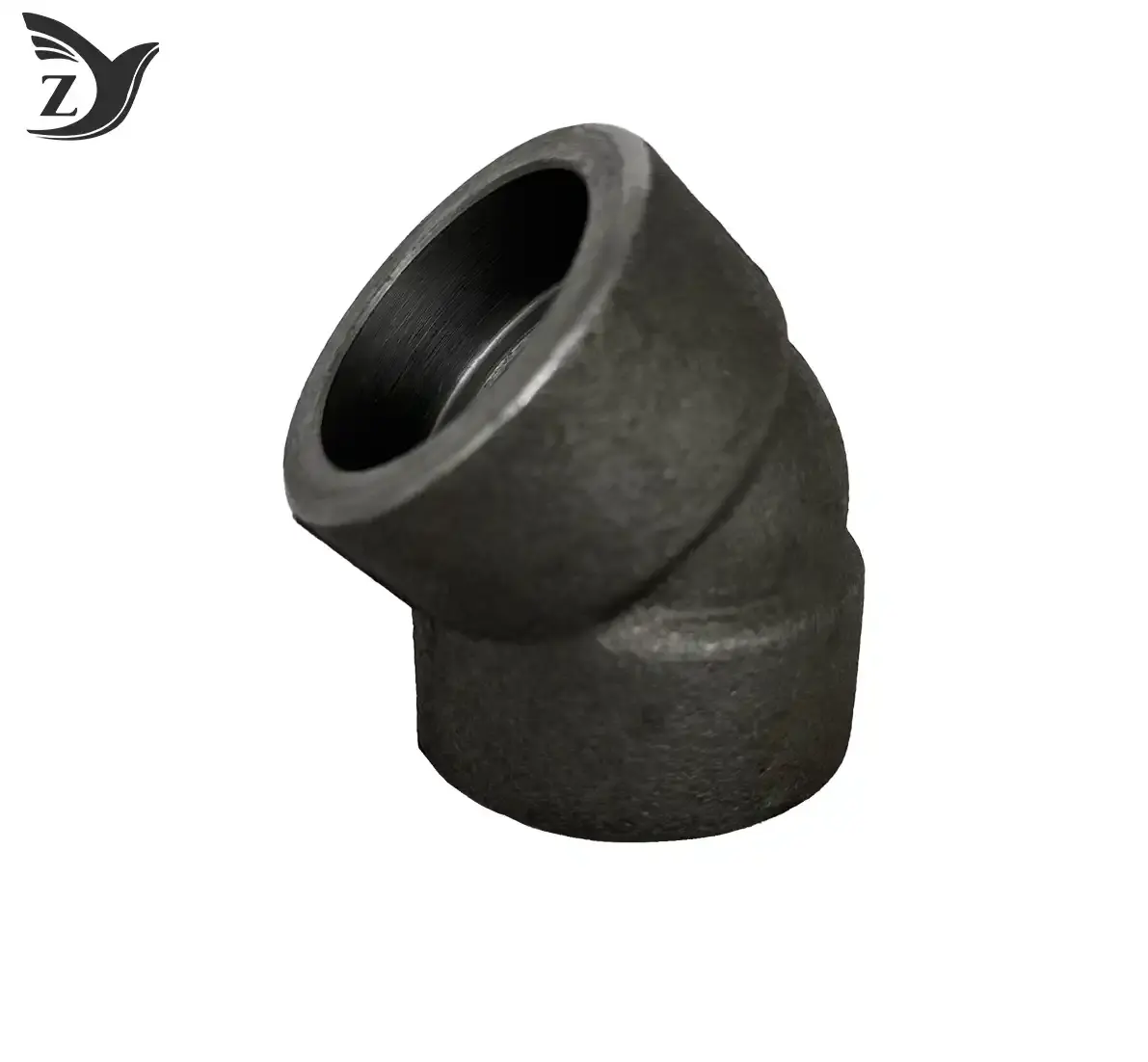
Understanding the Basics of 45-Degree Elbow Fittings
In systems that are under pressure, a 45-degree elbow fitting is a special type of pipe part that makes it easy to change the flow direction. To avoid rough 90-degree turns that waste energy and speed up the flow, this curved fitting makes the change more gradual. This keeps the flow speed steady and reduces the number of stress points in the pipeline network.
What Defines a Quality 45-Degree Elbow?
It depends on how well these parts are made, whether the system works or not, and how much it costs to keep up. For the more expensive ones, the threads and edges are square and precisely machined to meet either NPT (National Pipe Thread) or BSPT (British Standard Pipe Thread) standards. The base material is made of iron that can be shaped. It is heated to make it more flexible, but it still has strength when the pressure changes. A protective zinc layer is put on the iron surface during hot-dipped galvanization. Because this covering is physically attached to the iron, it can't be oxidized or attacked by chemicals when it's being used hard.
Material Properties That Matter
For pipes, malleable iron is better than regular cast iron because it can handle pressure better and has better mechanical features. Because of how the materials are made, these parts won't crack when they expand and contract with heat. This is very helpful in places where the temperature changes. The layer on the galvanized finish is generally 70 to 100 microns thick. This keeps water supply networks, gas lines, and pipes used in factories from rusting for many years. The main need of B2B buyers who want durable goods that don't need to be replaced too often is met by this mix of material strength and surface protection.
Thread Compatibility and Connection Reliability
How well it works and how quickly it can be put together depend on how accurate the threading is. NPT threads have a 60-degree thread angle and a 1 in-16 taper. This makes a mechanical seal that can be made better with tape or thread sealer. People in Europe and the Commonwealth like BSPT threads because they have a 55-degree angle and a similar pitch. Both sets of rules make sure that pipes from 1/8 inch to 6 inches can work with each other. In other words, they can handle all kinds of distribution needs, from mains for factories to residential branches.
The 45-Degree Elbow Formula and Design Principles
You need to know a lot about geometry and hydraulics to figure out how much space these fittings need and how they handle flow. These things affect how the system is built and how well it works.
Dimensional Calculations for Layout Planning
The center-to-face measurement is the most important one. It tells you how far the centerpoint of the fitting is from the end of the threaded link. This number changes the general path of the pipeline and tells you how much room you need for installation. Using a 45-degree elbow, use trigonometry to determine the offset distance. When you multiply the center-to-face length by the cosine of 45 degrees, you get 0.707. This is the horizontal shift. That same size times the sine of 45 degrees, which is 0.707, gives you the vertical rise. With these numbers, engineers can plan how to lay out pipes in places that are tight or have obstacles in the way while still meeting clearance rules.
Flow Dynamics and Pressure Drop Analysis
45-degree elbows work much better physically than 90-degree elbows when it comes to head loss. A 45 Degree Elbow typically adds the equivalent of 16 pipe diameters of straight pipe resistance, compared to 30–35 diameters for a 90-degree elbow. This difference is measured using the equivalent length method. This means that systems with more than one direction change cost less to run. Less turbulence in the flow path means less erosion and corrosion at the inner radius. This also extends the service life in rough or fast-moving conditions.
Comparing 45 vs. 90 Degree Configurations
To choose between these two directions, you have to balance the limitations of space with the effectiveness of the hydraulic system. In comparison to a 90-degree fitting, a 45-degree elbow needs more linear space to make the same direction change, but it drops pressure by about 40%. When energy economy and steady flow are important, like in heating circulation loops or air conveying systems, the 45-degree option saves money on running costs. On the other hand, 90-degree fittings may be needed in tight machinery rooms or repair jobs, even though they have higher resistance.
Selecting the Right 45-Degree Elbow for Your Project
When making a purchase decision, it's important to make sure that the product meets the needs of the application. This means taking into account things like working pressure levels and weather conditions that can affect the product's long-term performance and total cost of ownership.
Material Selection for Specific Environments
Galvanized malleable iron works great in places with moderate temperatures and pressures for natural gas distribution, fire protection networks, and potable water systems. The zinc coating effectively protects against corrosion caused by water, dirt, and exposure to the air, stopping the fast oxidation that happens to ferrous materials that are left out in the elements. This choice of material is especially cost-effective for big projects where stainless steel can't be used because of budget constraints but where quality standards are higher than what PVC can handle. Due to its high mechanical strength, malleable iron can withstand higher pressures than plastic options (usually 150 to 300 PSI, depending on size and schedule). This makes it perfect for use in industrial and city buildings.
Threading Standards and Installation Considerations
NPT threading is the standard in North America. Its curved shape makes it easier for male and female threads to interfere with each other, which improves sealing performance. BSPT threading serves foreign markets with similar ways of sealing, but it's important to be careful when mixing parts from different sources in the same area. Precision-threaded fittings speed up the installation process by letting you tighten them by hand and then turn them with a wrench to make sure they fit properly. This avoids problems like galling or cross-threading that happen with poorly made goods.
Pressure and Temperature Ratings
A standard 45-degree iron elbow with a working pressure of 150 PSI can handle most business and light industrial needs. This includes HVAC systems, networks for distributing compressed air, and networks for watering plants. The material doesn't break down at temperatures between -20°F and 300°F, so it can handle changes in the weather on outdoor sites and light process heat in factories. By knowing these limits, you can avoid over-specifying, which raises costs needlessly, and make sure that the safety gaps are large enough to meet real-world needs.
Procurement and Supplier Insights for 45 Degree Elbows
When you combine unit price, supply stability, quality consistency, and expert help during the buying process and in the long run, you get the best value.
Evaluating Supplier Capabilities
An honest company makes sure that its quality management systems meet the requirements of ISO 9001 and that products such as the 45 Degree Elbow have certifications from trusted authorities. Third-party testing to verify measurements, thread sharpness, and galvanization thickness demonstrates a commitment to meeting industry requirements. If suppliers have a wide range of sizes in stock, from 1/4 inch to 4 inches, you can consolidate orders and save on shipping costs. This also makes vendor management easier. Manufacturing capacity is particularly important for large projects. Zhiyuan Malleable Steel produces 30,000 tons of steel annually, allowing it to handle large orders efficiently without long lead times that could delay construction projects.
Pricing Structures and Volume Advantages
At warehouse prices, items are often priced in groups, with lower unit costs for larger orders (often 500 pieces, 2,000 pieces, or full cases). If sellers know these breakpoints, they can figure out the best order size based on how the project needs to be phased and how much it costs to store supplies. You don't have to pay markups to wholesalers when you buy from the factory. Markups can add 20–40% to the cost of things. This makes more money for wholesalers and helps contractors stay within their project budgets. Building ties with manufacturers that can offer competitive factory-direct prices while still achieving quality standards is a smart move in markets where prices are important.
Lead Time Management and Stock Availability
Standard configurations usually ship within 48 to 72 hours from companies that keep a lot of stock. This is helpful for tasks and fixes that need to be done right away. Wait times for custom threading, special coatings, or sizes that aren't common can be anywhere from two to six weeks, depending on how many orders there are and how busy the factory is. When buyers ask about stock levels, it should be clear so that projects don't get held up. For parts like 2-1/2-inch or 5-inch pieces that aren't used very often and don't sell very quickly, this is very important. Fast suppliers, like those who offer quotes and technical support the same day, make it easier to buy things and give purchasing teams less work to do.
Installation and Maintenance Best Practices
Fixing and maintaining parts in the right way will make them last longer, stop leaks, and cut down on system downtime that hurts businesses that sell to the public and contractors.
Preparation and Assembly Techniques
As a first step, both the male pipe threads and the female fitting threads need to be checked for damage, dirt, or production flaws that could make closing less effective. To stop leaks, you need to use the right thread sealant. For example, PTFE tape wrapped three to four times clockwise or pipe dope solution that is rated for the media being sent will work. It is important to make sure that the threads are properly connected before using wrench force on the link. Most of the time, 2-3 extra turns are added on top of hand-tight for diameters up to 2 inches, and 3-4 turns are added for sizes larger than 2 inches. To keep the threads tight without putting too much stress on them, which could cause the fitting body to break, this step is taken.
System Pressure Testing
After the systems are set up, they are put under pressure to make sure they are stable before they are used. It is necessary to add water to the system and slowly raise the pressure until it reaches 1.5 times the working pressure rate. This is done for 15 to 30 minutes while all the joints are checked for leaks or weeps. Anything that is broken needs to be drained, taken apart, and the threads checked. It should then be put back together correctly with new sealant. In this check, catastrophic failures are stopped while the system is running, and it is made sure that it meets building codes and insurance requirements.
Maintenance Inspection Schedules
Every six to twelve months, you should look at the structure to find early signs of rust, mechanical damage, or joint tears that could turn into failures. The silver-gray color of galvanized surfaces should stay the same. Rust spots on them mean that the coating is damaged and should be checked out and maybe changed. Check threaded connections for water or crystalline layers. They may have slow leaks that need to be fixed or made tighter. Preventative maintenance on a system makes it last longer and keeps you from having to fix it in an emergency, which takes more time and costs more money than planned maintenance.
Conclusion
It is important to choose 45 Degree Elbow fittings carefully because they have a big impact on how well and how long piping systems last and how much they cost in business, government, and industrial settings. When engineers and procurement experts know about measurement estimates, flow dynamics, and the properties of materials, they can pick parts that are good at withstanding pressure, temperature, and corrosion while also being good at moving water. Good stainless iron fittings that can be shaped and have accurate NPT/BSPT threading work well in tough situations like gas pipes and water distribution. One good thing about buying directly from the factory is that the prices are lower, but suppliers must also be able to offer consistent quality, a wide range of products, and technical support that speeds up project execution and lowers the system's total cost of ownership over its lifetime.
FAQ
1. What advantages do 45-degree elbows offer compared to 90-degree fittings?
About 40% less flow resistance is lost when the turn angle is shallower. This lowers the drop in pressure and the power needed to pump in systems where the flow changes direction more than once. In times of high flow, this means real cost savings for running the business. The better flow path also lessens the damage that turbulence does to the inside of the fitting. This makes it last longer in rough or fast-moving conditions. In contrast, they need more linear space to make the same number of direction changes. This makes them ideal for situations that need layout flexibility and energy efficiency.
2. How do I select between NPT and BSPT threading standards?
In North America, National Pipe Thread (NPT) is the most common way to connect things. For projects that use standard pipe widths and US-made parts, this should be brought up. People all over the world, mostly in Asia, Europe, and Commonwealth countries, use the British Standard Pipe Thread (BSPT). Because they both use tapered threads, both types make good seals, but you can't use one on top of the other. Doing so causes touch and leaks to happen. It's important to know what size standard is being used in your present system before you buy any new fittings or growth parts.
3. What galvanization thickness ensures adequate corrosion protection?
A 70- to 100-micron-thick hot-dipped zinc finish will keep things from rusting for 20 to 30 years when they are used with water and gas and the temperature and pH are normal. Thick coatings last longer in harsh places like coastal areas, industrial process systems, or uses that are below ground and touch the ground. Reliable manufacturers check the thickness of the coating according to ASTM standards and give mill certificates that prove they follow the rules. This makes people believe that the product will last a long time and cuts down on the number of replacements that need to be made, which raises the lifecycle costs.
Partner With a Trusted 45-Degree Elbow Manufacturer
Zhiyuan Malleable Steel sells precision-threaded, hot-dipped galvanized malleable iron parts, including 45 Degree Elbow fittings, at factory-direct prices that meet the high quality standards of people who work on big projects and sell in bulk. Every year, we make 30,000 tons of goods and keep more than 1,000 specs in stock. This lets us quickly fill large orders, from single crates to projects with multiple shipments. Our ISO 9001-certified production methods make sure that the quality of each run is the same in terms of size, thread accuracy, and galvanization. By giving you technical specs and application advice, our engineering team makes it easier for you to decide what to buy. This is true whether you need standard NPT threading for markets in North America or BSPT threading for markets around the world. Our sales team can be reached at q1236800000@gmail.com to talk about volume discounts, shipping times, and customization options that fit with what you promised your customers and how you plan to handle your inventory.
References
1. American Society of Mechanical Engineers. (2020). ASME B16.9: Factory-Made Wrought Buttwelding Fittings. New York: ASME Press.
2. Crane Co. Technical Paper. (2018). Flow of Fluids Through Valves, Fittings, and Pipe. Stamford: Crane Company.
3. Miller, D.S. (2019). Internal Flow Systems: Design and Performance Prediction. Bedford: BHR Group Limited.
4. American Water Works Association. (2021). Manual of Water Supply Practices M11: Steel Pipe—A Guide for Design and Installation. Denver: AWWA.
5. British Standards Institution. (2017). BS EN 10242: Threaded Pipe Fittings in Malleable Cast Iron. London: BSI Standards Publication.
6. Hydraulic Institute. (2019). Pump System Optimization and Life Cycle Costing for Pumping Systems. Parsippany: Hydraulic Institute Publications.
Online Message